
You've probably heard songs that transport you to a place of peace, making you feel close to God. But what makes a melody truly sacred? Is it enough for it to be played inside a church to be considered sacred music? The president of the Pontifical Ambrosian Institute of Sacred Music, Father Riccardo Dell'Acqua, has shared a deep reflection that invites us to rethink the role of music in liturgy.
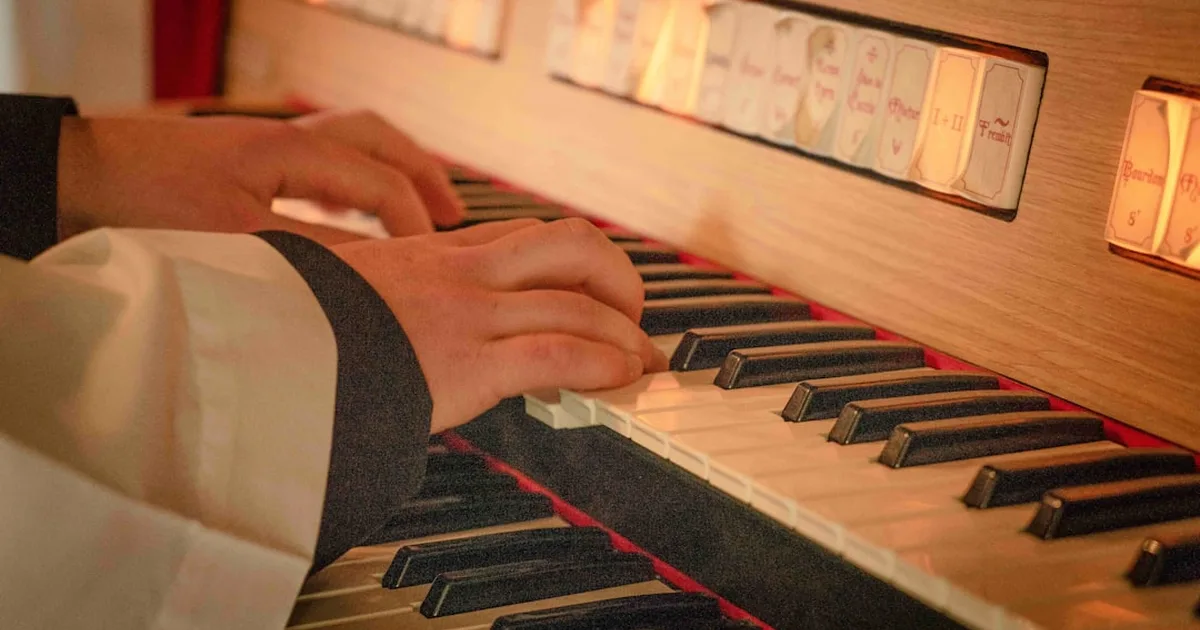
In a recent interview, the priest and musician made it clear that context isn't everything. Music doesn't become sacred just by being played in a church. Its essence goes far beyond: it is tied to its purpose, its ability to accompany God's action in the community. This idea resonates strongly at a time when the Church seeks to renew its language to reach people's hearts.
What Defines Sacred Music?
For Dell'Acqua, sacred music is music composed for liturgy, to support prayer and the celebration of the sacraments. It's not just about aesthetic beauty, although that is important. True sacred music springs from a deep connection with theology and Church tradition.
The Second Vatican Council, in its constitution Sacrosanctum Concilium, already spoke of the importance of music in liturgy. It emphasizes that sacred music must be holy, true art, and at the service of divine action. It is not an ornament, but a living part of the celebration.
As the psalmist says:
“Sing to the Lord a new song; sing to the Lord, all the earth” (Psalm 96:1, NIV).That new song is not just any song; it is praise that springs from a transformed heart.
The Training of Liturgical Musicians
Father Dell'Acqua, who began playing the organ at fourteen in his parish in Legnano, emphasizes the need for solid training. Musicians who serve in liturgy must not only master their instrument but also understand the theology and spirit of the celebration. It's not a concert, but a service that helps the community encounter God.
In many churches, we see praise bands playing contemporary songs. This is not wrong, but the challenge is that those songs are truly integrated into the liturgy, not a separate show. Music should unite, not distract.
The Danger of Superficiality
One current risk is thinking that any song with religious lyrics is suitable for Mass. However, sacred music has specific criteria. It's not about personal taste, but about music's ability to lift the soul toward God and unite the assembly in one prayer.
The apostle Paul reminds us:
“Let the word of Christ dwell in you richly, teaching and admonishing one another in all wisdom, singing psalms and hymns and spiritual songs, with thankfulness in your hearts to God” (Colossians 3:16, ESV).Music in church should be an expression of that word dwelling in us.
A Call to Authenticity
Dell'Acqua's reflection challenges all of us: pastors, musicians, and faithful. Are we using music to glorify God or to entertain ourselves? Next time you attend a celebration, pay attention to the songs. Ask yourself: Does this melody help me pray? Does it connect me with the mystery of faith?
Sacred music is not an accessory; it is a powerful tool for evangelization and encountering God. As a Church, we must care for it, train ourselves, and choose wisely what we sing and play. May every note be an offering of love to the Father.
To conclude, I invite you to reflect: what kind of music nourishes your faith? Do you seek songs that take you beyond the superficial, that





Comments