
St. Peter's Basilica in the Vatican is more than just a building—it is a testament to faith that has taken shape in stone and bronze over centuries. Every visitor who steps through its doors is struck by an atmosphere that inspires awe and wonder. The basilica invites us to reflect on the beauty of creation and the greatness of God. In this article, we want to take you on a spiritual journey that shows how art and architecture can help us better understand God's glory.
The basilica was built over a period of more than 100 years, from 1506 to 1626. It is the work of many great artists and architects, including Michelangelo, Bernini, and Bramante. Every stone, every fresco, and every statue tells a story of faith and devotion. The basilica is not only a place of worship but also a symbol of the worldwide Christian community.
The Message of Art: God's Glory in Color and Form
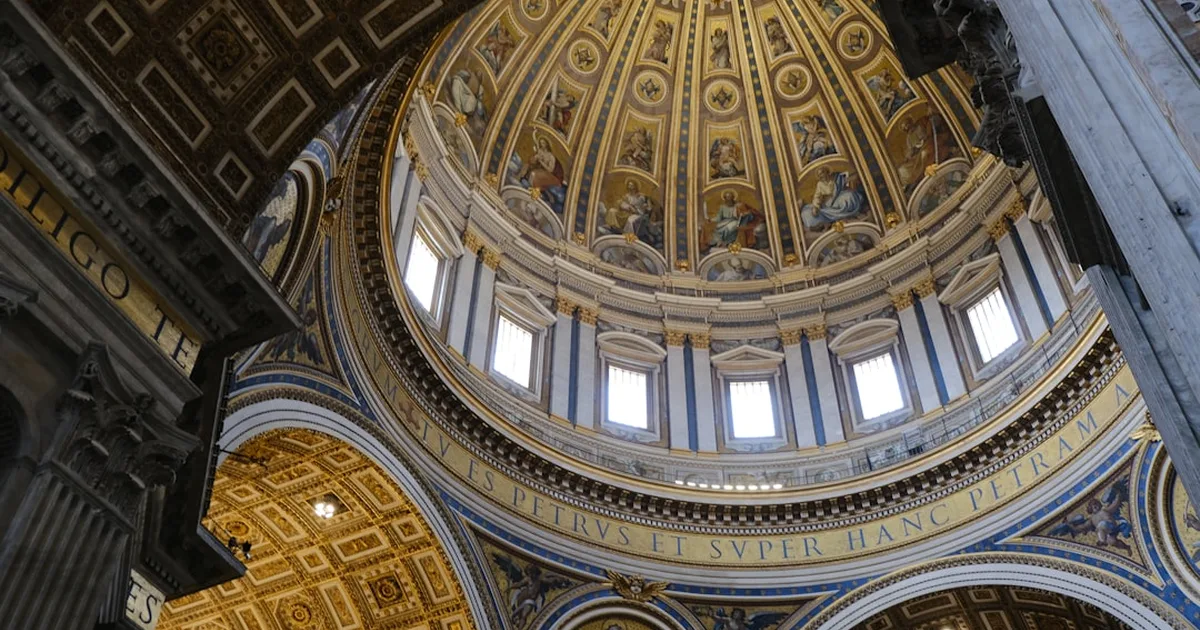
The art in St. Peter's is not merely decorative—it is a sermon in pictures. The enormous mosaics that adorn the dome depict biblical scenes and recall the history of salvation. Michelangelo's famous Pietà, showing the mother of Jesus with her dead son, evokes deep emotions and invites meditation on Christ's suffering. The artworks are designed to draw the viewer into the biblical stories and stimulate reflection.
In the Bible, we read that God Himself loves art. In the book of Exodus, He gives precise instructions for the design of the tabernacle:
"And you shall speak to all the skillful persons whom I have filled with a spirit of skill, that they make Aaron's garments to consecrate him for my priesthood" (Exodus 28:3, ESV).This verse shows that art and craftsmanship are willed by God to glorify His name.
The Dome: A Symbol of Heavenly Glory
The dome of St. Peter's, designed by Michelangelo, is an architectural masterpiece. It rises 136 meters above the ground and is one of Rome's landmarks. Seen from the inside, it seems to open up to heaven. The dome is decorated with mosaics depicting the glorification of God. It recalls the words of the prophet Isaiah:
"For thus says the LORD, who created the heavens (he is God!), who formed the earth and made it (he established it; he did not create it empty, he formed it to be inhabited!): 'I am the LORD, and there is no other'" (Isaiah 45:18, ESV).
The dome invites the viewer to look upward and reflect on eternity. It is a symbol of hope and the assurance that God reigns over all. When we look into the dome, we can remember that our true home is in heaven.
The High Altar and the Tomb of Peter: Center of Faith
Beneath the dome is the high altar, built over the tomb of the Apostle Peter. Peter, one of Jesus' closest disciples, was crucified here according to tradition in the 1st century AD. The altar is a place of prayer and Eucharist. Here believers from around the world gather to celebrate the Lord's Supper and affirm their union with Christ.
Faith in the resurrection is the foundation of Christian hope. As Paul writes:
"And if Christ has not been raised, your faith is futile and you are still in your sins" (1 Corinthians 15:17, ESV).The high altar reminds us of this central event of the Christian faith.
Bernini's Baldachin: A Masterpiece of Baroque Art
Above the high altar rises Bernini's Baldachin, a monumental bronze structure that marks the most sacred place in the basilica. Its twisted columns and gilded details are a testament to Bernini's artistic genius. The baldachin not only beautifies the altar but also directs attention to the center of faith: the sacrifice of Christ and the tomb of the Apostle Peter. It is a reminder that God's glory is revealed both in majesty and in humble service.





Comments