
In the history of the Church, some figures shine brightly while others prefer the shadows of humble service. Saint Leopold Mandić, a Capuchin friar of small stature and frail build, was one of those hidden saints who spent most of his life in the confessional, devoting up to fifteen hours a day to listening, advising, and absolving. His story may not be as famous as Padre Pio's, but his legacy of mercy continues to inspire thousands of Christians worldwide.
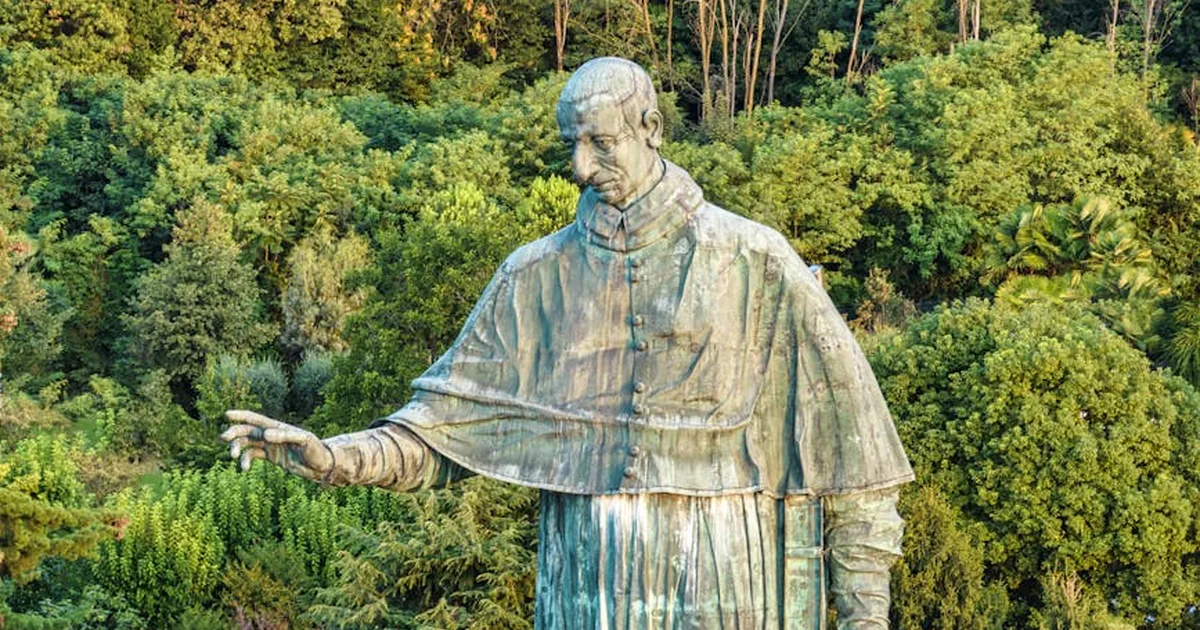
Born in 1866 in Castelnuovo, in present-day Croatia, Leopold Bogdan Mandić felt the call to religious life from a young age. He entered the Order of Friars Minor Capuchin and was ordained a priest in 1890. Despite his desire to be a missionary in the East, his superiors assigned him to serve in confessionals in Italy, mainly in Venice and Padua. There, with patience and love, he became a channel of God's grace for countless souls.
The Lord is compassionate and gracious, slow to anger, abounding in love. (Psalm 103:8, NIV)
Strength in Weakness
Saint Leopold suffered from multiple illnesses and physical limitations. He was very short, barely 1.35 meters tall, and struggled with vision problems and arthritis. Yet he never allowed these difficulties to keep him from his mission. On the contrary, he saw his fragility as an opportunity to rely more on God and to identify with the crucified Christ.
His example reminds us that God does not call the equipped, but equips the called. As Scripture says: “My power is made perfect in weakness” (2 Corinthians 12:9, NIV). Often, we too feel that our limitations prevent us from serving others. However, the life of Saint Leopold encourages us to place our weaknesses in God's hands, trusting that He can do great things through them.
The Confessional as a School of Mercy
For Saint Leopold, the confessional was not just a place where the sacrament of reconciliation was administered, but a space for personal encounter with God's love. There, each penitent was welcomed with a smile and words of encouragement. The holy Capuchin had a special gift for making people feel loved and forgiven, no matter how serious their sins.
In an era when many viewed the confessional as a harsh tribunal, Saint Leopold transformed it into a source of hope. His motto was: “God is greater than our heart” (cf. 1 John 3:20). This certainty drove him to spend endless hours listening, advising, and encouraging those who came to him.
If we confess our sins, he is faithful and just and will forgive us our sins and purify us from all unrighteousness. (1 John 1:9, NIV)
Lessons for the Church Today
In a world that often values visible success, power, and recognition, the figure of Saint Leopold Mandić offers a radical contrast. His life teaches us that true Christian heroism is found in humble, constant service, in fidelity to the small tasks of everyday life. We do not need to do extraordinary things to be saints; it is enough to love God and neighbor in the ordinary moments of each day.
Moreover, his example challenges us to rediscover the sacrament of reconciliation. In many Christian communities, confession has fallen into disuse. Yet Saint Leopold reminds us that this sacrament is an inexhaustible source of grace and healing. When we approach the confessional with humility, we experience the merciful embrace of the Father who always waits for us.
What Can We Learn from Saint Leopold?
- Perseverance in prayer: Despite his busy schedule, the saint spent long hours in prayer before the Blessed Sacrament. From





Comments