
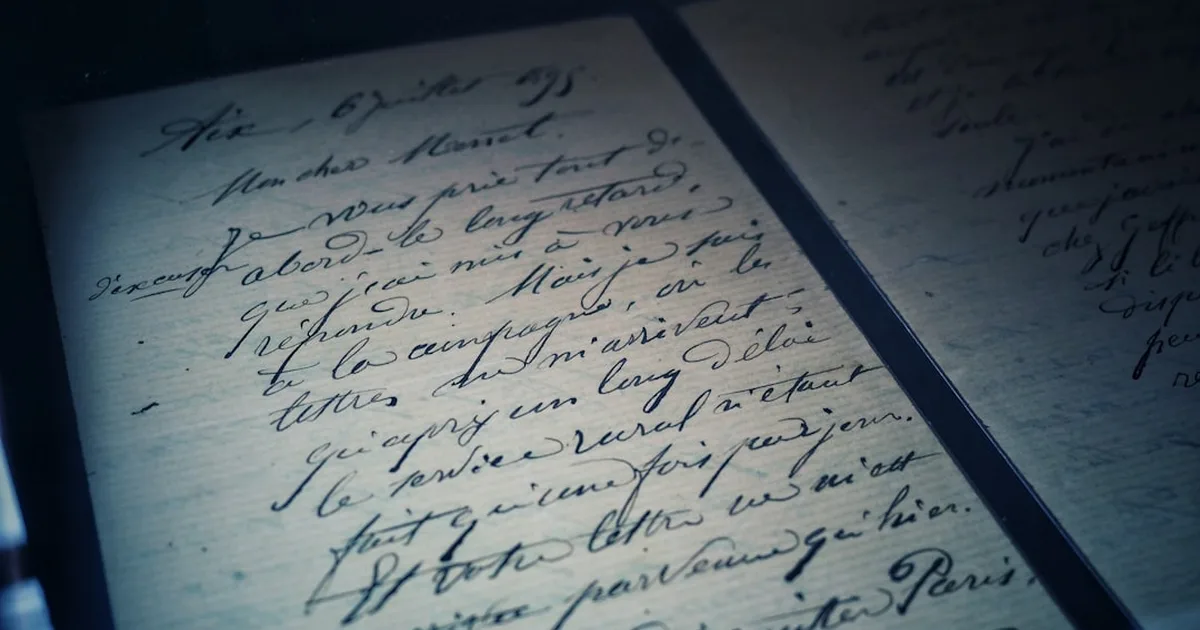
In our digital age where messages exchange at lightning speed, we've sometimes lost the deeper meaning of written communication. Handwritten letters, those tangible witnesses of our affection and faith, seem to belong to a bygone era. Yet the epistolary tradition constitutes a precious treasure in Christian history, a privileged means of sharing our spiritual journey.
Letters in Biblical Tradition
The Bible itself offers us beautiful examples of spiritual correspondence. The New Testament epistles represent an essential form of communication among the early Christian communities. The apostle Paul, for instance, wrote letters that have crossed centuries to teach us still today. These writings weren't mere messages, but true pastoral teachings, encouragements, and fraternal corrections.
"Although I hope to come to you soon, I am writing you these instructions so that, if I am delayed, you will know how people ought to conduct themselves in God's household, which is the church of the living God, the pillar and foundation of the truth." (1 Timothy 3:14-15, NIV)
The Spiritual Value of Handwriting
Taking time to write a letter represents a concrete act of love. Each chosen word, each carefully formulated sentence testifies to the importance we place on our correspondent. In our Christian life, this practice can become a true ministry:
- Encouraging a brother or sister going through trials
- Sharing a biblical discovery that illuminated our path
- Expressing gratitude for service rendered in the Church
- Passing on our faith testimony to future generations
Pope León XIV, in his recent exhortation, emphasized the importance of "small attentions" in building Christian community. These simple gestures, like writing a letter, contribute to weaving authentic bonds between believers.
Madame de Sévigné: A Model of Authentic Communication
The Marquise de Sévigné, whose 400th birth anniversary we celebrate, offers us a remarkable example of rich and profound correspondence. Her letters to her daughter aren't simple family news, but true soul-sharing, reflections on life, faith, and human relationships. She demonstrates how writing can become a space for truth and intimacy.
In our Christian context, we can draw inspiration from this approach to deepen our spiritual exchanges. A letter allows developing a thought, nuancing a teaching, sharing a meditation in all its depth.
Reviving Christian Correspondence
How can we, today, cultivate this precious art of correspondence? Here are some practical suggestions:
- Set aside specific time each month to write to a member of your community
- Create an epistolary prayer journal where you note people you wish to intercede for in writing
- Organize a letter exchange between generations in your parish
- Use postcards during your travels to share the beauties of divine creation
"Let the message of Christ dwell among you richly as you teach and admonish one another with all wisdom through psalms, hymns, and songs from the Spirit, singing to God with gratitude in your hearts." (Colossians 3:16, NIV)
A Reflection for Today
As we live in a world of instant communication, rediscovering the art of handwritten correspondence can become a prophetic act. It's not about rejecting technology, but complementing it with deeper forms of communication. In an age where relationships often become superficial, a lovingly written letter can be a ray of light, a tangible reminder that every person is valuable in God's eyes. Pope León XIV invites us to value these small gestures that build community. Perhaps today is the perfect day to take paper and pen, and bless someone with words that will endure through time.





Comments