
In an era marked by rapid social, political, and cultural changes, many Christians seek to understand the deeper meaning of history and the role of faith in the world. A term that sometimes emerges in these discussions is "katechon," a Greek word found in the Second Letter to the Thessalonians. What does it mean? Why is it relevant for believers today? In this article, we will explore the concept of katechon, its biblical foundation, and its possible significance for contemporary Christian life, without falling into political or theoretical extremes, but maintaining a pastoral and accessible perspective.

The term katechon comes from the Greek verb κατέχω (katechō), meaning "to hold back," "to restrain," or "to hinder." In Christian tradition, it has been interpreted as a force or entity that delays the final coming of the Antichrist and, consequently, the end of times. But to fully understand this concept, we must return to the Scriptures and the reflection of the Church Fathers.
The biblical foundation: 2 Thessalonians 2:6-7
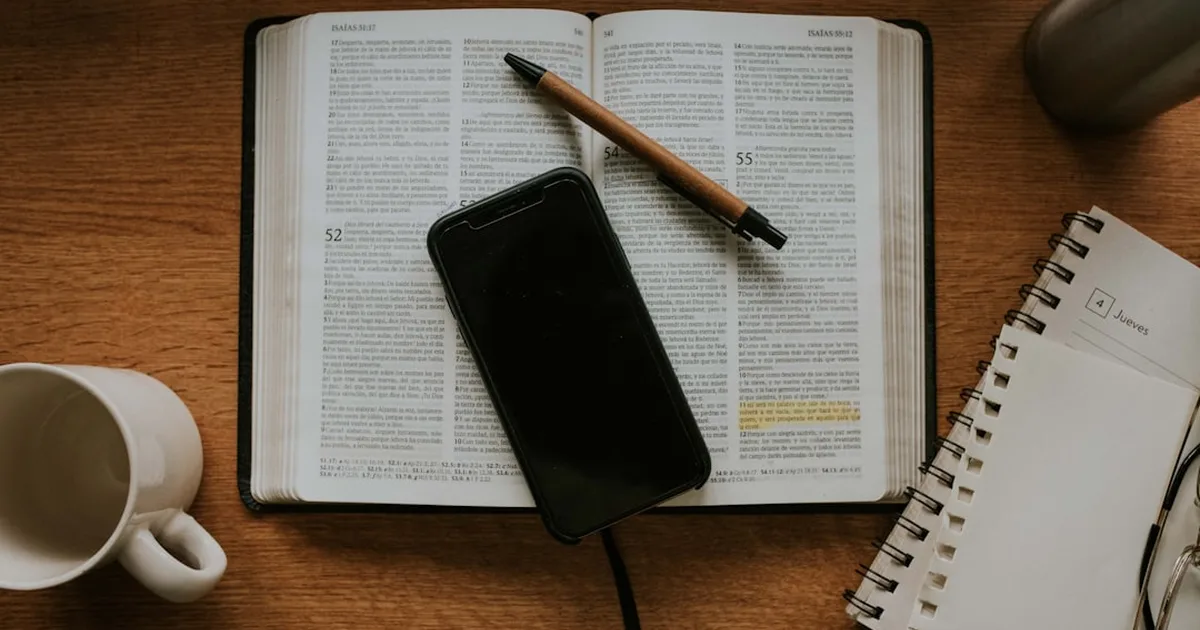
The only biblical passage where the term katechon appears is in Paul's Second Letter to the Thessalonians. Writing to a community concerned about the imminent return of Christ, Paul clarifies that before the parousia (the second coming of Christ) there will be a period of apostasy and the appearance of the man of lawlessness, the Antichrist. However, Paul states that there is something that "restrains" (katechon) this event: "And you know what is restraining him now so that he may be revealed in his time. For the mystery of lawlessness is already at work; only he who now restrains it will do so until he is out of the way" (2 Thessalonians 2:6-7, ESV).
Paul does not specify what or who this "restrainer" is, leaving room for various interpretations. Some Church Fathers, like Tertullian, identified the katechon with the Roman Empire, which through its law and order prevented the spread of evil. Others, like Augustine, saw in it a spiritual force or the Church itself. Over the centuries, the concept has been taken up by theologians, philosophers, and even political thinkers, often in very different ways.
"For the mystery of lawlessness is already at work; only he who now restrains it will do so until he is out of the way" (2 Thessalonians 2:7, ESV).
The katechon in the history of Christian thought
From the Church Fathers to the Middle Ages
In the early centuries of Christianity, the identification of the katechon with the Roman Empire was common. Christians prayed for the emperor and for the stability of the empire, seeing it as a bulwark against chaos and the Antichrist. With the fall of the Western Roman Empire, this interpretation lost strength but did not disappear entirely. In the Middle Ages, the concept was sometimes associated with the Holy Roman Empire or the figure of the Christian emperor.
Thomas Aquinas, though not dedicating an in-depth analysis to the katechon, mentions it in his exegesis of 2 Thessalonians, suggesting that the "restrainer" might be the secular power that prevents the spread of apostasy. However, for Thomas, the main focus remains God's sovereignty over history.
The katechon in modern and contemporary thought
In the 20th century, the concept was taken up by theologians like Erik Peterson and, in the political sphere, by jurist Carl Schmitt. Schmitt saw in the katechon a force that delays the end of the world and can be embodied by political or religious institutions. This view has also influenced contemporary thinkers, such as Russian philosopher Aleksandr Dugin, who has integrated the katechon into a traditionalist geopolitical vision. However, it is important to note that these interpretations go beyond the simple biblical data and often reflect particular political agendas.
For the average Christian, it is essential to distinguish between philosophical speculations and the central message of Scripture. The katechon is not a concept that should generate anxiety or lead us to seek hidden forces in history. Rather, it reminds us that God is in control and that, while we await Christ's return, we are called to be agents of his love and justice in the world.
In a pastoral sense, every Christian can see themselves as a miniature "katechon": someone who, through faith and actions, "holds back" the spread of evil in their surroundings. Prayer, community, service, and witness are concrete ways to exercise this restraining force. It is not a political theory but a call to Christian responsibility.
Thus, the katechon invites us to reflect on our role in history. Instead of passively waiting for the end, Christians are called to be light in the midst of darkness, to build peace and justice, and to be witnesses of God's love in every age. As Paul says, "let us not grow weary of doing good" (Galatians 6:9), for that is the best way to prepare for the Lord's coming.



Comments