
In Christian life, liturgical celebration represents a privileged moment of encounter with the divine. It's not merely a ritual to perform, but an active participation in the mystery of salvation. As Romans reminds us: "Therefore, I urge you, brothers and sisters, in view of God's mercy, to offer your bodies as a living sacrifice, holy and pleasing to God—this is your true and proper worship" (Romans 12:1 NIV). These words invite us to understand how every celebration is a total offering of ourselves to God.
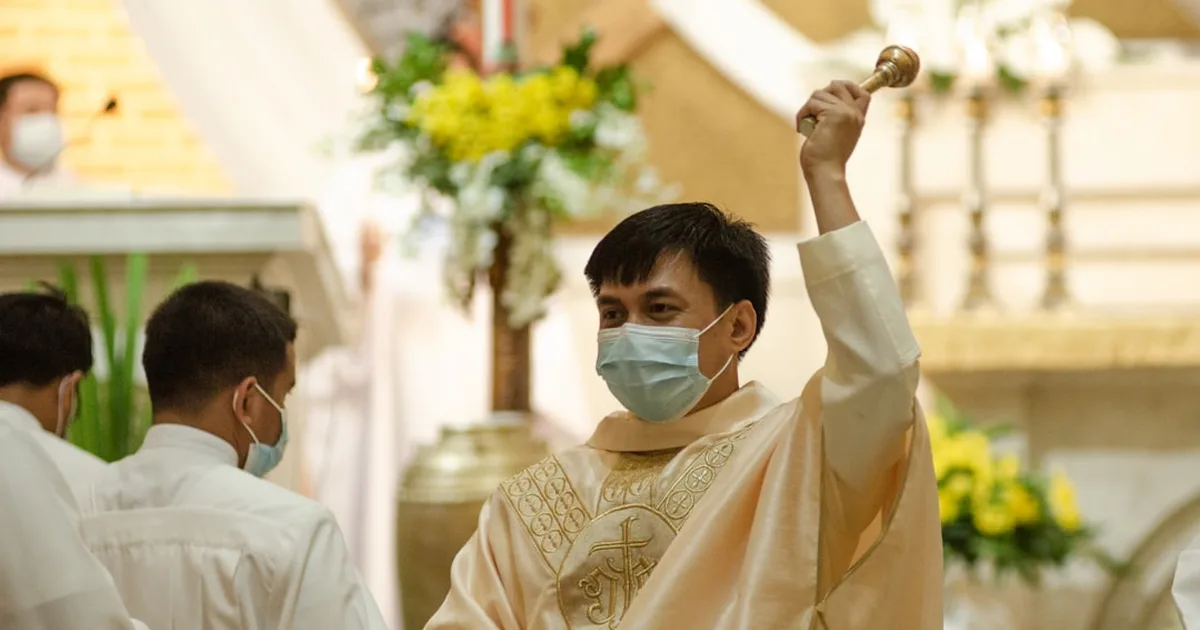
In an age where individualism seems to dominate many aspects of society, liturgy calls us to rediscover the beauty of communion. We are not passive spectators, but living members of Christ's body, called to participate with our whole being. Pope León XIV, in his first homily after election, emphasized precisely this aspect: "The liturgy is not ours, it is Christ's. We are servants of this great mystery."
This vision helps us overcome a purely aesthetic or ritualistic conception of celebration. Liturgy thus becomes a school of Christian life, a place where we learn to conform our existence to the Gospel. Every gesture, every word, every silence acquires profound meaning when lived with awareness of God's presence.
The Art of Service: When the Minister Becomes Transparent
One of the most fascinating aspects of liturgical service is the minister's ability to become "transparent" so that Christ may shine through. This isn't about negating one's personality, but placing it at the service of the mystery being celebrated. As Saint Paul writes: "I have been crucified with Christ and I no longer live, but Christ lives in me" (Galatians 2:20 NIV).
This "art of disappearing" is not self-denial, but the fullness of realization in one's received vocation. The liturgical minister, whether priest, deacon, or extraordinary minister, is called to be a channel of grace, not its source. Their preparation, devotion, and attention to detail aren't ends in themselves, but serve to create the best conditions for the assembly to encounter the Lord.
In this context, liturgical formation takes on fundamental importance. Knowing the rites isn't enough—one must understand their deep meaning. As the apostolic exhortation Sacrosanctum Concilium suggests, "the liturgy is the primary and indispensable source from which the faithful are to derive the true Christian spirit." The minister's preparation thus becomes service to the entire community.
Beauty That Leads to Truth
Attention to detail in liturgical celebration isn't formalism, but an expression of love. Every gesture, word, and silence contributes to creating an atmosphere where the mystery can be received. The beauty of celebrations isn't an end in itself, but a path leading to Christ's truth.
When everything is prepared with love and competence, the assembly can focus on what's essential without being distracted by imperfections or negligence. The minister who serves discreetly and efficiently allows the community to lift their hearts to God without hindrance. In this sense, the minister's "disappearance" is the most eloquent sign of their perfect service.
Liturgy as a School of Spiritual Life
Active participation in liturgy doesn't end with the celebration itself, but extends into daily life. As Vatican II states, "from the liturgy, especially from the Eucharist, grace is poured forth upon us as from a fountain, and the sanctification of men in Christ and the glorification of God to which all other activities of the Church are directed are achieved with maximum effectiveness."
This integral vision helps us overcome the separation between "sacred time" and "profane time." What we experience in celebration should permeate our entire existence, transforming how we relate to God, others, and the world. Liturgy educates us in an incarnate spirituality that finds in concrete service the most authentic expression of Christian love.
Liturgical service, lived with this depth, becomes a school of humility and self-giving. We learn that the true protagonist of our lives is Christ, and that our greatest fulfillment lies in making space for Him to act through us. This is the deepest beauty of service: discovering that when we step back, Christ can shine with all His splendor.





Comments