
In recent months, the synodal process has raised deep questions about the Church's doctrine and pastoral practice. Among the most discussed topics, marriage and the family have taken center stage, with authoritative voices expressing concerns about possible relativistic shifts. In this article, we offer a calm and constructive reflection, in light of Scripture and Christian tradition, to help readers understand the challenges and opportunities of this historic moment.
The Biblical Foundation of Marriage
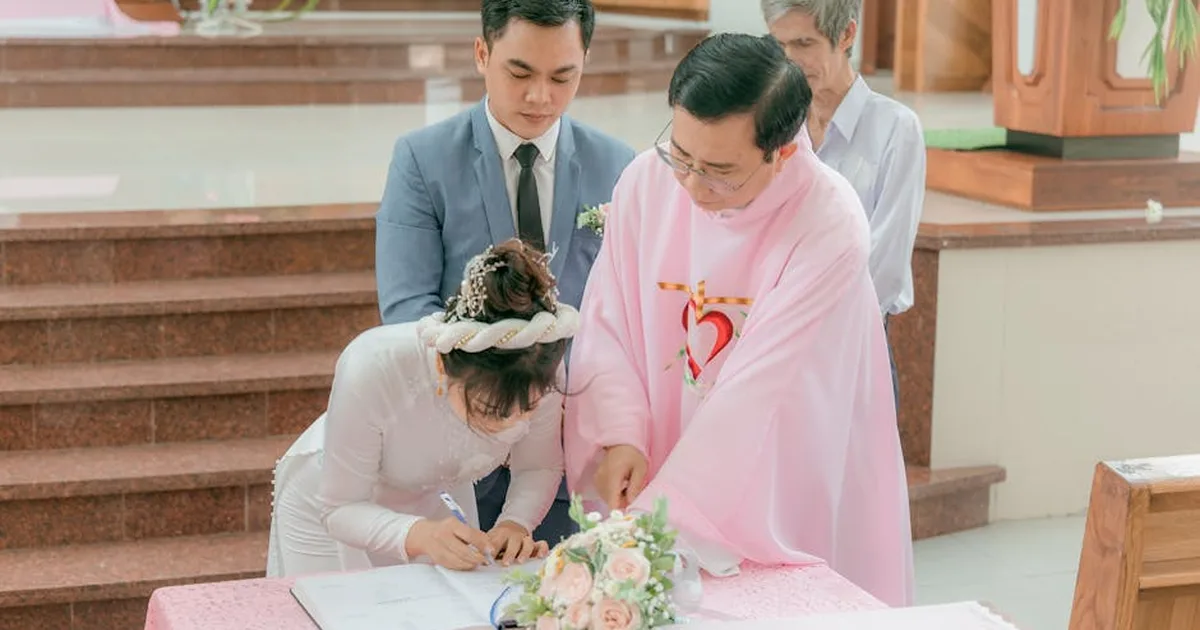
The Bible presents marriage as an institution willed by God from creation. In the book of Genesis we read: “Therefore a man shall leave his father and his mother and hold fast to his wife, and they shall become one flesh” (Genesis 2:24, ESV). Jesus himself recalls this principle, stating, “What therefore God has joined together, let not man separate” (Matthew 19:6, ESV). Christian tradition has always seen marriage as a sacrament, a sign of Christ's unfailing love for his Church (Ephesians 5:31-32).
This vision is not merely doctrinal; it touches people's concrete lives. Christian marriage is called to be a school of faithful love, open to life, and rooted in God's grace. In an era of profound cultural change, the Church is called to propose this ideal with clarity and tenderness, without yielding to compromises that would distort its meaning.
The Synodal Document and Reactions
The final report of Study Group 9 of the Synod on Synodality addressed sensitive topics such as homosexuality and so-called blessings of same-sex couples. Some theologians and pastors, including Cardinal Gerhard Ludwig Müller, have voiced strong criticism, speaking of a heretical relativization of marriage. Without entering into the merits of individual statements, it is important to recognize that the debate touches the heart of the Christian faith: faithfulness to divine revelation and listening to the Holy Spirit in history.
The Church, led by the Spirit, is called to discern the signs of the times without ever betraying the deposit of faith. As the Apostle Paul writes: “Test everything; hold fast what is good” (1 Thessalonians 5:21, ESV). Open and respectful dialogue is necessary, but it must always have the Word of God and authentic magisterium as its reference point.
Pastoral Care of Mercy and Truth
It is not a matter of opposing mercy and truth, for both find their full expression in Jesus Christ. Pope Francis, who concluded his pontificate on April 21, 2025, often reminded us that the Church is a field hospital, called to heal humanity's wounds. The current Pontiff, Leo XIV, elected in May 2025, has also emphasized the importance of a pastoral approach that welcomes everyone without confusing good and evil.
The challenge is to accompany people with love, offering them the fullness of Christian truth. As we read in the First Letter of Peter: “Always be prepared to make a defense to anyone who asks you for a reason for the hope that is in you; yet do it with gentleness and respect” (1 Peter 3:15-16, ESV). The Church cannot bless what Scripture calls sin, but it can and must bless every person who seeks God with a sincere heart.
An Invitation to Prayer and Discernment
Faced with these complex issues, every Christian is called to pray and study God's Word. The psalmist reminds us: “Your word is a lamp to my feet and a light to my path” (Psalm 119:105, ESV). Let us ask the Holy Spirit to enlighten the whole Church, so that she may proclaim with courage and love the Gospel of marriage and the family.
We conclude with a question for your personal reflection: how can we, in our communities and families, witness to the beauty of God's plan for love?





Comments