
In the 9th century, the city of Córdoba in Andalusia was a place where Christian communities lived under Muslim rule. This period, often referred to as Muslim Spain, was characterized by a sometimes fragile coexistence between different faiths. Christians, although tolerated to some extent, had to navigate carefully to express their faith. They were subject to restrictions and social pressures that could make their witness particularly risky. In this climate, every word spoken in public could have serious consequences, especially when it touched on fundamental religious questions. Daily life therefore required great discretion while maintaining an inner faithfulness to Christ.
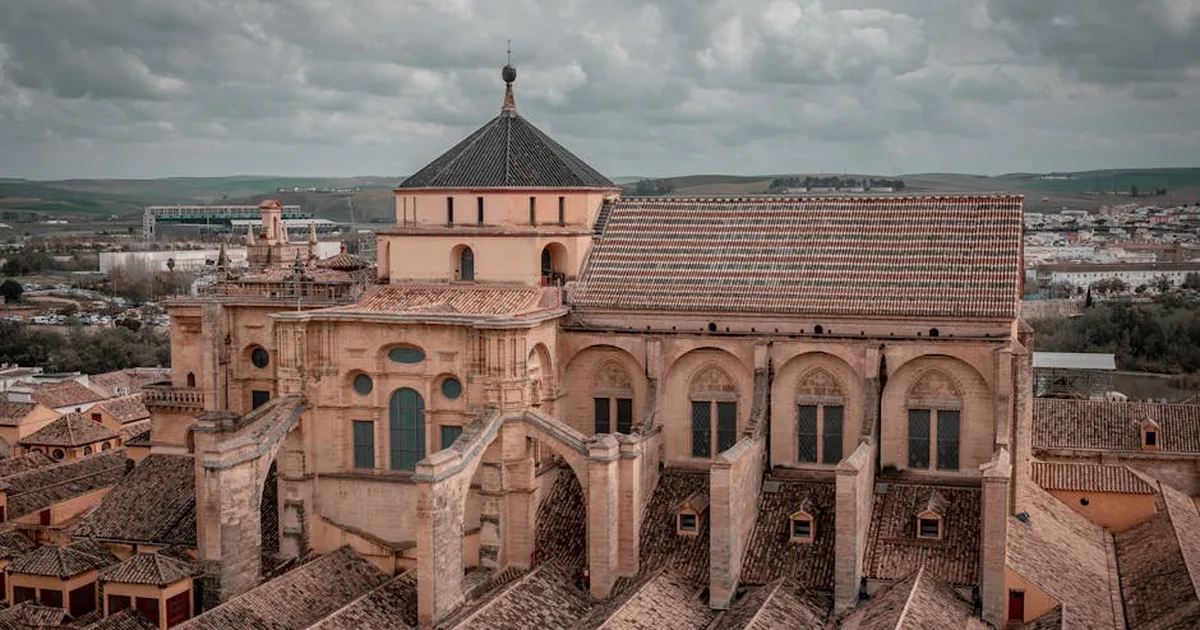
Historical accounts tell us that many Christians of that time chose to live their faith courageously despite the dangers. Some opted for martyrdom rather than deny their convictions. These witnesses, including Saint Perfectus, left a spiritual legacy that continues to inspire believers today. Their example reminds us that faithfulness to God can sometimes demand a high price, but it remains a powerful testimony of divine love. As the Apostle Paul emphasizes in his letter to the Romans:
“Who shall separate us from the love of Christ? Shall tribulation, or distress, or persecution, or famine, or nakedness, or danger, or sword?” (Romans 8:35, ESV)This word resonates particularly in the context of Saint Perfectus’s life.
The Account of Saint Perfectus’s Martyrdom
Tradition recounts that Saint Perfectus, a priest in Córdoba, was approached one day on the street by two men who presented themselves as seekers of truth. They asked him questions about Muhammad and Jesus Christ, claiming to want to understand the differences between Islam and Christianity. Wary of this sudden request, the priest perceived the potential danger of such an exchange. He knew that any explicit criticism of Islam could be severely punished. Yet, driven by his conscience and faith, he chose to answer frankly.
Saint Perfectus clearly explained his belief in Jesus Christ as Savior and Son of God, while expressing his reservations about Muhammad’s prophetic mission. The two men listened attentively, then walked away without showing an immediate reaction. This apparent calm was short-lived. A few days later, Saint Perfectus was denounced to the authorities for his statements. Summoned before a Muslim court, he was questioned about what he had said. Facing his judges, he did not seek to retract or soften his words. On the contrary, he publicly reaffirmed his Christian faith with renewed conviction.
This courageous witness earned him a death sentence. Imprisoned and then executed, likely by beheading, he thus joined the long list of Córdoba’s martyrs. His sacrifice fits within a period when many Christians gave their lives to remain faithful to Christ. Their collective memory has left a lasting mark on the Church, reminding us that faith can triumph even in the most difficult circumstances. As the Apostle John writes:
“Do not love the world or the things in the world. If anyone loves the world, the love of the Father is not in him.” (1 John 2:15, ESV)This warning against excessive attachment to the world finds particular echo in Saint Perfectus’s choice to preserve his spiritual integrity.
The Spiritual Meaning of Martyrdom
The martyrdom of Saint Perfectus should not be interpreted as a mere act of bravado or provocation. It is first and foremost a profound testimony of faithfulness to God. In Christian tradition, martyrdom represents the ultimate expression of love and surrender, following Christ’s example on the cross. Saint Perfectus, by choosing the truth of his faith over his own life, shows us that there are values that transcend earthly existence. His story invites us to reflect on what it truly means to be a disciple of Jesus in a world that often challenges our deepest convictions. In an age where faith can be tested in various ways, the example of this Córdoban martyr remains a light guiding believers toward a more authentic and courageous commitment.





Comments