
On this day when we remember Saint Maximus, we contemplate a page of Christian history that continues to speak to our hearts. In the third century, in imperial Rome, men and women chose to follow Christ at the cost of their lives. Maximus, along with Tiburtius and Valerian, belongs to those witnesses whose courage still illuminates our path of faith today.
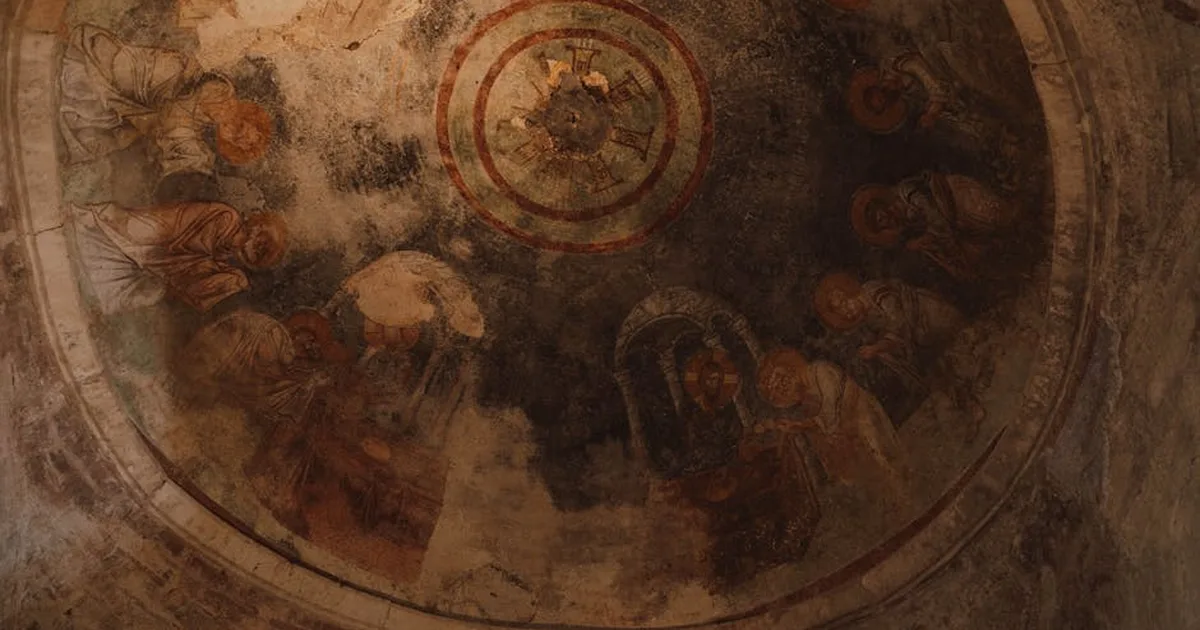
The Historical Context of Early Christians
To understand the significance of their witness, we must immerse ourselves in that era when being Christian often meant risking one's life. The Roman Empire, with its diversity of cults, looked unfavorably upon those who refused to participate in official rites. Christians, through their attachment to the one God revealed in Jesus Christ, often found themselves at odds with the social and political demands of their time.
Persecution was not constant nor uniform, but it loomed as a real threat. In this climate, every confession of faith became an act of courage. As the apostle Paul reminds us:
"For I am not ashamed of the gospel, because it is the power of God that brings salvation to everyone who believes: first to the Jew, then to the Gentile." (Romans 1:16, NIV)
The Silent Witness of the Catacombs
The Cemetery of Praetextatus, on the Appian Way, is not merely a burial place. It becomes, for historians and believers alike, a mute but eloquent witness to the faith of the early centuries. In these underground galleries, Christians buried their dead and sometimes gathered to celebrate the Eucharist, away from hostile eyes.
This archaeological site reminds us that the early Church often grew in discretion, sometimes in secrecy, but always in faithfulness. The inscriptions found, the symbols carved in stone – the fish, the anchor, the Good Shepherd – speak of a hope that could not be stifled, even by the threat of death.
The Communion of Saints in Trial
What strikes us in the account concerning Maximus is that he is never presented alone. He is always mentioned with Tiburtius and Valerian. This association is not accidental: it reminds us that Christian faith is lived and witnessed in community. Even in the ultimate trial, these martyrs were not alone.
This communal dimension of faith finds its echo in Scripture:
"Carry each other's burdens, and in this way you will fulfill the law of Christ." (Galatians 6:2, NIV)
Their common martyrdom teaches us several precious truths:
- Faith is strengthened through mutual support
- Witness takes on a special dimension when shared
- The communion of saints transcends eras and circumstances
Faithfulness to the Point of Sacrifice
The ancient sources concerning Maximus and his companions are sober, as is often the case with martyrs of the early centuries. But this very sobriety is eloquent: it tells us the essential. These men preferred death to the denial of their faith. They chose to remain faithful to Christ, even when that choice meant losing their lives.
This radicality may seem distant to us, in our societies where religious freedom is generally respected. Yet their example continues to challenge us. It reminds us that faithfulness to Christ is not one option among others, but the fundamental commitment of every Christian life.
The apostle Peter, who would himself know martyrdom, writes these words that resonate particularly with Maximus's witness:
"Dear friends, do not be surprised at the fiery ordeal that has come on you to test you, as though something strange were happening to you." (1 Peter 4:12, NIV)
An Enduring Legacy
The memory of Saint Maximus and his companions invites us to reflect on our own faithfulness. In a world that often prioritizes immediate success and comfort, their example challenges us to stand firm in what is essential. Their witness, engraved in the history of the Church, remains a light for all who seek to live their faith with consistency and courage.





Comments