
In an era marked by conflicts, inequalities, and a constant pursuit of power, the figure of Saint Francis of Assisi stands out as a beacon of light. His life, lived in poverty and fraternity, continues to speak to the heart of contemporary people. He is not just a saint of the past, but a prophet whose testimony questions our daily choices. As Christians, we are called to rediscover the revolutionary power of the Gospel that Francis embodied.
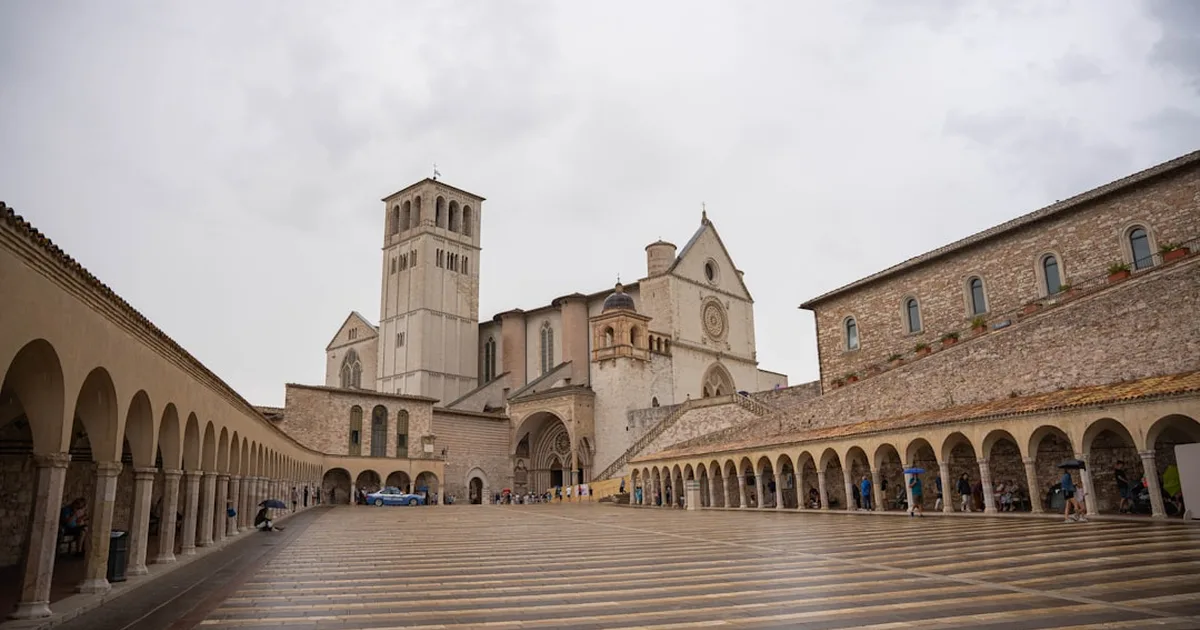
The Franciscan message has never been more relevant. In a world where might often makes right, smallness, meekness, and peace become signs of contradiction. Francis, calling himself pauperculus, chose the way of weakness, which the world considers foolishness but God sees as wisdom. As the apostle Paul writes: “God chose the weak things of the world to shame the strong” (1 Corinthians 1:27, NIV).
This provocation is still needed. We need voices that remind us that true greatness lies in service, not in domination. Francis did not try to change the world with weapons or political power, but with the power of love and humility. And this is a message that every generation must rediscover.
Fraternity as a Social Revolution
One of the most innovative aspects of the Franciscan charism is its vision of fraternity. In the Middle Ages, society was rigidly divided into social classes: nobles, serfs, burghers. Francis and his followers broke down these barriers, creating a community where everyone was considered brothers and sisters, regardless of their background. This was a subversive act that challenged the power structures of the time.
Today, fraternity is still a challenge. We live in a world marked by divisions: poverty and wealth, racism, gender discrimination. The Church is called to be a sign of unity, as Saint Paul reminds us: “There is neither Jew nor Gentile, neither slave nor free, nor is there male and female, for you are all one in Christ Jesus” (Galatians 3:28, NIV). Francis invites us to live this unity not just in words, but with concrete actions.
One example is the figure of John the Simple, a peasant who walked alongside Bernard of Quintavalle, a wealthy man. Their friendship was a prophetic sign in a divided world. Today, we can ask ourselves: in our communities, are we able to welcome everyone without distinction? Franciscan fraternity is not an abstract ideal, but a reality to be built every day.
Smallness as a Path to Salvation
Saint Francis called himself pauperculus, a little poor one. This was not false humility, but a deep awareness of his own identity before God. He knew that salvation does not come from human strength, but from God's grace. As the Psalm says: “The Lord is near to the brokenhearted and saves the crushed in spirit” (Psalm 34:18, ESV).
In our society, which exalts success, wealth, and appearance, smallness is seen as a defeat. But for the Gospel, it is a beatitude: “Blessed are the poor in spirit, for theirs is the kingdom of heaven” (Matthew 5:3, ESV). Francis lived this beatitude radically, stripping himself of everything to embrace poverty. And his joy was complete.
Today, we can learn from him not to be afraid of being small. It is not about seeking material poverty for its own sake, but about living with a free heart, without attachment to earthly goods. True wealth is the love of God and communion with our brothers and sisters. Francis shows us that the way of the cross is also the way of resurrection.
Carlo Acutis: Another Witness of Grace
In the diocese of Assisi, alongside the Poor Little One, the figure of Carlo Acutis now shines, a young b





Comments