
In this spring of 2026, the words of the Holy Father resonate with particular relevance. In an address delivered before the Pontifical Academy of Social Sciences, Pope Leo XIV, successor to the late Pope Francis, offered a profound reflection on the ethical foundations of political life. His message, delivered with the pastoral wisdom that characterizes him, invites us to consider contemporary challenges to democracy in light of a Christian vision of the human person.
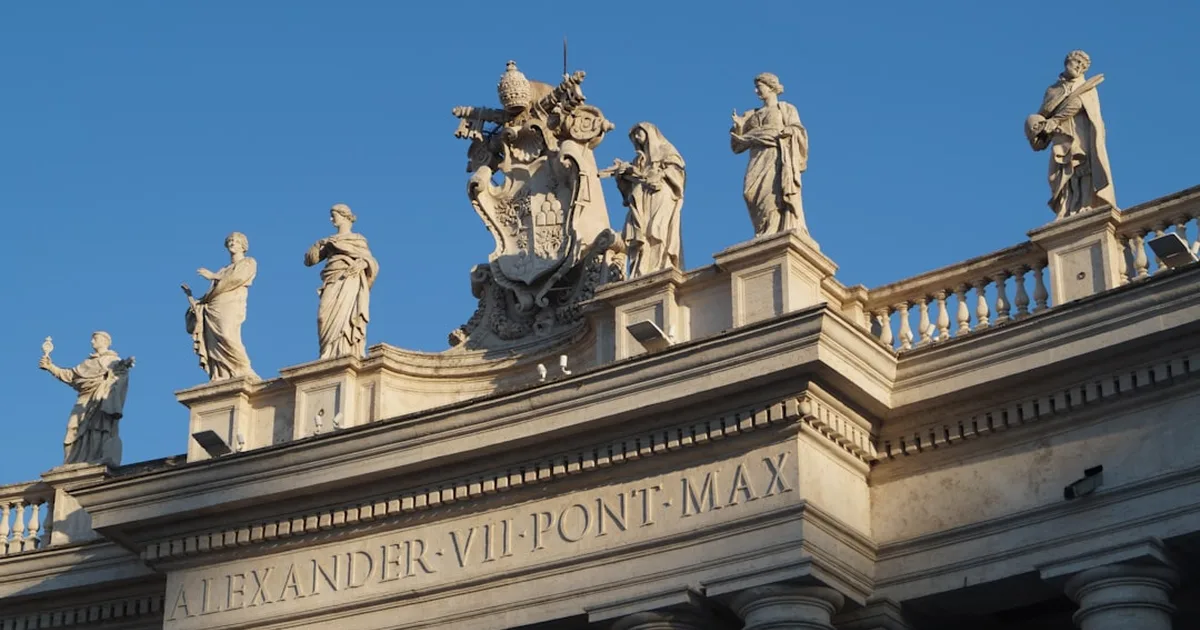
The Supreme Pontiff, elected in May 2025, thus continues the magisterium of his predecessors by reminding us that any social organization worthy of the name must place the human person at the center of its concerns. In a world where geopolitical balances are being reconfigured and technologies are transforming our relationships, these words illuminate our common path.
Power in Service of the Common Good
From the opening lines of his address, Pope Leo XIV establishes a fundamental principle: political authority is not an end in itself, but a means ordered toward the good of all. This affirmation, rooted in Christian philosophical and theological tradition, reminds us that the legitimacy of power is measured not by its apparent strength, but by its capacity to truly serve the community.
The Holy Father develops this idea by emphasizing that the exercise of power requires wisdom and virtue. He particularly mentions the cardinal virtues of justice, fortitude, and temperance. The latter, often neglected in contemporary political discourse, is presented as an essential safeguard against authoritarian drift and the pride of power.
This approach is part of the Church's rich tradition of social thought, dating back to the Church Fathers and finding systematic expression in Saint Thomas Aquinas. It reminds us that politics is not an autonomous sphere, detached from moral demands, but fully participates in the search for true good for persons and societies.
The Foundations of Authentic Democracy
Pope Leo XIV then specifies what constitutes, according to the Christian vision, the bases of a democracy worthy of the name. He affirms that such a democracy "recognizes the dignity of every person and calls each citizen to participate responsibly in the pursuit of the common good." This definition highlights two essential dimensions: recognition of the inherent dignity of every human being and the call to active and responsible participation by all.
The Holy Father cites in this regard his predecessor Saint John Paul II, who reminded us that democracy allows us "to elect and control those who govern." This dimension of control and accountability of rulers is essential to prevent abuses of power. However, Pope Leo XIV insists that these institutional mechanisms, while necessary, are insufficient to guarantee the health of a democratic system.
The papal reflection warns against two pitfalls that threaten contemporary democracies. On one hand, "the tyranny of the majority" where minority rights are sacrificed on the altar of dominant opinion. On the other hand, a more insidious phenomenon: the hidden domination of economic and technological elites who, under the guise of formal democratic processes, steer decisions according to their particular interests.
Rooted in Moral Law
Facing these risks, the Pope proposes an essential remedy: rooting democracy in moral law and in an authentic vision of the human person. This affirmation aligns with biblical teaching that reminds us of the ultimate foundations of all legitimate authority. As the Apostle Paul proclaims: "Let every person be subject to the governing authorities. For there is no authority except from God, and those that exist have been instituted by God" (Romans 13:1, ESV). This fundamental truth calls us to recognize that all human authority is subordinate to divine authority and must be exercised in conformity with the moral law that God has inscribed in every human heart.
Pope Leo XIV emphasizes that this moral law is not an arbitrary imposition, but the expression of God's creative wisdom, which seeks the true good of humanity. When societies lose sight of this transcendent reference, they risk falling into moral relativism, where everything becomes permissible and where the most fundamental human rights can be violated in the name of particular interests or circumstantial majorities.
The Holy Father's teaching invites us to cultivate a mature moral conscience, capable of discerning good from evil not only in personal life, but also in the collective decisions that shape our common future. This formation of conscience is an urgent task for all Christians engaged in public life, as well as for all people of good will who seek to build more just and fraternal societies.





Comments