
On an April evening, as twilight descended upon the Eternal City, Pope Leo XIV offered the Church and the world a sign of hope. Before St. Peter's Basilica, the Holy Father paused among the faithful before entering for the Rosary prayer for peace. This simple yet profound gesture reminded us all that faith does not live only in sacred places, but manifests itself especially in the encounter between people.
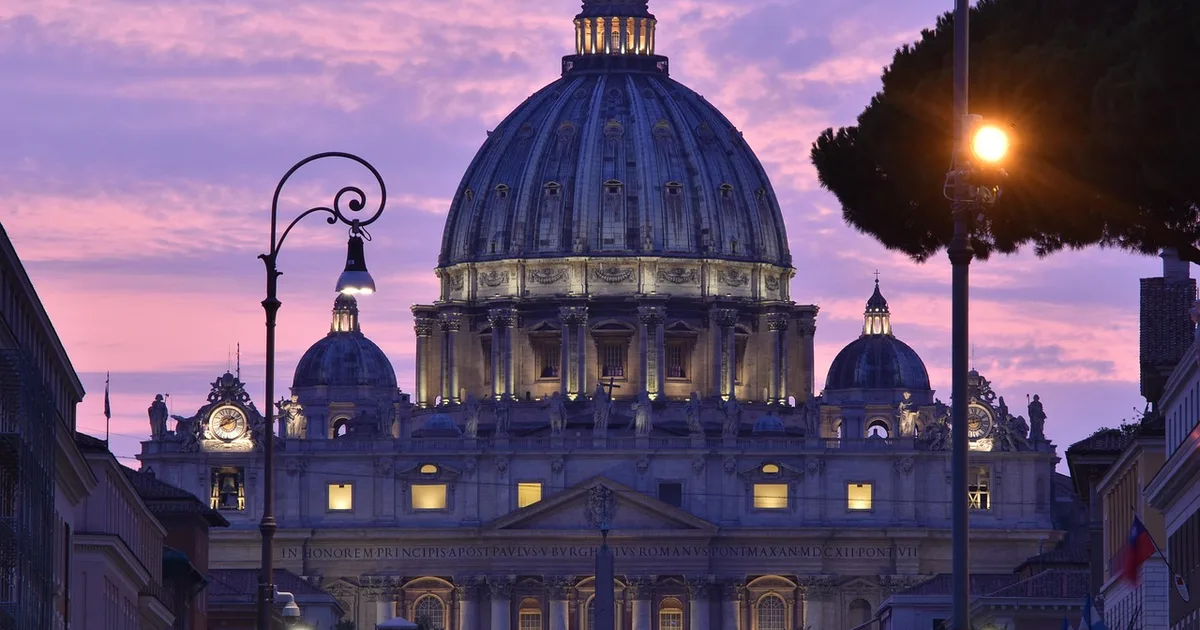
With words that resonated in the hearts of listeners, the Pontiff stated: "Peace is not a utopia, but a concrete possibility that arises when we recognize in every person, of any religion or culture, a brother or sister." These words invite us to reflect on the Gospel message of unity in diversity, a theme dear to the entire Christian tradition.
The Prayer That Transforms the Heart
Inside the basilica, illuminated by participants' candles, Pope Leo XIV developed a deep reflection on the authentic meaning of prayer. "The Rosary is not an escape from responsibilities," he explained, "but rather a school of compassion that prepares us to be peacebuilders in daily life."
This vision reminds us of the words of the apostle Paul: "Do not be anxious about anything, but in every situation, by prayer and petition, with thanksgiving, present your requests to God. And the peace of God, which transcends all understanding, will guard your hearts and your minds in Christ Jesus" (Philippians 4:6-7). Prayer does not isolate us from the world, but gives us strength to transform it with love.
An Appeal to World Leaders
In a particularly moving passage of his address, the Holy Father spoke directly to world leaders: "In the face of the drama of war and violence, I ask you with all my heart: Stop! Listen to the cry of the innocent, of children, of the elderly who pay the highest price of conflicts."
This appeal resonates with Isaiah's prophecy: "They will beat their swords into plowshares and their spears into pruning hooks. Nation will not take up sword against nation, nor will they train for war anymore" (Isaiah 2:4). The biblical vision of peace is not passive, but requires courageous and constant commitment.
The International Context
The prayer vigil took place at a time of particular tension in international relations. A few days earlier, Pope Leo XIV had expressed concern about threats of military escalation in the Middle East, emphasizing how every conflict especially affects the most vulnerable.
The Pontiff recalled that "beyond questions of international law, there exists a fundamental moral dimension: respect for the dignity of every human person, created in the image and likeness of God." This perspective invites us to look beyond political divisions to recognize the sacred value of every human life.
Prayer as Responsible Action
One of the most significant aspects of Pope Leo XIV's reflection was the connection between prayer and concrete commitment. "Praying the Rosary for peace," he affirmed, "means taking responsibility to be instruments of reconciliation in one's own family, community, and nation."
This vision echoes Jesus' words in the Sermon on the Mount: "Blessed are the peacemakers, for they will be called children of God" (Matthew 5:9). The beatitude does not promise a future reward, but reveals a present truth: those who build peace already participate in divine sonship.
The Rosary: School of Contemplation and Compassion
Pope Leo XIV offered a beautiful meditation on the meaning of the Rosary in Christian life. "Through the joyful, sorrowful, glorious, and luminous mysteries," he explained, "we learn to contemplate Christ's life and develop a compassionate heart toward our brothers and sisters."
The Holy Father continued: "Each Hail Mary is like a step toward interior peace, which then radiates to the world around us. The loving repetition of prayers helps us focus on what is essential and open ourselves to the Holy Spirit's action."
This teaching invites us to rediscover the Rosary not as a mechanical practice, but as a spiritual path that transforms us from within and enables us to be agents of reconciliation in a fragmented world.





Comments