
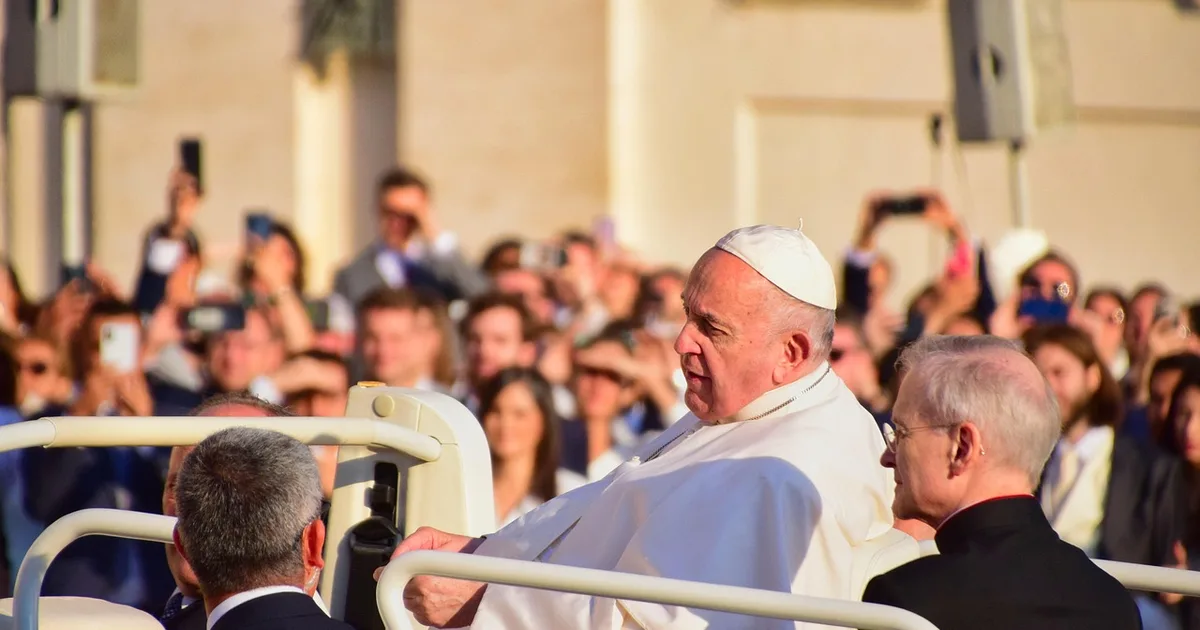
In these complex times, the worldwide Christian community is attentively observing the ministry of Pope Leo XIV, elected in May 2025 following the passing of Pope Francis. His service comes at a particularly delicate historical moment, where international tensions and social divisions test our capacity for dialogue and reconciliation.
The Language of Conscience
Recently, some statements from the Holy Father have generated reactions in the international political arena. Pope Leo, in his prayer for peace held in St. Peter's Square, expressed concern about what he called "a delirium of omnipotence" that makes the world "a nightmare." He further denounced how "the holy Name of God" is sometimes "dragged into discourses of death," issuing a strong call: "Enough with the idolatry of self and money! Enough with the display of force! Enough with war!"
These words, spoken with pastoral yet firm tone, do not constitute a personal attack against any political leader, but rather a universal appeal to Gospel values. As the prophet Micah reminds us:
"He has shown you, O mortal, what is good. And what does the Lord require of you? To act justly and to love mercy and to walk humbly with your God" (Micah 6:8 NIV).
The Prophetic Role of the Church
The Church, in its diverse ecumenical expressions, has always played a prophetic role in society. This doesn't mean taking political sides, but reminding everyone - rulers and the ruled - of the fundamental principles of human dignity, justice, and peace.
When religious leaders raise their voices on moral issues, they do so as service to all humanity, not as opposition to specific political figures. The prophet Jeremiah reminds us of the need to speak courageously:
"Perhaps they will listen and each will turn from their evil ways. Then I will relent and not inflict on them the disaster I was planning because of the evil they have done" (Jeremiah 26:3 NIV).
When Power Meets Conscience
History repeatedly shows moments when temporal power confronts voices appealing to higher principles. These encounters - sometimes difficult - represent opportunities to reflect on the priorities guiding our societies.
The reactions that sometimes emerge when religious leaders speak of peace, justice, or human dignity reveal how these topics touch raw nerves in our communities. Precisely for this reason, respectful dialogue becomes even more necessary.
The Freedom of Pastoral Service
What characterizes the ministry of any religious leader is a particular form of freedom: the freedom to serve truth without being bound by political calculations or particular interests. This freedom is not against anyone, but in service to all.
The apostle Paul exhorts Christians:
"Do not conform to the pattern of this world, but be transformed by the renewing of your mind. Then you will be able to test and approve what God's will is—his good, pleasing and perfect will" (Romans 12:2 NIV).
This transformation of the mind allows us to see situations through the eyes of faith, beyond partisan divisions.
Building Bridges, Not Walls
In a frequently polarized world, the Christian community is called to be an instrument of reconciliation. This means:
- Listening respectfully to different positions
- Seeking common ground while respecting human dignity
- Remembering that every person is created in God's image
- Practicing dialogue even when it's difficult
- Praying for all those with governmental responsibilities
The Psalmist invites us to pray for peace and justice, reminding us that our ultimate hope is in God, who guides the hearts of those who govern and all of us toward paths of peace and mutual understanding.





Comments