
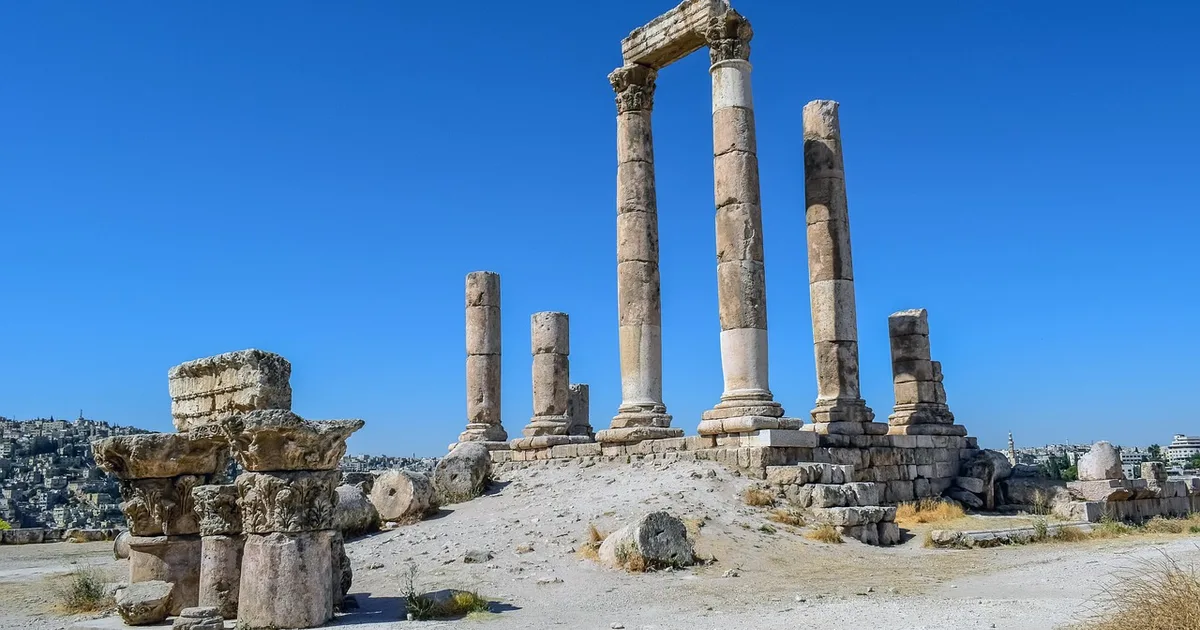
During his journey to Algeria, Pope Leo XIV visited a place of great importance to Christian history: the archaeological excavations of Hippo, present-day Annaba. This site was for over 1600 years the home and workplace of Saint Augustine, one of the most influential Church Fathers in history. The Pope's visit to this historic location took place under special atmospheric conditions, with wind and rain washing over the ancient stones.
The Connection Between Pope and Church Father
Pope Leo XIV, who himself belongs to the Augustinian Order, emphasized throughout his journey the deep connection to his spiritual predecessor. In his addresses, he repeatedly referred to the importance of Saint Augustine for his own spiritual life and for the entire Church. This personal connection gives the visit a special depth and authenticity that goes beyond a merely protocol visit.
A Moment of Silence and Reflection
After a choir from the local music institute performed several songs in Latin, Berber, and Arabic – based on texts by Saint Augustine on peace and brotherhood – the Pope remained for a moment in silent prayer. This moment of contemplation before the historic ruins symbolized the connection between past and present, between the legacy of the early Church and the current challenges of Christian faith.
The Archaeological Treasures of Hippo
The excavation site of Hippo offers impressive insights into different historical epochs:
- Roman buildings such as the paved forum, surrounded by columned porticos
- The ancient theater, once used for cultural events
- The well-preserved marketplaces and bathhouses
- Cisterns that ensured the water supply of the ancient city
- Figurative mosaics of great artistic and historical value
Particularly significant for Christian visitors are the buildings from the Christian period, including the Basilica Pacis, where Saint Augustine exercised his episcopal ministry, and the adjacent baptistery. These sites remind us of the early spread of Christianity in North Africa.
Biblical References to the Pilgrimage
The Pope's journey to the historic sites of Christianity reminds us of biblical models of pilgrimage. Like Abraham, who followed God's call to an unknown land (Genesis 12:1), or like Paul, who traveled to communities to strengthen faith, so too the Pope visits places significant to Christian identity.
"For here we have no lasting city, but we seek the city that is to come." (Hebrews 13:14 – ESV)
This verse reminds us that Christian life is always a pilgrimage – both in spiritual and physical terms. Visiting historic sites can help us understand our roots and draw strength for the present.
The Importance of Remembering
In Holy Scripture, great importance is placed on remembering. In the book of Deuteronomy it says:
"Remember the days of old; consider the years of many generations." (Deuteronomy 32:7 – ESV)
The Pope's visit to Hippo is precisely such an act of remembrance – a recollection of the witnesses of faith who went before us and the places where they lived and worked.
Ecumenical Perspectives
As a platform that respects and values different Christian traditions, we consider this visit from an ecumenical perspective. Saint Augustine is venerated not only in the Catholic Church but also in many Protestant and Orthodox communities. His theology on grace, the Trinity, and the nature of the Church continues to be studied and appreciated throughout the Christian world. This pilgrimage of Pope Leo XIV invites all Christians to rediscover our common roots and strengthen our bonds of unity in Christ.





Comments