
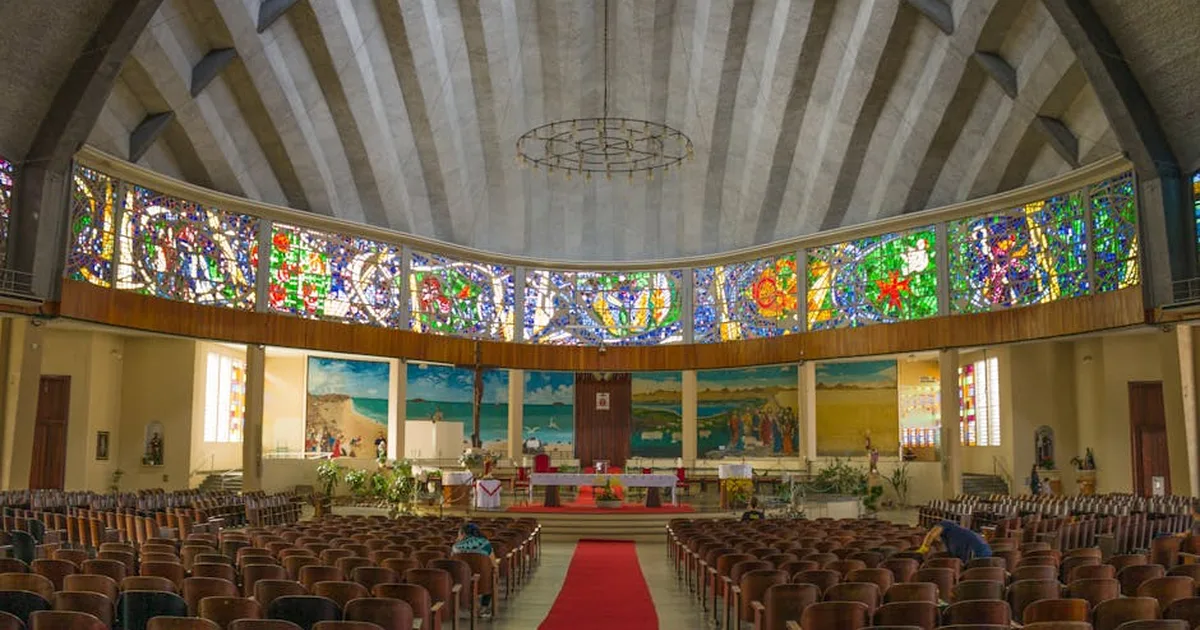
In an international context marked by persistent tensions, Pope Leo XIV made a pastoral visit to Algeria, just a few months after his election in May 2025. This journey, filled with solemnity and spiritual depth, brought the Holy Father to the Sanctuary of the Martyrs in Algiers, a place rich in history and memory for the local and universal Christian community.
Speaking with courage and truth
The pontificate of Pope Leo XIV, who succeeds the late Pope Francis who died in April 2025, continues a frank dialogue with the world. During this visit, the Holy Father calmly recalled that the Church's mission is to carry the light of the Gospel without fear, regardless of the audience. This freedom of speech, rooted in faith, is not a provocation but a testimony of hope offered to all.
The weight of history and the path to healing
Before the assembled audience, the Pope respectfully and sensitively evoked the painful pages that have marked the region's history. Without dwelling on details, he acknowledged the sufferings endured by peoples over generations. "We cannot add resentment to resentment, from generation to generation," he declared, thus highlighting the risk of a poisoned legacy that perpetuates the wounds of the past.
This reflection aligns with biblical wisdom that warns us against cycles of violence. The book of Proverbs teaches us:
"Whoever repays evil for good, evil will not depart from his house." (Proverbs 17:13, ESV)Accumulating grievances is building walls between hearts and hindering the path of reconciliation.
Forgiveness: The only foundation for authentic peace
The central message of Pope Leo XIV was of evangelical clarity: lasting peace can only be born from forgiveness. This is not about naive forgetfulness or denial of injustice, but a courageous choice of inner liberation. The Holy Father insisted on the need to transform hearts, to move from a logic of resentment to a dynamic of healing.
This requirement echoes Christ's teaching. The apostle Paul exhorts the Ephesian community:
"Bear with each other and forgive one another if any of you has a grievance against someone. Forgive as the Lord forgave you." (Colossians 3:13, NIV)The forgiveness presented here is not a feeling, but an act of will that imitates God's infinite grace.
Faith, a people's wealth
In the second part of his address, the Pope lifted his gaze toward a perspective of hope. "A people who love God possesses the most authentic wealth," he affirmed. This statement highlights the vital role of faith as a spiritual and social backbone. It is a source of meaning, cohesion, and resilience in the face of trials.
This spiritual wealth is a treasure to preserve and cultivate, not as mere cultural heritage, but as a living relationship with the Lord. Psalm 33 reminds us:
"Blessed is the nation whose God is the Lord, the people he chose for his inheritance." (Psalm 33:12, NIV)
For application in our daily lives
Pope Leo XIV's message in Algeria challenges us personally and communally. How can we, in our families, parishes, and societies, break the chains of resentment?
- Examine our memory: Take time in prayer to identify whether we consciously or unconsciously maintain grievances inherited from our family or collective history. Present them before God.
- Practice active forgiveness: Forgiveness is not passive; it requires action. Seek opportunities to reconcile with those who have offended us, following Christ's example.
- Foster dialogue: In our communities, promote spaces for honest conversation where pains can be expressed and paths to healing sought together.
- Live in hope: Remember that our faith gives us the strength to overcome resentment and build a future based on love and mercy.
May Pope Leo XIV's example inspire us to be agents of reconciliation in our surroundings, trusting that God transforms even the most difficult situations.





Comments