
The publication of Free Under Grace: Learning from St. Augustine in the Face of History's Challenges (original Italian title: Liberi sotto la grazia. Alla scuola di Sant'Agostino di fronte alle sfide della storia) is far more than a mere publishing event. This collection brings together texts by Robert Francis Prevost, written while he was Prior General of the Order of St. Augustine. It offers a precious glimpse into the intellectual and spiritual formation of the man who became Pope Leo XIV in May 2025.
Two texts in particular reveal the coherence of his thought: a homily delivered in Milan in 2013 and a speech given in Manila in 2010. They disclose a deep conviction, expressed with simplicity: 'To convert to God means to put oneself at the service of all.' For Cardinal Prevost, Christian conversion is never an individualistic, self-enclosed endeavor. It leads to a life given, offered, turned toward others.
The 'Tornaviaje': A Path of Ongoing Conversion
In his address in the Philippines, the then cardinal-pope develops an image that structures his entire reflection: that of the 'tornaviaje,' the return sea route discovered by Andrés de Urdaneta. But this return is not merely geographical. 'The only true and meaningful journey is the one that leads us to Christ,' he affirms. Christian life thus appears as a path of permanent conversion, a continual return to what is essential.
This image of the 'tornaviaje' is powerful. It evokes a movement of return to God, but also a movement toward others. For Christian faith, in Leo XIV's view, is never a private affair. It pushes us to go out of ourselves to meet our neighbor, especially the most vulnerable.
The Temptation of Routine
This path can, however, become fragile. With lucidity, the pope warns against an insidious risk: that of routine. 'We can slow down, become self-satisfied, remain immobile,' he observes. The initial enthusiasm can fade, leaving room for a practice without momentum. A community that is content to just function ends up losing its ability to attract and witness.
This warning is particularly relevant for the Church today. In a constantly changing world, the temptation is great to retreat into comfortable habits. But Pope Leo XIV reminds us that faith is a dynamic path, a constant call to conversion.
The Augustinian Roots of Leo XIV's Thought
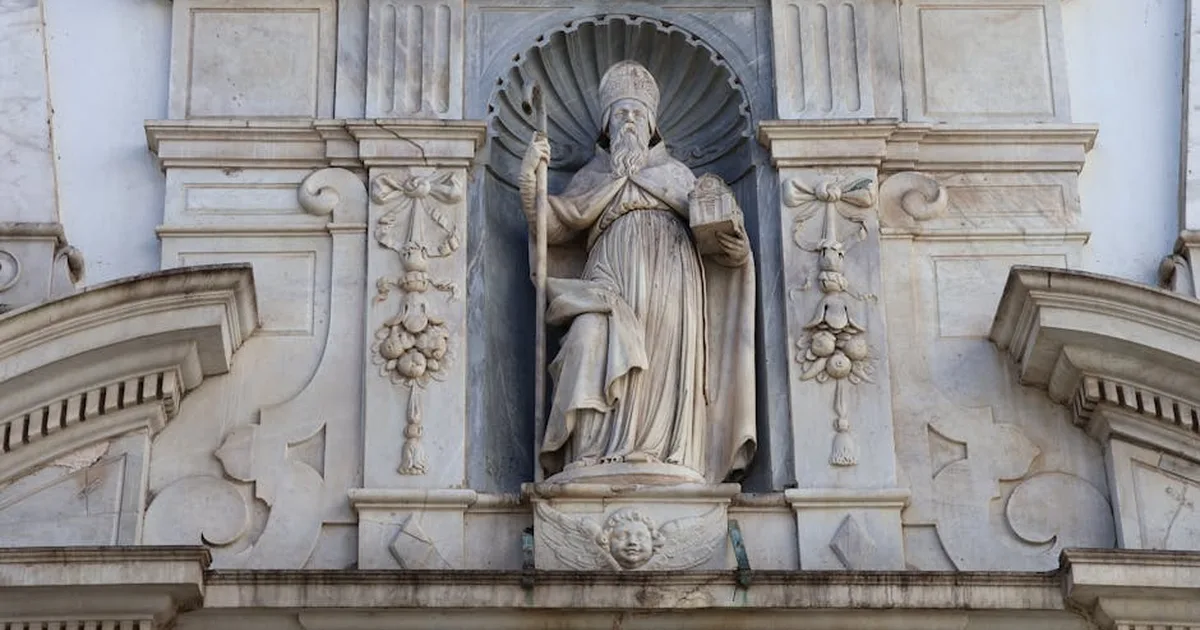
To understand Leo XIV's thought, one must turn to St. Augustine, of whom he is a recognized expert. Augustine, bishop of Hippo in the fourth century, deeply marked Christian theology with his reflection on grace, freedom, and conversion. The pope stands in this tradition, but renews it by adapting it to the challenges of our time.
Augustine taught that God's grace does not destroy human freedom, but liberates it from its chains. This idea is at the heart of the work Free Under Grace. Leo XIV shows how grace makes us capable of responding to God's call, not by our own strength, but by the action of the Holy Spirit in us.
'For it is by grace you have been saved, through faith—and this is not from yourselves, it is the gift of God.' (Ephesians 2:8, NIV)
This quote from the Apostle Paul sums up Augustinian thought well: salvation is a free gift from God, but it requires a free response on our part. For Leo XIV, this freedom under grace is the key to an authentic Christian life.
A Message for the Church Today
Pope Leo XIV does not merely comment on Augustine. He applies his thought to the concrete challenges of the contemporary Church. He calls believers to live a faith that is both faithful and creative, rooted in tradition yet open to new realities. In a rapidly changing world, the Church is called to be a community of missionary disciples, always going out to the existential peripheries.
Ongoing conversion, freedom under grace, service to others: these are the pillars of Leo XIV's pontificate. His book Free Under Grace is an invitation to rediscover the joy of the Gospel and to boldly commit to following Christ. For all Christians, it is a reading that inspires and challenges.





Comments