
As the aircraft soared through African skies, carrying the Holy Father from Angola toward Equatorial Guinea, Pope Leo XIV turned his thoughts to his predecessor. It was April 21, 2026, the first anniversary of Pope Francis' passing, and the new Pontiff found himself on the final leg of his third international visit. This journey to Africa, initially scheduled for different dates, had found its definitive placement precisely to allow Leo XIV to be on mission on that most significant day.
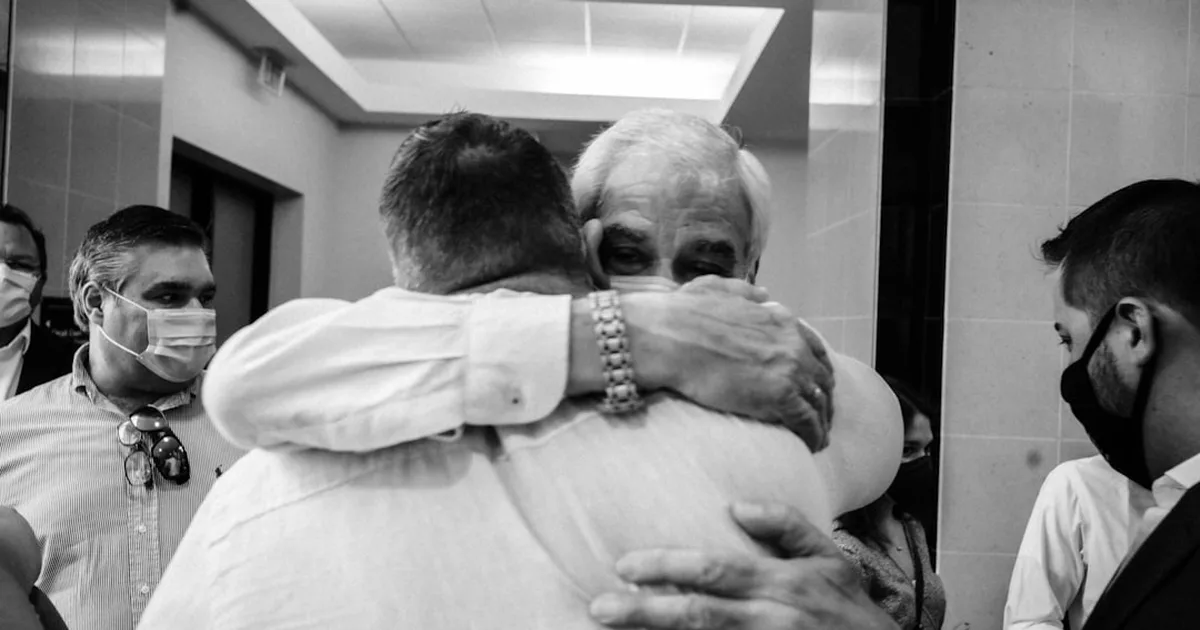
Before the journalists accompanying him, the Pope chose simple yet profound words to describe Bergoglio's legacy. "Francis gave so much to the Church and to the entire world," he stated warmly, "through his life, his witness, his words, and his gestures." In that moment, at thirty thousand feet, a spiritual passing of the torch was taking place that transcended geographical and temporal boundaries.
The Three Pillars of the Franciscan Legacy
Closeness to the Most Vulnerable
Pope Leo XIV identified as the first pillar of his predecessor's work the concrete closeness to the least. "Francis taught us that the Church must have the smell of the sheep," the Pontiff recalled, evoking one of Bergoglio's most cherished images. This closeness manifested in embracing the sick, listening to the poor, making oneself small with the small. It was not an attitude of superiority, but of genuine brotherhood.
The Gospel reminds us of this call to closeness:
"Blessed are the merciful, for they will be shown mercy" (Matthew 5:7, NIV).Francis lived this beatitude not as a distant ideal, but as daily practice. His attention toward the marginalized, refugees, prisoners, and all those society tends to forget represents a permanent lesson for every Christian community.
Universal Brotherhood
The second aspect highlighted by Leo XIV concerned the commitment to brotherhood among all human beings. "Francis reminded us that we are all brothers and sisters," the Pope explained during that in-flight conversation. This principle, rooted in the Gospel, translated into authentic respect for every person, beyond differences of culture, religion, or social condition.
The encyclical "Fratelli Tutti" represents perhaps the most significant document of this commitment. In those pages, Bergoglio developed a vision of society where mutual care becomes the foundation of human coexistence. As Saint Paul writes:
"There is neither Jew nor Gentile, neither slave nor free, nor is there male and female, for you are all one in Christ Jesus" (Galatians 3:28, NIV).This unity in diversity constitutes the heart of the Christian message about brotherhood.
Mercy as a Way of Life
The third element of the Franciscan legacy, according to Leo XIV, was the centrality of divine mercy. The Pope particularly recalled the Mass celebrated at St. Anne's on March 17, 2013, just days before the official beginning of the pontificate, when Francis spoke "with an open heart about God's mercy, love, forgiveness." That homily set the tone for a ministry that would make mercy its central theme.
The Extraordinary Jubilee of Mercy (2015-2016) represented the culmination of this pastoral insight. Through that Jubilee, Francis invited the entire Church to rediscover the merciful face of the Father, who "ran to his son" (Luke 15:20). Mercy was not presented as an exception in Christian life, but as its normal breath, its fundamental style.
Evangelization as Joyful Witness
Responding to questions from Angolan journalists, Leo XIV emphasized how Francis' legacy continues to inspire the Church's mission today. "Evangelization is not primarily about strategies," he explained, "but about authentic and joyful witness." This perspective, inherited from his predecessor, emphasizes that the proclamation of the Gospel flows naturally from a life transformed by encountering Christ.
The Pope recalled how Francis often said that "the joy of the Gospel fills the hearts and lives of all who encounter Jesus." This conviction, according to Leo XIV, should animate every Christian community to share their faith not as an obligation, but as the natural overflow of a transformative experience. In a world marked by divisions and pessimism, this joyful witness becomes a prophetic sign of hope.





Comments