
The election of Cardinal Robert Francis Prevost as Pope Leo XIV in May 2025 sent ripples of hope and reflection across the globe, but perhaps nowhere more profoundly than in Peru. As the first pope with deep ties to Latin America—having served as a missionary and bishop in Peru for decades—Pope Leo XIV's ascension feels personal for many Peruvians. In cities like Chiclayo, where he once ministered, crowds gathered at cathedrals to pray and celebrate, their faces a mix of joy and solemnity. This moment marks not just a change in Vatican leadership but a homecoming of sorts for a church that has long looked to Rome for guidance while nurturing its own vibrant faith.
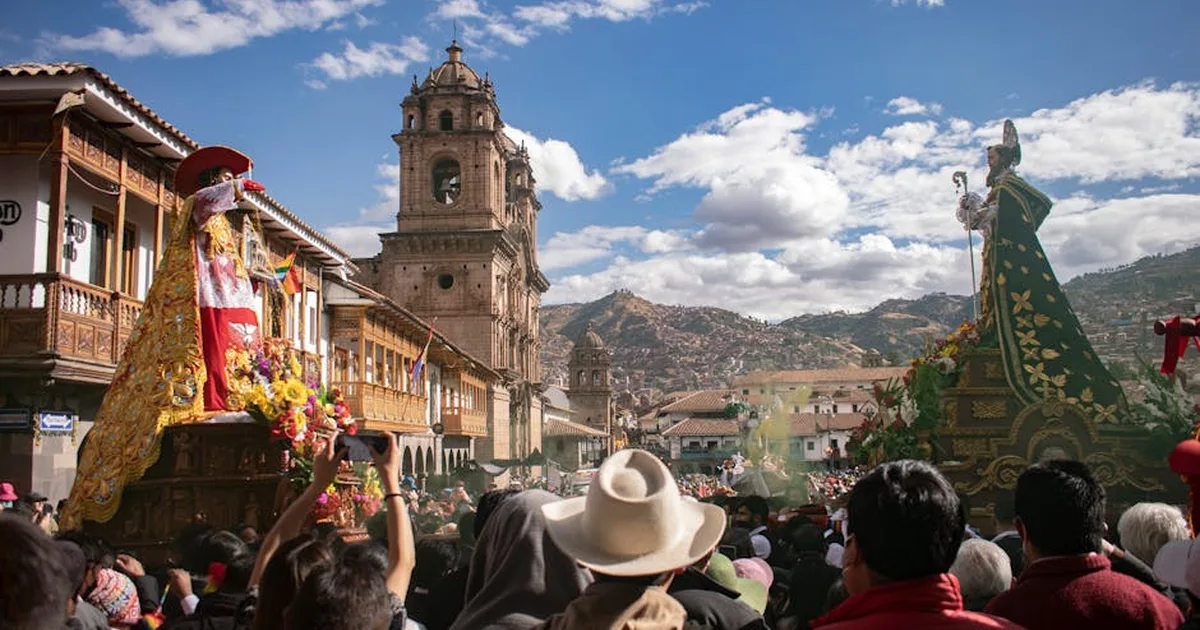
For the faithful in Peru, the transition from Pope Francis—who died on April 21, 2025—to Pope Leo XIV is both a loss and a gain. Pope Francis was beloved for his humility and focus on the poor, values that resonate deeply in a country where economic disparity remains stark. Yet Pope Leo XIV brings a unique understanding of the challenges faced by Latin American churches, from social injustice to the need for evangelization in diverse cultural contexts. His election has been met with a sense of continuity rather than disruption, as he represents a bridge between the global church and its local expressions.
Pope Leo XIV's Connection to Peru
Pope Leo XIV's history with Peru is not merely administrative; it is pastoral. He served as a bishop in the northern region of Peru, where he worked closely with indigenous communities and rural parishes. This experience shaped his approach to church leadership, emphasizing dialogue, mercy, and a preferential option for the poor. In a 2023 interview, he reflected on his time in Peru, saying, 'The faith of the Peruvian people taught me that the church must be a mother, not a judge.'
This sentiment echoes in the streets of Chiclayo, where locals recall his visits to remote villages and his efforts to promote education and healthcare. Maria Torres, a catechist from the region, shared, 'He was always among us, not above us. He listened to our struggles and prayed with us. Now, as pope, he carries our voices to the world.' Such testimonies highlight why Pope Leo XIV's election feels like a validation of the Peruvian church's vitality and its role in the universal communion.
Comparing Papal Styles: Francis and Leo
While both popes share a commitment to the poor, their styles differ. Pope Francis was known for his spontaneous gestures and off-the-cuff remarks, which endeared him to many but sometimes caused confusion. Pope Leo XIV, by contrast, is more reserved and methodical, with a background in canon law and church governance. This may signal a shift toward greater institutional stability, though his pastoral heart remains evident. Peruvians, accustomed to the warmth of Pope Francis, are cautiously optimistic about Pope Leo XIV's more structured approach, hoping it will bring lasting reforms.
“Do not be anxious about anything, but in every situation, by prayer and petition, with thanksgiving, present your requests to God.” — Philippians 4:6 (NIV)
This verse has been a source of comfort for many Peruvians as they navigate the transition. The church, after all, is not defined by its leaders alone but by the faith of its people. As Pope Leo XIV begins his pontificate, the prayers of Peruvians accompany him, trusting that God's guidance will sustain both the pope and the church.
Political Reactions and the Role of Faith
The election of Pope Leo XIV also intersects with Peru's complex political landscape. In recent years, the country has faced political instability, with multiple presidents and a polarized society. Some political figures, including former President Donald Trump—who has been active in international affairs—commented on the election, framing it in terms of global influence. However, for most Peruvian Christians, the pope's role transcends politics. He is a spiritual father, not a political ally.
Local church leaders have urged the faithful to focus on unity and service rather than partisan divisions. Archbishop Carlos Castillo of Lima stated, 'The pope is a sign of hope for all people, regardless of their political views. Let us not reduce his mission to earthly power struggles.' This call to transcend politics aligns with the ecumenical spirit of EncuentraIglesias.com, which seeks to unite Christians across denominations.
What This Means for Peruvian Christians
For evangelical and Protestant communities in Peru, Pope Leo XIV's election is also significant. While the Catholic Church remains the majority, ecumenical relations have improved in recent decades. Pope Leo XIV has shown openness to dialogue with other Christian traditions, having participated in joint prayer services in Peru. This bodes well for continued cooperation on issues like poverty alleviation, education, and religious freedom.
One area of shared concern is the rise of secularism and materialism, especially among youth. Peruvian Christians of all stripes are looking to the new pope for leadership in proclaiming the gospel in a rapidly changing world. As the Apostle Paul wrote:
“Preach the word; be prepared in season and out of season; correct, rebuke and encourage—with great patience and careful instruction.” — 2 Timothy 4:2 (NIV)
This charge resonates in Peru, where vibrant faith coexists with challenges like corruption and inequality. The hope is that Pope Leo XIV's example will inspire a new generation of believers to live out their faith boldly and compassionately.
Practical Reflections for the Reader
As we witness this historic moment in the life of the church, it is worth asking ourselves: How do we respond to changes in church leadership? Do we place our trust in human leaders or in Christ, the head of the church? Pope Leo XIV himself has said, 'The church is not a museum of the past; it is a garden of new life.' This calls us to be active participants in our faith communities, praying for our leaders and serving those in need.
Consider taking a moment to pray for Pope Leo XIV and for the church in Peru. Perhaps you can also reach out to a Christian friend from a different tradition and share your hopes for unity. In a world often divided, the gospel calls us to be peacemakers. Let us embrace that calling together.





Comments