
In recent weeks, residents of the historic Monti district in Rome have raised their voices against a practice they consider an affront to the sanctity of their churches. The Patriarchal Basilica of Saint Mary Major, one of the oldest and most venerated places of worship in Christendom, has become the center of a controversy that goes beyond local concerns: enormous billboards for a well-known French perfume brand have been installed on its facade and apse, lit up at night, turning the monument into an advertising medium.
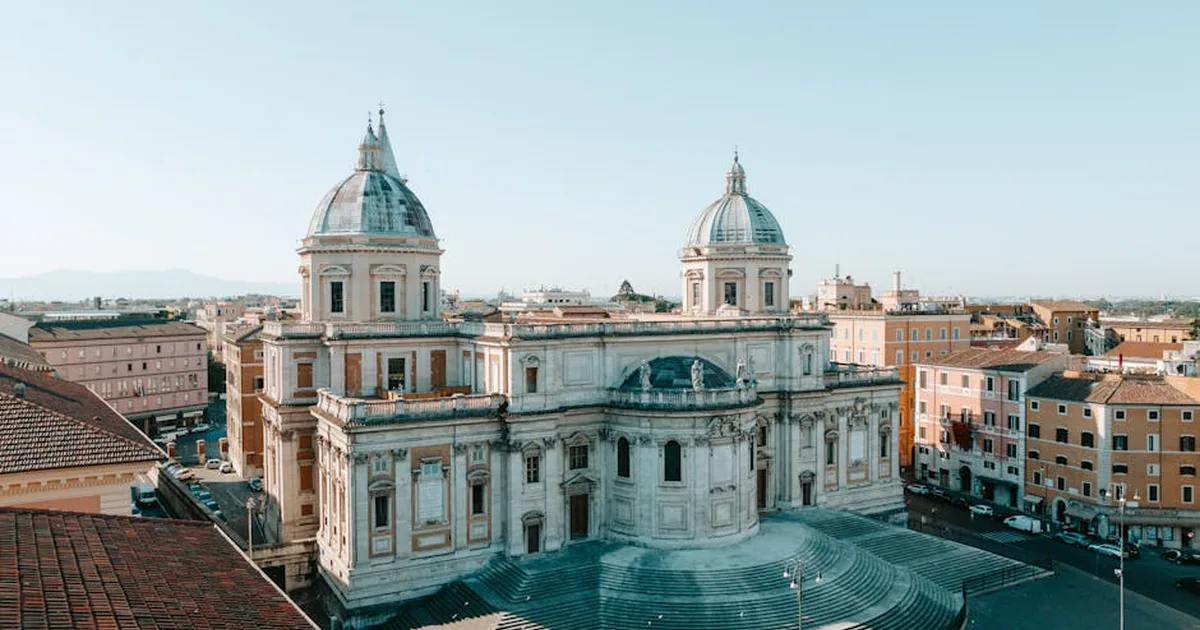
A group of faithful and neighbors, organized as the Citizens' Committee of the Monti District, sent a letter of protest to the cardinal archpriest Rolandas Makrickas. In it, they express their "deep dismay" over what they consider a "commercialization" of sacred space. The letter, reproduced by local media, questions the need for such ostentatious advertising, which "bears no relation to the atmosphere and sacred character of the place."
This is not the first time this has happened. In previous months, the same basilica had been used to promote everything from coffee featuring a famous tennis player to the latest smartphone model. Each time, outrage grew. But this time, the perfume was the last straw. Protesters denounce that the basilica is becoming a mere "walking advertisement," losing its dignity as a house of prayer.
What Does the Church Say?
So far, the Vatican has not issued an official statement on this particular controversy. However, Pope Leo XIV, who assumed the pontificate in May 2025 after the death of Francis, has repeatedly shown concern about the "worldliness" of the Church. In a recent homily, he warned: "We cannot allow temples to become markets. The Lord drove the sellers out of the temple, and we must ensure that God's house is a place of encounter with Him, not of consumption."
The Gospel reference is clear. In John 2:13-17, Jesus himself expels the money changers from the temple, saying, "Get these out of here! Stop turning my Father's house into a market!" His disciples then remembered that it was written: "Zeal for your house will consume me." This teaching resonates strongly today among the faithful who see commercial interests invading sacred spaces.
"Stop turning my Father's house into a market!" — John 2:16 (NIV)
However, some defenders of the practice argue that these ads generate income that helps maintain historic monuments, whose restoration costs are extremely high. The Basilica of Saint Mary Major, with its more than 1,500 years of history, requires constant conservation work. But is this the right path? How far is the Church willing to yield to the market?
The Dilemma Between Faith and Funding
This is not a problem unique to Rome. Around the world, churches and cathedrals face the challenge of funding their maintenance without compromising their sacred identity. Some have opted to charge tourists for entry, others to rent out spaces for concerts or events. But advertising on facades is a step many consider too far.
In the case of Saint Mary Major, the contract with the perfume brand has not been made public, but it is speculated to be in the millions. Cardinal Makrickas, who received the letter of protest, has not yet responded. Meanwhile, the residents of Monti wonder if the money is worth the loss of respect and silence that a place of prayer deserves.
The Voice of the Faithful: What Does the Bible Say?
Scripture offers clear principles about the holiness of places of worship.





Comments