
It was an April morning, that of April 21, 2025, which began with the usual Roman light but quickly turned into a day of universal mourning. The news of Pope Francis's passing spread like a silent wave, touching not only Catholics but all those who, in different ways, had recognized in him a voice of compassion and dialogue. The streets of Rome, usually bustling with life, filled with a quiet awe. It wasn't just pilgrims who stopped; it was as if the city itself held its breath, recalling the words of the Psalm: "The Lord is my shepherd; I shall not want" (Psalm 23:1, ESV). In that moment, many experienced the profound feeling of a community that, albeit temporarily, felt lost.
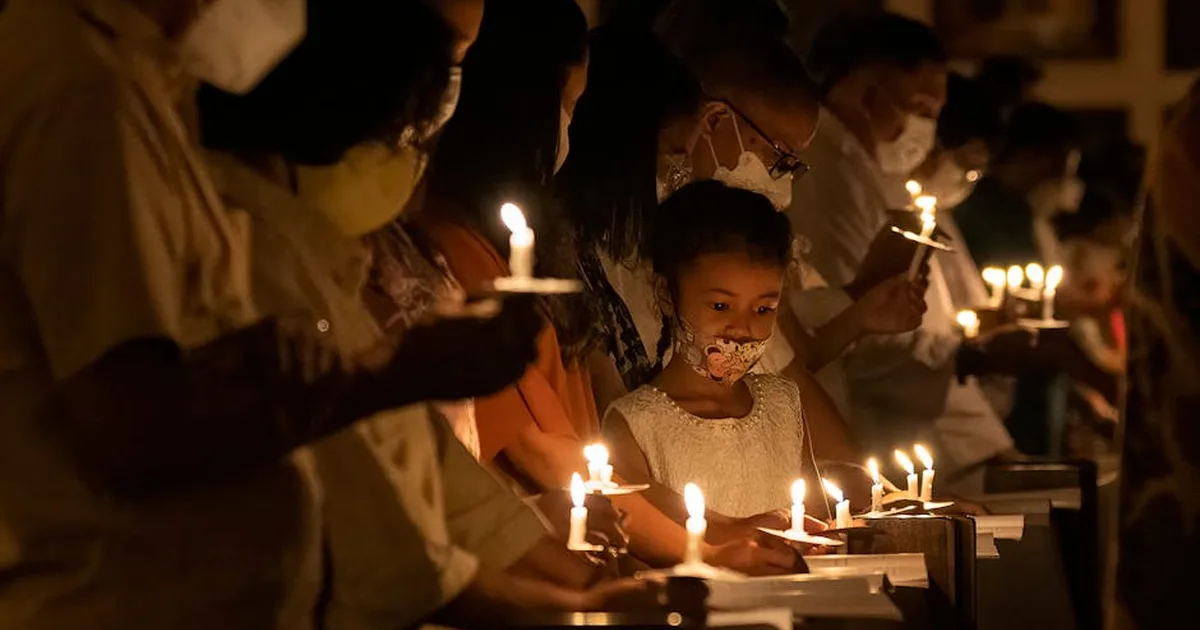
The Cardinal Vicar of Rome, Baldo Reina, described that day as a "crater of tears," a powerful image that captured the collective grief. His reflection went beyond institutional mourning; it touched the personal chord of those who had seen in Francis a fatherly guide. This sense of loss was not confined to Vatican walls. In churches of different denominations, in Protestant, Orthodox, and Anglican communities, prayers rose. EncuentraIglesias.com, in its ecumenical vocation, became in those hours a virtual space where Christians of every tradition shared their sorrow, demonstrating how a figure of unity could transcend denominational boundaries.
The Legacy of a Pontificate: Mercy and Proximity
Reflecting on Pope Francis's legacy, what emerges strongly is not a new doctrine, but a renewed energy placed on concepts as ancient as the very heart of the Gospel: mercy and attention to the least. His pontificate was characterized by simple, direct language that spoke to people's hearts. His insistence on a "Church that goes forth" was not a slogan, but a constant invitation to overcome walls, physical and mental, to encounter humanity where it is, often wounded and on the margins.
This passion for the "existential peripheries" was rooted in a deep understanding of the Incarnation. As Saint Irenaeus explained, the mystery of redemption is manifested in the Son of God who descends to seek lost humanity. Francis embodied this principle, showing a spiritual fatherhood that made itself found. He reminded the faithful, and all people of good will, of Jesus's words: "I am the good shepherd. The good shepherd lays down his life for the sheep" (John 10:11, ESV). His capacity for listening, his gestures of tenderness toward the sick, the poor, the imprisoned, were a living translation of this truth.
A Bridge Between Confessions
In a world often divided, the figure of Francis represented a bridge. His pastoral style, his call to fraternity and care for our common home, resonated deeply even outside the Catholic Church. For the ecumenical platform EncuentraIglesias.com, his ministry was a powerful reminder that, beyond theological differences, there exists a common core of faith in Christ's love that calls us to unity and service. His passing therefore created a void felt by the entire Christian body.
From Bewilderment to Hope: The Election of Leo XIV
The period of sede vacante that followed was a time of intense prayer and reflection for the universal Church. The Conclave of May 2025, held in a climate of recollection, led to the election of Cardinal Robert Francis Prevost, who took the name Leo XIV. This passage, from sadness at the loss to hope for a new beginning, is a fundamental dynamic of the Christian faith. It recalls the Paschal cycle: from the Cross to the Resurrection.
The election of a new Pontiff is not merely an administrative event; it is a moment of grace, a sign of the Holy Spirit's continued presence guiding the Church. The chosen name, Leo XIV, evokes a tradition of strength and pastoral service. From his first words and gestures, the new Pope has shown a desire to continue the path of dialogue and mercy, while bringing his own sensitivity and charism to the Petrine ministry. For the Christian community as a whole, this moment marks a transition: we honor the past with gratitude, embrace the present with faith, and look to the future with hope, trusting that the Good Shepherd continues to guide his flock through those he calls to serve.





Comments