
In a time when public debates are often marked by harsh rhetoric, Christians face questions about appropriate communication. Recent comments by a former U.S. president toward Pope León XIV have prompted reflection in church circles. This isn't primarily about political positions, but about how we treat one another—especially when it concerns spiritual authorities.
The Bible reminds us in Ephesians 4:29: "Do not let any unwholesome talk come out of your mouths, but only what is helpful for building others up according to their needs, that it may benefit those who listen." This verse reminds us that our words don't just convey information—they shape relationships and touch hearts. In a digital world where expressions are often quick and thoughtless, this biblical wisdom gains particular relevance.
Various Christian voices have emphasized in recent days how important a respectful tone remains—even with differing political or theological views. Several bishops and church leaders have spoken on this topic, underscoring the need for dignified dialogue.
The Role of Spiritual Authorities in Societal Debates
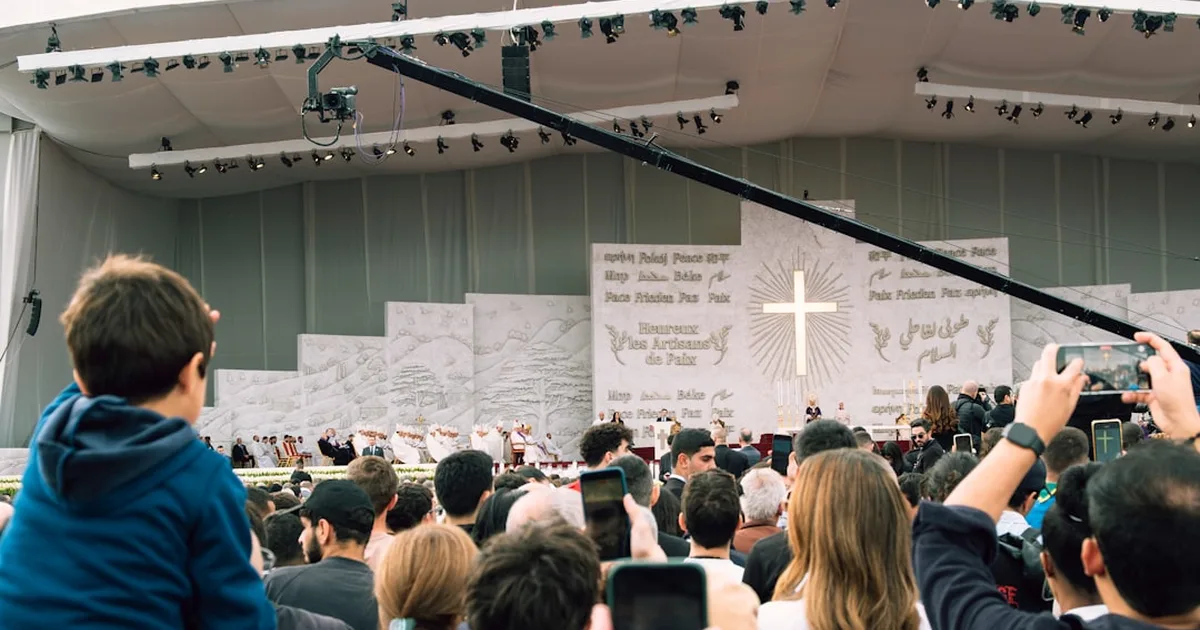
Pope León XIV, who assumed office in May 2025, has issued various appeals for peace and reconciliation during his first months. His particular commitment to ending international conflicts has drawn worldwide attention. As successor to Pope Francis, who served until April 2025, León XIV is establishing certain emphases within the global Christian community.
The Pope's position as spiritual head of the Catholic Church means his words find hearing beyond denominational boundaries. Many Protestant and Orthodox Christians value the Vatican's ecumenical engagement and recognize the moral authority of the papacy on certain issues. This is particularly evident in peace initiatives and humanitarian appeals.
In Scripture, we find various models of spiritual leadership. The apostle Paul writes in 1 Timothy 3:2-7 about the qualities of a church leader: "Now the overseer is to be above reproach, faithful to his wife, temperate, self-controlled, respectable, hospitable, able to teach." These biblical standards apply, in adapted form, to contemporary spiritual authorities as well.
Historical Perspectives on Church-Political Relations
The relationship between spiritual and secular power has a long and complex history. Even in the Middle Ages, tensions existed between emperors and popes, culminating in famous confrontations like the Investiture Controversy. The 16th-century Reformation brought new questions about the relationship between church and state.
In modern democratic societies, this relationship has fundamentally changed. Today it's less about power struggles and more about constructive dialogue and shared values. Christian ethics can provide important impulses for political debates without seeking political power itself.
The Second Vatican Council (1962-1965) formulated important principles for the Church's relationship with the modern world in the pastoral constitution "Gaudium et Spes." These documents remain guiding for dialogue between faith and society today.
Practical Insights for Christian Engagement in Public Debates
How can we as Christians participate constructively in societal discussions? First, it's important to clarify our motives and attitudes. Prayer and biblical reflection help examine our hearts before speaking. Second, we should actively listen to those who think differently, seeking to understand before being understood. Third, our words should reflect the fruit of the Spirit mentioned in Galatians 5:22-23: love, joy, peace, patience, kindness, goodness, faithfulness, gentleness, and self-control.
In situations where opinions diverge deeply, let's remember Jesus' words in Matthew 5:9: "Blessed are the peacemakers, for they will be called children of God." Being a peacemaker doesn't mean avoiding difficult topics, but addressing them with grace and truth. This involves recognizing each person's dignity, created in God's image, even when we disagree.
Social media presents particular challenges. Before posting a comment, let's ask ourselves: Does this build up? Does it reflect Christ's character? Does it contribute to mutual understanding? Sometimes, the wisest response might be silence or expressing disagreement with humility and respect.
Finally, let's remember that our most powerful testimony isn't just in our words, but in our actions. How we treat others, especially those we consider opponents, reveals the authenticity of our faith. As the apostle Peter wrote: "Always be prepared to give an answer to everyone who asks you to give the reason for the hope that you have. But do this with gentleness and respect" (1 Peter 3:15).





Comments