
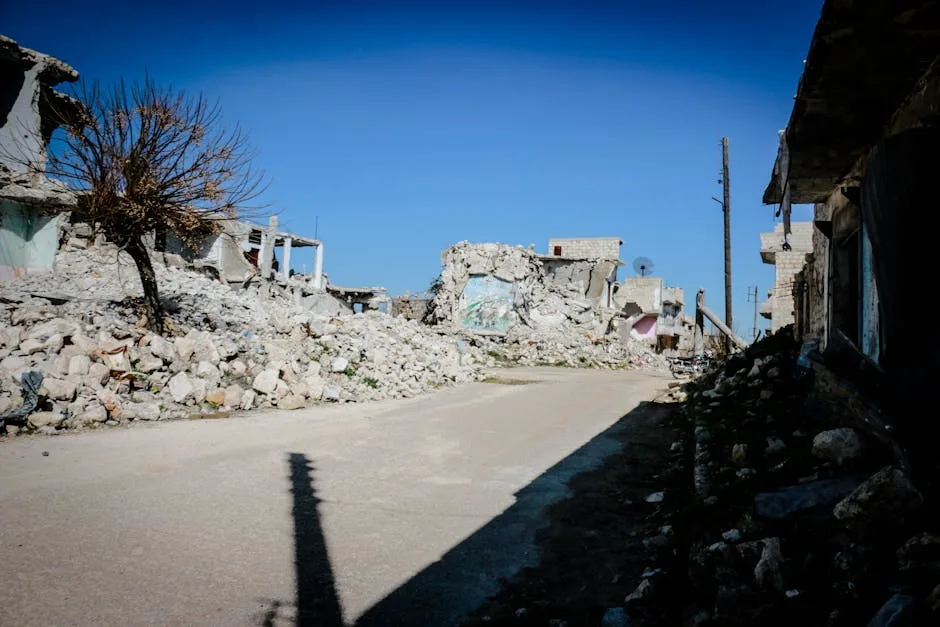
In recent weeks, Lebanon has been experiencing hours of profound suffering. As a Christian community, we feel a duty to tell what is happening, not with the language of news reporting, but with that of compassion. Images of destruction, sounds of alarm, faces marked by fear and exhaustion: this is the reality our Lebanese brothers and sisters are facing.
Bishop César Essayan, Apostolic Vicar of Beirut, has shared with deep emotion the difficulties of the moment. He describes a situation of extreme gravity, where in a very short time the sky filled with threats and the earth shook. Not a single region was spared, leaving the population in dismay and pain.
Hope Betrayed and the Resilience of the People
A few days ago, an announcement of a ceasefire had sparked a glimmer of hope. After weeks of violence, it seemed possible to stop, breathe, and think about reconstruction. Some displaced people had even begun preparing to return to their homes, to those places that, though scarred, represent the roots of life.
This hope, unfortunately, was short-lived. The ceasefire broke down, and with it the possibility of immediate relief. The Church, in this circumstance, finds itself fulfilling its oldest and truest role: to be a presence, a consolation, concrete support.
“Blessed are those who mourn, for they will be comforted” (Matthew 5:4 NIV).
These words of Jesus resonate with particular strength in this context. The beatitude does not cancel out the pain, but embraces it, promising a comfort that comes from God's presence and the solidarity of brothers and sisters.
The Priorities of a Love That Becomes Service
Faced with a tragedy of such magnitude, establishing priorities becomes a challenge in itself. The needs are multiple, urgent, and overlapping. Bishop Essayan clearly indicates some of them.
First, to support the courageous choice of those in southern Lebanon who have decided to stay. Remaining in one's land, in one's home, even when everything around is collapsing, is an act of non-violent resistance, an attachment to life that deserves all our respect and help. Leaving often means returning to find only rubble.
Another absolute priority is assistance to the displaced who have found refuge in other areas of the country. The Church tries to take care of the most immediate needs: a meal, shelter, a word of comfort. It seeks to contain the anger, a legitimate child of injustice, and to guarantee at least the minimum necessary for human dignity.
State institutions do what they can, but resources are limited and needs are immense. The Church finds itself, once again, having to “knock on many doors,” as the Vicar himself states, to collect funds and aid. It is a mendicancy made of love, to transform the world's solidarity into concrete hope.
“For I was hungry and you gave me something to eat, I was thirsty and you gave me something to drink, I was a stranger and you invited me in, I needed clothes and you clothed me, I was sick and you looked after me, I was in prison and you came to visit me” (Matthew 25:35-36 NIV).
The Gospel reminds us that serving those who suffer is serving Christ himself. In Lebanon, this service takes on the face of wounded children, scattered families, interrupted communities.
Beyond the Emergency: The Invisible Wounds
The bombs stop, but their consequences last a long time. Bishop Essayan raises a crucial issue: the environmental and health impact of what has happened. The smell of burning that persists in Beirut is not just a memory, but a warning. How many people will become ill because of air, water, and soil pollution?
The Church's concern therefore embraces not only the visible wounds but also those that are unseen but will mark future generations. It is a call for a solidarity that goes beyond the immediate emergency, that thinks about the integral reconstruction of people and the land they inhabit.





Comments