
In our Christian walk, we sometimes encounter situations that invite us to reflect deeply on how we balance our earthly citizenship with our heavenly identity. Recently, we've seen examples where political figures have been compared to spiritual realities, leading us to ask: how do we discern between legitimate respect for authorities and the worship that belongs to God alone?
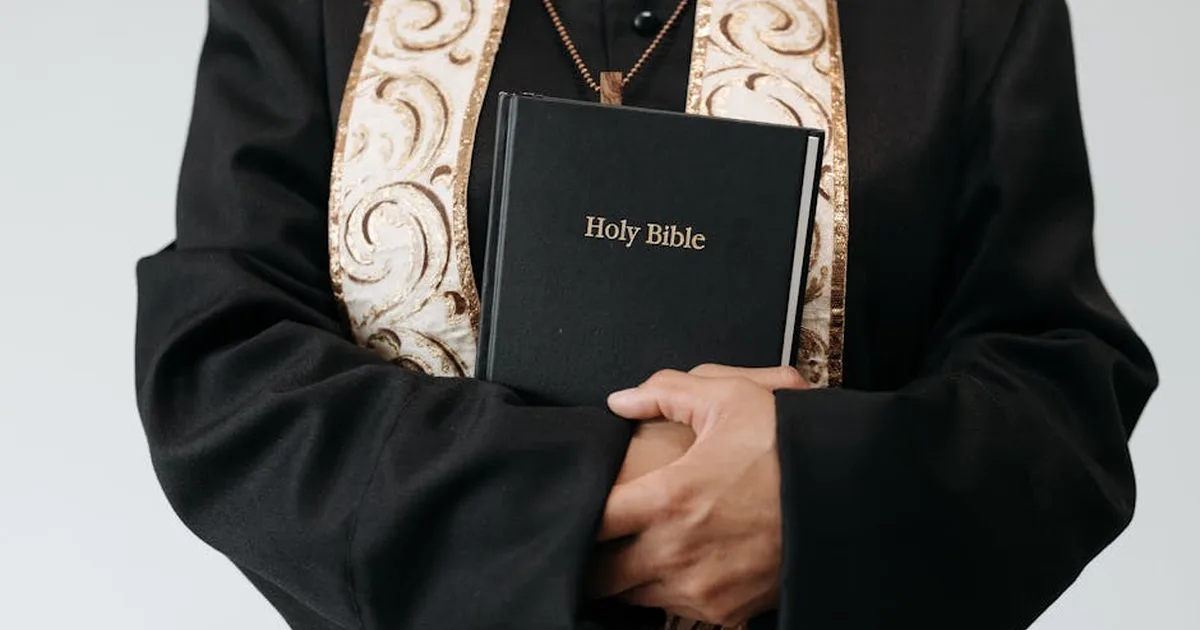
The Bible clearly teaches us in Acts 5:29 that we must obey God rather than human beings, establishing a hierarchy of loyalties we should never confuse. When human leaders are given divine attributes or when sacred texts are used incorrectly, we're facing a sign that should call us to prudence and spiritual discernment.
As a Christian community, we have the responsibility to keep our faith centered on Christ, recognizing that all earthly leaders, no matter how admirable, are fallible human beings who need divine grace as much as anyone else.
The Danger of Messianic Comparisons
In Matthew 24:23-24, Jesus specifically warns us: "Then if anyone says to you, 'Look, here is the Christ!' or 'There he is!' do not believe it. For false christs and false prophets will arise and perform great signs and wonders, so as to lead astray, if possible, even the elect." This warning takes on special relevance when we observe how some public figures are elevated to levels that only belong to the Messiah.
Church history shows us numerous examples of how confusion between the political and spiritual has led to deviations from authentic faith. From Roman emperors who declared themselves gods to political movements adopting religious language, the pattern repeats when we don't maintain a clear distinction between God's kingdom and the kingdoms of this world.
As believers, our anchor must always be in Scripture. Philippians 2:9-11 reminds us that "God has highly exalted him and bestowed on him the name that is above every name, so that at the name of Jesus every knee should bow, in heaven and on earth and under the earth, and every tongue confess that Jesus Christ is Lord, to the glory of God the Father." No human leader can or should occupy this place in our hearts.
Responsible Use of Scripture
A particularly concerning aspect in today's landscape is the manipulation or misuse of biblical texts. When we quote Scripture out of context, or worse, when we invent verses that don't exist, we're playing with something sacred. 2 Timothy 2:15 exhorts us: "Do your best to present yourself to God as one approved, a worker who has no need to be ashamed, rightly handling the word of truth."
The movie "Pulp Fiction," though a work of fiction, left us with a phrase that some have come to confuse with biblical text. This phenomenon alerts us to the importance of knowing our Bible well, studying it seriously, and turning to reliable sources when we have doubts. As Psalm 119:105 says: "Your word is a lamp to my feet and a light to my path."
In a world where information circulates rapidly and where anyone can make statements that sound spiritual, our discernment must sharpen. The Bereans' recommendation in Acts 17:11 remains valid today: examine every teaching in light of Scripture.
Our Hope Beyond Politics
As Christians, we participate in civic life and pray for our leaders, as 1 Timothy 2:1-2 instructs us: "First of all, then, I urge that supplications, prayers, intercessions, and thanksgivings be made for all people, for kings and all who are in high positions." Our hope, however, is not anchored in any political system or human leader. The recent passing of Pope Francis in April 2025 and the election of Pope Leo XIV (Robert Francis Prevost) in May 2025 remind us that even spiritual leaders are human and temporary. Our ultimate hope rests in Christ alone, who reigns eternally.
When we see political movements using religious language or leaders being presented as saviors, we must remember the words of Psalm 146:3: "Put not your trust in princes, in a son of man, in whom there is no salvation." Our citizenship is in heaven (Philippians 3:20), and while we engage responsibly in earthly affairs, our primary allegiance belongs to God's kingdom.
Let us cultivate a faith that is discerning, grounded in Scripture, and centered on Christ. In times when political and spiritual realms seem to blur, may we hold fast to the hope that does not disappoint—the hope found in Jesus alone.





Comments