
On an April morning in Jerusalem, a simple yet profoundly significant sound broke the silence that had enveloped the city for too long. The chatter of children returning to school after a long interruption filled the air, carrying with it an echo of hope. This return to normalcy represents more than just a resumption of daily activities; it's a tangible sign of human resilience, especially in a land that has known so many trials. Each child resuming the walk to school carries not just a backpack, but the promise of a different future, built on knowledge and peace.
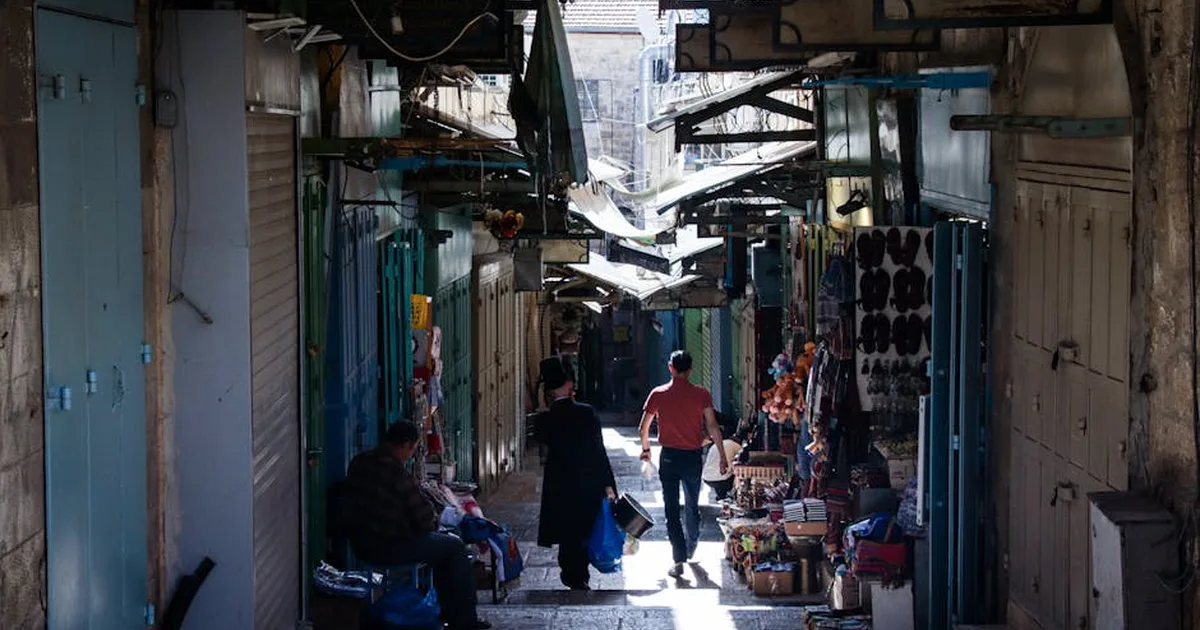
The reopening of Catholic schools in particular reminds us how education is a fundamental right for every child, regardless of origin or faith. In a context where divisions often seem insurmountable, seeing children from different communities return to learn together represents a small but significant step toward reconciliation. This moment invites us to reflect on how precious normalcy is, especially when it has been denied for so long.
Memory That Unites in the Silence of Yom HaShoah
Just as the city seemed to regain its daily rhythm, another sound interrupted the flow of the day. The siren of Yom HaShoah, Holocaust Remembrance Day, called everyone to stop and remember. For two minutes, Jerusalem stood still in a collective silence that spoke louder than any words. Cars stopped, people frozen in the streets, an entire community united in remembering Holocaust victims.
This moment of forced pause offers us a powerful spiritual metaphor. Sometimes, just when life seems to resume its course, we are called to stop, to remember, to honor. Our thoughts naturally turn to the children who, on their first day back at school, experienced this sudden interruption. We wonder what might pass through their young hearts, how they might reconcile the joy of return with the weight of memory. Perhaps precisely in this apparent contradiction lies a deep truth: life and memory, joy and remembrance, don't exclude each other but complement one another.
"Remember the days of old, consider the years of many generations" (Deuteronomy 32:7 KJV).
The Long Road Between Jerusalem and Bethlehem
Leaving Jerusalem for Bethlehem, one physically experiences the separation dividing these two cities so deeply united in Christian faith. The closed checkpoint forces longer routes, detours that seem to lengthen not just geographical distance but emotional distance as well. Yet despite visible barriers, an invisible thread continues to hold Jerusalem and Bethlehem together: a thread made of faith, shared history, common hope.
Jerusalem safeguards the mystery of the Passion and Resurrection, while Bethlehem preserves the memory of the Incarnation, of the Savior's humble birth. These two mysteries, apparently distinct, actually form a single narrative of salvation. The physical distance between the two cities cannot break this spiritual unity, just as present difficulties cannot cancel the divine promise that has traversed centuries.
Bethlehem: Beauty That Endures
Arriving in Bethlehem, the scene presented is one of palpable desolation. The main street, once lively with its hotels and shops, now appears almost deserted. Shutters lowered for years, dusty storefronts telling interrupted stories, family businesses closed awaiting better times. This stillness seems to strongly contrast with the movement of life that normally characterizes a city.
And yet, even amid this apparent quiet, Bethlehem's beauty endures. The Church of the Nativity stands firm, its walls witnessing centuries of prayer and pilgrimage. In side streets, small family workshops continue creating traditional olive wood carvings, passing skills from generation to generation. In Manger Square, though tourists are scarce, local faithful still gather to pray, keeping alive the flame of faith where it all began.
Bethlehem's resilience isn't in its economic activity, but in its unbreakable spirit. Every family choosing to stay, every artisan continuing their craft, every prayer lifted in the Nativity church, are acts of hope that defy despair. As Pope Leo XIV reminds us in his first encyclical: "Faith isn't the absence of difficulties, but the certainty that God walks with us even in the darkest valley."
In these trying times, the Christian communities of the Holy Land teach us that hope isn't a passive feeling, but a daily decision to trust in God's promises. Jerusalem and Bethlehem, though separated by physical barriers, remain united by a thread of faith no wall can break. Their testimony inspires us to keep hope alive in our own hearts, remembering that even in the darkest night, Christ's light continues to shine.





Comments