
In these times of global uncertainty, voices from conflict zones speak deeply to us as a Christian community. Father Gabriel Romanelli, pastor of the Holy Family parish in Gaza, offers a moving testimony about the current situation in the region. His words, filled with realism and hope, invite us not to forget the brothers and sisters living in extremely difficult conditions.
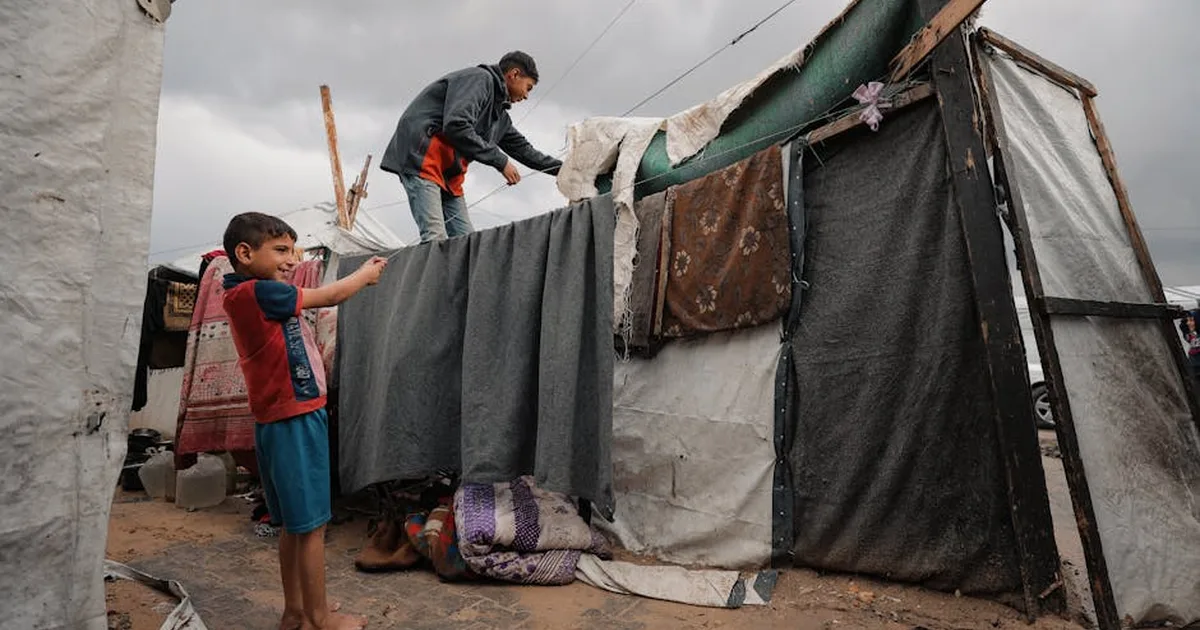
The situation described by Father Romanelli is complex and constantly evolving. Although there is talk of a truce, daily reality for Gaza's inhabitants remains marked by profound precariousness. The priest emphasizes how the absence of constant bombardment doesn't automatically mean peace or normality. On the contrary, the fragility of the ceasefire creates an atmosphere of anxious waiting, where fear of renewed hostilities is always present.
As Christians, we are called to pay attention to these testimonies, remembering Jesus' words: "Blessed are the peacemakers, for they will be called children of God" (Matthew 5:9 NIV). Authentic peace isn't simply the absence of war, but the presence of justice, dignity, and decent living conditions for every person.
The Humanitarian Crisis: Daily Challenges and Resilience
Father Romanelli describes a humanitarian situation he calls "dramatic." Essential aid struggles to arrive, creating shortages that affect every aspect of daily life. Not only are basic food items lacking, but also what allows fundamental services to function: fuel for generators, oil for machinery, materials for repairs.
One of the most significant images emerging from his account concerns bread ovens. "There is flour," explains the pastor, "but the ovens need diesel and oil to function." This paradox represents well the complexity of the crisis: the availability of raw materials isn't enough if the elements to transform them into goods useful to the community are missing.
The fuel shortage has created a paradoxical economic situation, with prices that have increased exponentially. What once cost a few shekels today can reach prohibitive amounts, forcing the population to find creative and often dangerous solutions to meet daily needs.
The Local Christian Community's Response
Amid these difficulties, the Holy Family parish continues to be a reference point for the community. As Saint Paul reminds us: "Carry each other's burdens, and in this way you will fulfill the law of Christ" (Galatians 6:2 NIV). The local church commits to supporting not only Catholic faithful, but all those in difficulty, without distinction of religious affiliation.
This testimony of concrete charity reminds us that Christian faith expresses itself above all in love for neighbor, especially for those who suffer. In a context of divisions and tensions, the Christian community seeks to be a sign of unity and reconciliation, living the commandment of love that transcends every barrier.
Hope and Prayer in Time of Crisis
Despite objective difficulties, Father Romanelli's testimony isn't without hope. Faith in God becomes a secure anchor amid life's storms. As the prophet Isaiah writes: "But those who hope in the Lord will renew their strength. They will soar on wings like eagles; they will run and not grow weary, they will walk and not be faint" (Isaiah 40:31 NIV).
Prayer takes on particular meaning in this context. It isn't escape from reality, but strength that sustains in facing daily challenges. The community gathers regularly to celebrate the Eucharist, finding in it consolation and strength to continue the journey.
In this particular time for the universal Church, with Pope Leo XIV guiding the faithful since May 2025, we remember that our solidarity with suffering brothers and sisters is a concrete expression of our common faith. Christian hope doesn't ignore present pain, but looks beyond, trusting that God never abandons his children at any moment in history.





Comments