
Imagine for a moment that you've been floating in the vastness of space, gazing at Earth from a perspective few humans have ever experienced. You've seen the fragility of our blue planet, the infinite darkness surrounding it, and the wonder of creation on its grandest scale. Then you return, your feet touch solid ground again, and something within you has changed forever. This was the experience of astronaut Reid Wiseman, one of the crew members of the Artemis II mission, whose encounter with the divine took him completely by surprise.
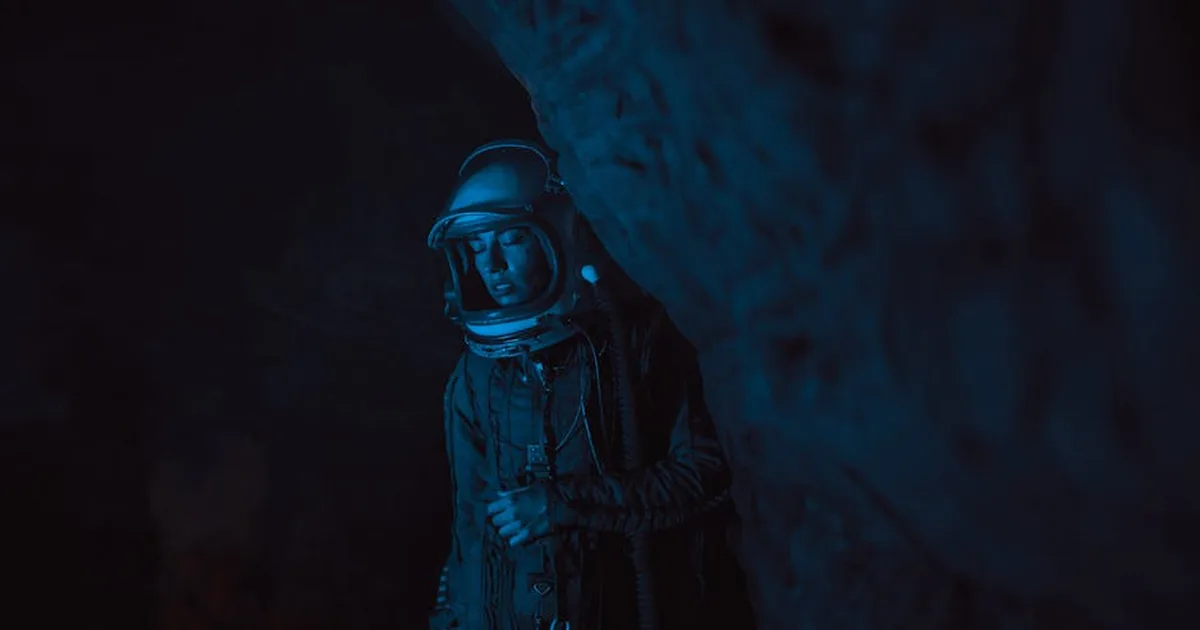
Wiseman didn't consider himself particularly religious before his space journey. Like many scientists and engineers, his world was built on data, equations, and verifiable observations. Yet there are experiences that transcend the measurable, moments that touch dimensions of human existence that science cannot yet fully map. His return to Earth wasn't just a physical descent, but the beginning of a spiritual journey he never anticipated.
The Encounter That Melted the Heart
Upon stepping back onto our planet after days floating in cosmic weightlessness, Wiseman and his crewmates were greeted by the support team. Among the professionals waiting for them was a Navy chaplain, a man whose uniform bore a small but significant symbol: a crucifix. Seeing that cross, something broke inside the astronaut.
"I'm not a very religious person," Wiseman later confessed, "but there was no other way to explain or experience something like that. I asked the chaplain to come visit us, and when he entered, even though I'd never seen him before in my life, I saw the cross around his neck and just broke down in tears." These tears weren't of sadness, but of profound recognition, of a connection that transcended words and learned theological concepts.
This moment reminds us of the psalmist's words:
"When I consider your heavens, the work of your fingers, the moon and the stars, which you have set in place, what is mankind that you are mindful of them, human beings that you care for them?" (Psalm 8:3-4, NIV)
Science and Faith: Two Languages of One Truth
Many people see science and faith as irreconcilable enemies, as if exploring the universe with telescopes and rockets necessarily distances someone from the Creator of that same universe. Wiseman's experience shows us a different reality: the more deeply we explore creation, the more opportunities we have to encounter the Creator.
The Artemis II mission represented the pinnacle of human ingenuity: cutting-edge technology, years of preparation, precise calculations, and extraordinary courage. Yet at the moment of return, it was a simple symbol—a cross—that touched the astronaut most deeply. This doesn't diminish science, but complements it, reminding us that human beings are more than calculating minds; we're also hearts seeking meaning, spirits longing for connection.
The apostle Paul wrote to the Romans:
"For since the creation of the world God's invisible qualities—his eternal power and divine nature—have been clearly seen, being understood from what has been made, so that people are without excuse." (Romans 1:20, NIV)
What Space Cannot Answer
In the silent vacuum of space, far from the constant noise of our earthly lives, fundamental questions resonate more strongly: Why do we exist? Is there purpose in this seemingly infinite universe? What does this overwhelming beauty we behold mean? Science can explain how stars work, but cannot answer why their light moves us. It can describe the physical laws governing planets, but





Comments