
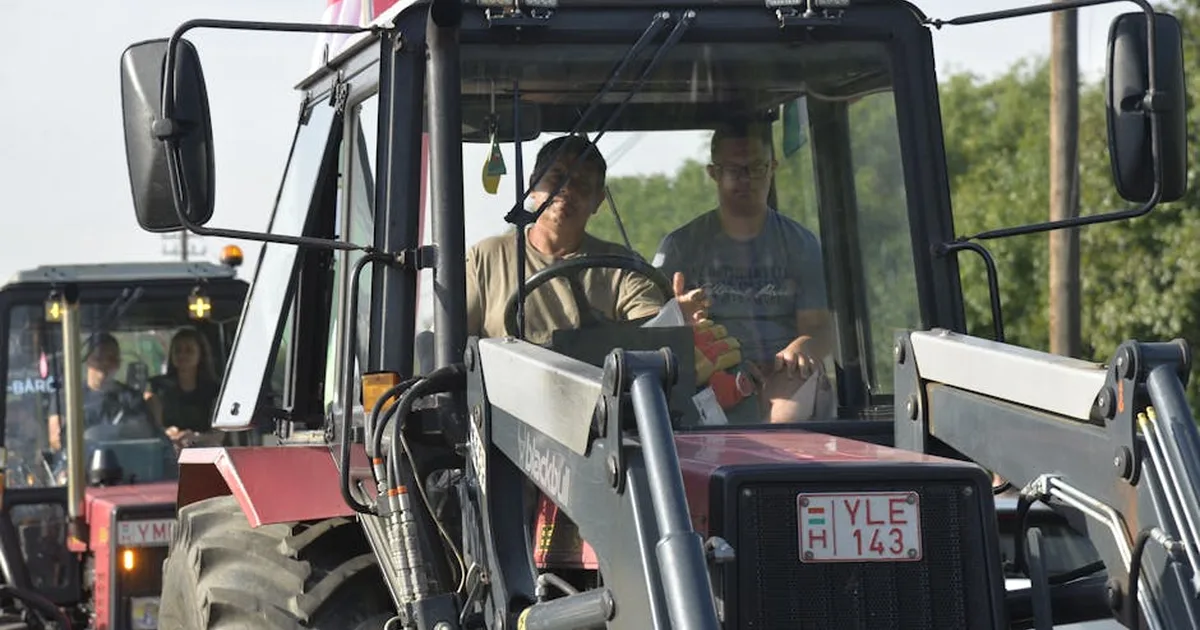
In the quiet rhythm of Mississippi's agricultural heartland, where spring planting marks the annual renewal of the earth, one farmer's daily work carries an unexpected symbol of global connection. Rodney Mast, a third-generation farmer from Crawford, Mississippi, moves through his fields with two small flags waving from his tractor—one representing his American homeland, the other the Ukrainian nation whose people have become part of his extended family.
Planting More Than Crops
While most farmers measure their harvest in bushels and yields, Mast counts his blessings in lives transformed. Through quiet, determined effort, he has helped more than 150 Ukrainian refugee families find new beginnings in the United States, with two dozen settling in Mississippi's Golden Triangle region. What began as a response to human need has blossomed into a vibrant cross-cultural community where Southern hospitality meets Ukrainian resilience.
"If you had told me a decade ago that I'd be helping build a Ukrainian community right here in Mississippi," Mast reflects, "I would have found it hard to imagine. But sometimes God plants seeds in our hearts that grow in directions we never anticipated."
Roots of Service
Mast's commitment to serving others didn't emerge in a vacuum. His grandparents moved from Indiana to Mississippi during the turbulent 1960s, responding to a call to foster racial reconciliation in a divided South. His grandmother taught literacy classes for Black women while caring for sick neighbors, while his grandfather provided employment opportunities on their farm, treating every worker with dignity and respect.
"They showed me that faith isn't just something you profess on Sunday," Mast explains. "It's something you live every day through how you treat people. Their example taught me that every person bears God's image, regardless of background or circumstance."
The Farmer's Perspective on Service
Mast sees parallels between agricultural work and compassionate service. "Farming teaches you to respond to what's in front of you," he says. "You work with what the weather gives you, what the soil needs, what the crop demands. You learn to adapt and persevere."
This same practical wisdom guided his refugee work. When Ukrainian families began arriving, Mast applied the same problem-solving approach he uses in his fields: assessing needs, finding resources, and doing the work required. He helped families navigate housing, employment, schools, and the complex web of documentation needed to rebuild their lives.
"For I was hungry and you gave me something to eat, I was thirsty and you gave me something to drink, I was a stranger and you invited me in."
— Matthew 25:35 (NIV)
Building Bridges Across Cultures
The Ukrainian families who have settled in Mississippi bring their own rich traditions, faith practices, and cultural heritage. Mast has worked to create spaces where these can be shared and celebrated alongside Southern customs. Community meals feature both Mississippi barbecue and Ukrainian borscht. Church gatherings incorporate hymns in English and Ukrainian. Children play together in fields that have become common ground for new friendships.
"We're not asking people to abandon who they are," Mast emphasizes. "We're creating a new community where different backgrounds enrich one another. It's like planting different crops together—they each bring something unique to the field."
Biblical Foundations for Welcoming Strangers
Throughout Scripture, God's people are called to extend hospitality and care to those displaced from their homes:
- The Israelites were commanded: "The foreigner residing among you must be treated as your native-born. Love them as yourself, for you were foreigners in Egypt." (Leviticus 19:34, NIV)
- The writer of Hebrews reminds believers: "Do not forget to show hospitality to strangers, for by so doing some people have shown hospitality to angels without knowing it." (Hebrews 13:2, NIV)
- Jesus himself identified with those in need: "I was a stranger and you invited me in." (Matthew 25:35, NIV)
These passages remind Christians that welcoming those who have been displaced isn't merely a social service—it's an expression of our identity as people who have received God's welcome through Christ.
A Family Transformed
Mast's commitment has reshaped not only his community but his own family. Through their work with refugees, they've developed deep relationships that have expanded their understanding of family itself. Ukrainian traditions now mingle with Southern ones in their home, and their dinner table regularly includes newcomers still practicing English while sharing stories of their homeland.
"We've learned that family isn't just about blood relations," Mast observes. "It's about the bonds we form through shared experiences, mutual care, and common faith. These Ukrainian brothers and sisters have become part of our story, and we've become part of theirs."
Practical Wisdom for Everyday Compassion
Mast's story offers several insights for Christians seeking to live out their faith through practical compassion:
- Start with what's in front of you. You don't need a grand plan to make a difference. Look for the needs within your reach and respond with what you have.
- Build on your strengths. Mast used his problem-solving skills from farming to address practical challenges refugees faced. Consider what skills and resources you already possess that could serve others.
- Embrace learning. Cross-cultural relationships require humility and curiosity. Be willing to learn from those you're serving.
- Think long-term. Real transformation happens through sustained relationships, not one-time gestures.
- Involve your community. Lasting change happens when others join in. Share the vision and invite participation.
Reflection: What Seeds Are We Planting?
As spring planting gives way to summer growth in Mississippi's fields, Mast's story invites reflection on what seeds we're planting in our own communities. The biblical metaphor of sowing and reaping applies not only to agriculture but to our relationships and service.
"Let us not become weary in doing good, for at the proper time we will reap a harvest if we do not give up."
— Galatians 6:9 (NIV)
Every act of welcome, every gesture of practical help, every effort to build bridges across differences plants seeds that God can nurture into something beautiful. We may not always see immediate results—just as farmers wait patiently for crops to grow—but faithful sowing eventually yields a harvest.
In a world where divisions often dominate headlines, simple acts of Christian hospitality can create pockets of hope and healing. Like Rodney Mast's two flags waving together in the Mississippi breeze, they testify to the possibility of unity amid diversity, and to the power of ordinary people responding to God's call with extraordinary love.





Comments