
Imagine that moment when everything seems lost. You've placed your hope in something or someone, and suddenly, the ground gives way beneath your feet. This is how Cleopas and his companion felt on the road to Emmaus. They were returning to their village after experiencing the most devastating event of their lives in Jerusalem: the death of Jesus. In their hearts, there was only room for sadness and disappointment. "We had hoped that he was the one who was going to redeem Israel," they confessed to the stranger who joined them on the road (Luke 24:21, NIV).
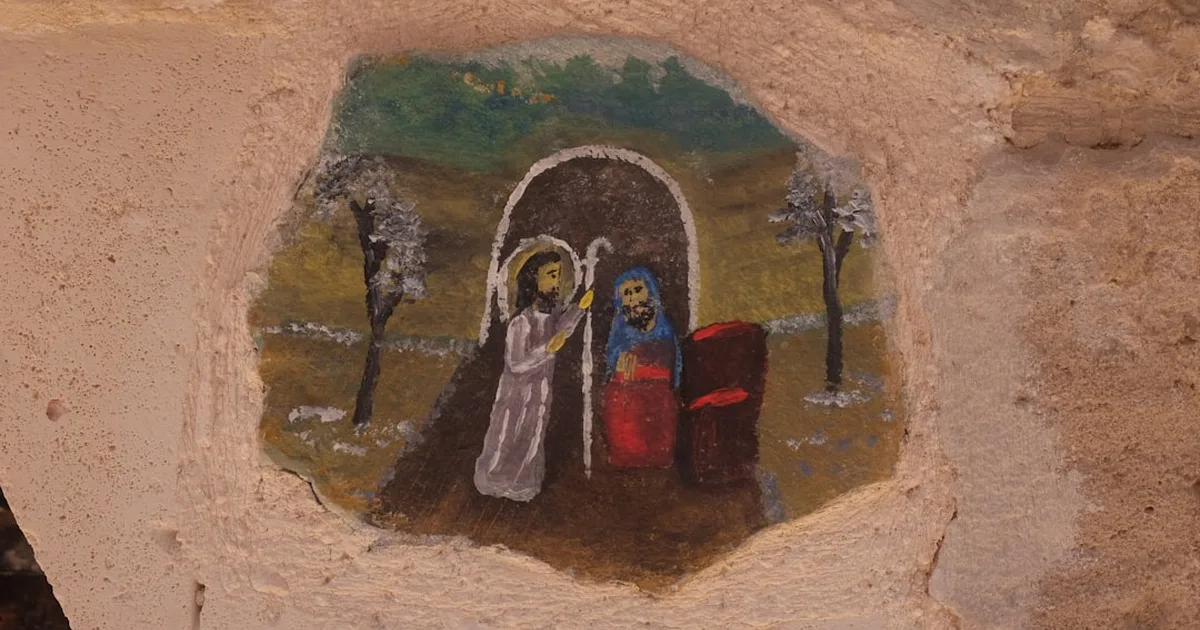
Does this feeling sound familiar? Many Christians have experienced moments when our expectations collide with reality. We pray for healing, and the illness progresses. We intercede for a loved one, and the situation worsens. We dream of a perfect church and find human communities, with their lights and shadows. Disappointment can be so profound that some, like those disciples, begin to pull away, taking the road back to what's familiar, to what feels safe.
The beautiful part of this story is that Jesus doesn't wait for us to return to him. He meets us precisely on the road of our disappointment. He doesn't first encounter us in the temple or in moments of great faith, but in the midst of our confusion, walking alongside us when we can't even recognize him.
Divine Teaching in the Midst of Pain
Jesus, the master teacher, uses a wonderful strategy with these discouraged disciples. First, he asks them: "What are you discussing together as you walk along?" (Luke 24:17, NIV). God always begins with a question, inviting us to express our pain, to put into words what troubles us. He doesn't minimize their suffering but creates space for them to share it.
Then, Jesus does something extraordinary: "And beginning with Moses and all the Prophets, he explained to them what was said in all the Scriptures concerning himself" (Luke 24:27, NIV). In our pain, we tend to read the Bible looking for immediate answers, magical solutions. Jesus, instead, invites us to a deeper reading, to discover how the entire story of salvation points to a God who makes himself present precisely in suffering—not to magically eliminate it, but to transform it from within.
Pope Leo XIV, in his first homily as Pontiff, recalled this very dynamic: "God does not spare us the road to Emmaus, but walks it with us. His presence does not cancel our questions but illuminates them with a new light." As the successor of Peter following the passing of the beloved Pope Francis in April 2025, the Holy Father reminds us that Christian faith is not insurance against suffering but the certainty that we do not suffer alone.
When Our Ideas About God Collide with Reality
The Emmaus disciples had a very specific idea about how the Messiah should act: a political liberator who would restore the kingdom of Israel. When Jesus dies on the cross, their concept of God collapses. Something similar happens to us when we form reduced images of the Lord: the God who only blesses, the God who always says yes, the God who rewards good behavior with prosperity.
God's Word gently corrects us, as it corrected those travelers. In Psalm 22, the same one Jesus recites on the cross, we find this paradox: "My God, my God, why have you forsaken me?" (Psalm 22:1, NIV) followed by "I will declare your name to my people; in the assembly I will praise you" (Psalm 22:22, NIV). The Bible doesn't hide the cry of abandonment but frames it within a larger story of divine faithfulness.
The Moment of Recognition: When the Bread Is Broken
The story reaches its climax when they arrive at the village. The disciples, moved by a hospitality that springs forth even in the midst of their sadness, invite the stranger to stay with them. As he breaks the bread, their eyes are opened, and they recognize him. This moment teaches us that Jesus often reveals himself in simple acts of fellowship and sharing. The broken bread becomes a symbol of his broken body, given for us, and in that breaking, our spiritual blindness is healed. Their hearts, once heavy with disappointment, now burn within them as they realize that Jesus had been with them all along. They immediately return to Jerusalem, transformed from retreating disciples into bold witnesses, proving that true encounter with Christ turns our despair into purpose and our isolation into community.





Comments