
On April 15-16, 2026, the Espace Grand Paris in Créteil hosted an edition of the Evangelical Center that will be remembered for years to come. In this symbolic space where diverse expressions of Christian faith come together, nearly five thousand people gathered around the theme "The One Church, Together in Our Differences." While our contemporary world often appears fragmented, this gathering demonstrated that unity among believers remains possible when we allow the Holy Spirit to work in our hearts.
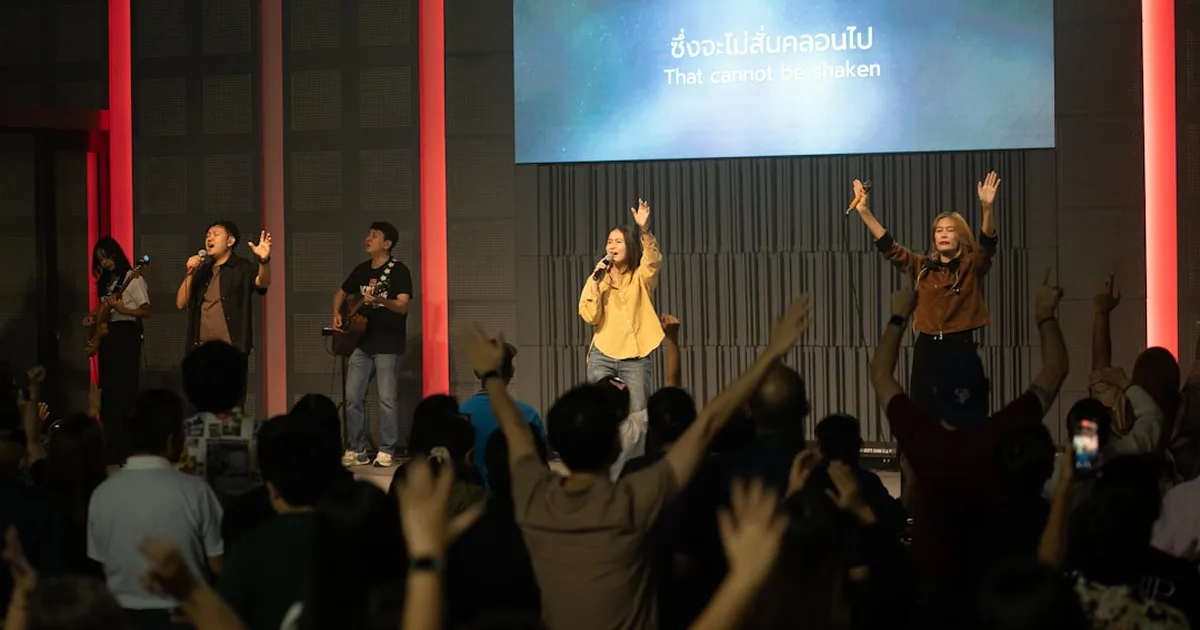
The initial program included worship moments with several Christian artists, theological presentations, and a main message. However, what occurred during the evening of Wednesday, April 15th, transcended all expectations. Instead of a prepared teaching, participants witnessed a spontaneous movement of reconciliation that deeply touched everyone present.
In a context where media sometimes presents a divided image of evangelical Christians, this manifestation of unity appeared as a living response to prejudices. As the apostle Paul reminds us: "Bear with each other and forgive one another if any of you has a grievance against someone. Forgive as the Lord forgave you" (Colossians 3:13, NIV).
The Transformative Power of Mutual Forgiveness
During this memorable evening, an unexpected event completely redefined the gathering's dynamics. Pastor Ivan Carluer, whose preaching was scheduled, chose a radically different path. Addressing the assembly, he turned to another pastor present, Serge Oulaï, to offer public apologies.
"Brother Serge," acknowledged Ivan Carluer, "for years, you've sought to establish a fraternal relationship with me. You've extended numerous invitations, messages, and signs of openness. And I, through negligence or being overwhelmed with activities, didn't respond to your outreach. I ask your forgiveness for this absence that may have hurt you."
Serge Oulaï's response was equally gracious: "Ivan, this wound is real, but it now belongs to the past. What matters today is that we recognize each other as brothers in Christ, called to serve our Lord together." These words provoked profound silence in the assembly, followed by sustained applause and tears among many participants.
This scene recalls Jesus' exhortation in the Gospel: "Therefore, if you are offering your gift at the altar and there remember that your brother or sister has something against you, leave your gift there in front of the altar. First go and be reconciled to them; then come and offer your gift" (Matthew 5:23-24, NIV).
An Unexpected Chain of Reconciliation
The forgiveness movement didn't stop there. Pastor Joëlle Sutter-Razanajohary, present in the audience, stood up in turn. Addressing Ivan Carluer, she shared: "Several years ago, during a meeting of the Protestant Federation of France, I made a hasty judgment about you. I considered you more as a competitor than as a brother in faith. I ask your forgiveness for this attitude that didn't reflect Christ's love."
This cascade of reconciliations created a special atmosphere in the room, where God's presence became tangibly felt. Several other people then stood up to ask forgiveness from brothers and sisters present, transforming a scheduled evening into a genuine time of community healing.
The Biblical Foundations of Christian Unity
This event invites us to rediscover what Scripture teaches about believers' unity. Christ Himself prayed for this unity shortly before His passion, saying: "That all of them may be one, Father, just as you are in me and I am in you. May they also be in us so that the world may believe that you have sent me" (John 17:21, NIV). Jesus' prayer wasn't merely a pious wish but a reality we must build day by day through forgiveness and reconciliation.
Christian unity doesn't mean uniformity. As the gathering's theme well expressed, it's about being "together in our differences." Each tradition, each expression of faith, each spiritual sensitivity brings particular riches to Christ's body. What unites us is stronger than what divides us: our common faith in Jesus Christ as Savior and Lord.
The lived testimony at Evangelical Center 2026 shows us that unity is built with concrete gestures of forgiveness and reconciliation. It's not just a theological theory but a daily practice requiring humility, courage, and openness to the Holy Spirit. When Christians reconcile with one another, we give powerful witness to the world of the Gospel's transformative reality.





Comments