
Imagine waking with a peace that fills every corner of your being, a joy that springs from the deepest part of your heart. It's not the fleeting excitement of a sports victory or personal achievement, but something far more profound: the certainty that God has been working in your life even in the darkest moments. Today, many people in our Christian community are experiencing that sense of renewal and restored hope.
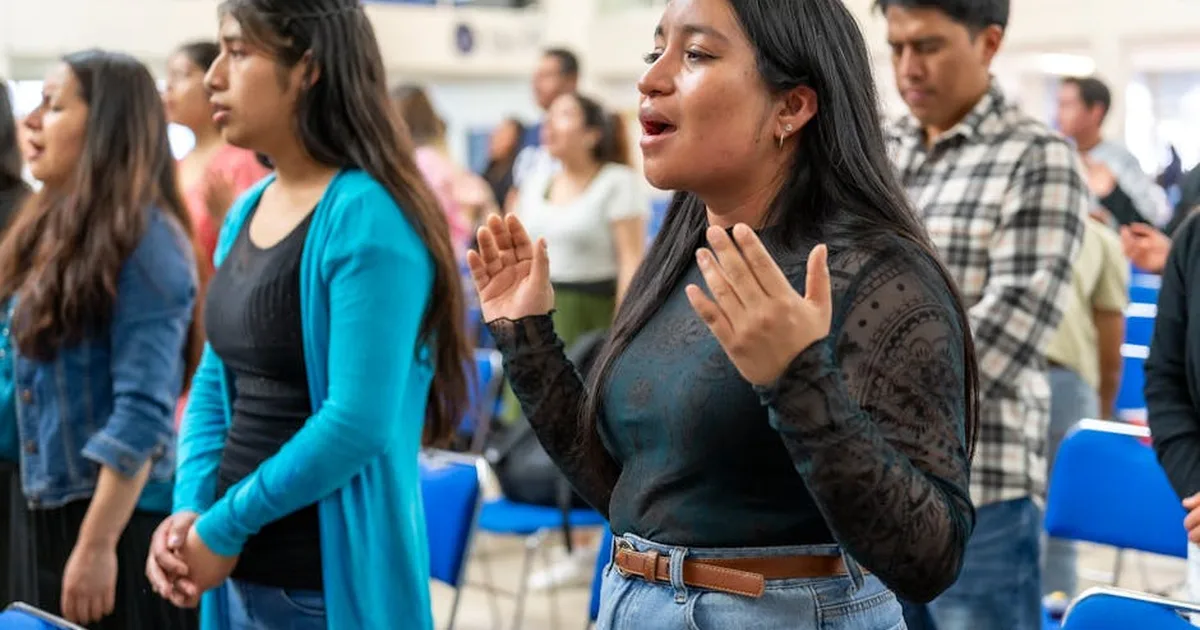
Across Latin America and around the world, brothers and sisters in faith have walked through seasons of legal uncertainty, where the future seemed unclear and basic rights felt fragile. As a Christian community, we've witnessed how faith becomes an anchor when everything around us seems to shift. God's Word reminds us in Hebrews 11:1 that "faith is confidence in what we hope for and assurance about what we do not see."
This assurance in divine promises is what sustains so many families who have faced complex immigration processes, endless paperwork, and the anxiety of not knowing what tomorrow holds. In the midst of these circumstances, the church has risen as both refuge and extended family, demonstrating that Christ's love transcends borders and legal situations.
The Faith Community as Support
When someone arrives in a new country, everything is unfamiliar: customs, laws, even ways of relating to others. In the midst of this uprooting, the Christian community becomes a safe harbor where unconditional acceptance is found. No matter where you come from or what documents you have, in God's family you are welcomed as a brother or sister.
I remember the story of a family who shared in a Bible study group how their small congregation walked with them through years of immigration uncertainty. Church members prayed with them, helped with practical needs, and above all, constantly reminded them that their primary identity wasn't in an official document, but in being sons and daughters of the heavenly King. As Galatians 3:28 says: "There is neither Jew nor Gentile, neither slave nor free, nor is there male and female, for you are all one in Christ Jesus."
This unity in Christ is especially powerful when we face systems that can make us feel less valuable or marginalized. The church, when living out its calling authentically, becomes that space where every person is seen with the dignity God has given them. Pastors and leaders play a crucial role in reminding the congregation of this fundamental gospel principle.
The Pastoral Role in Times of Trial
Spiritual leaders who walk alongside people in complex immigration situations develop a deeply incarnational ministry. It's not just about giving advice from the pulpit, but about accompanying daily life—helping navigate paperwork, offering job references, or simply being present when anxiety threatens to steal peace. This accompaniment reflects the heart of Jesus, who identified with the marginalized and vulnerable of his time.
In Matthew 25:35-40, Jesus teaches us: "For I was hungry and you gave me something to eat, I was thirsty and you gave me something to drink, I was a stranger and you invited me in, I needed clothes and you clothed me, I was sick and you looked after me, I was in prison and you came to visit me... Truly I tell you, whatever you did for one of the least of these brothers and sisters of mine, you did for me." This passage challenges us to see Christ in every person who comes to our community needing welcome.
Gratitude That Transforms
When resolution finally comes after a prolonged legal situation, the emotion that floods the heart is indescribable. It's not just relief about the document obtained, but a deep gratitude toward God who sustained through the process, and toward the community that became family. This gratitude often transforms into a powerful testimony of God's faithfulness.
Many who have walked this path discover a new calling to support others facing similar challenges. Their experience becomes a bridge of empathy and practical wisdom. The church grows stronger when we allow our stories of struggle and victory to intertwine, creating a tapestry of mutual support that reflects the early Christian communities described in Acts.
As we continue to navigate uncertain times together, let's remember that our faith isn't meant to be lived in isolation. The Christian journey is fundamentally communal—we need each other's prayers, practical help, and reminders of God's promises. Whether you're currently in a season of stability or uncertainty, know that you are part of a family that spans nations and circumstances, united by the love of Christ that knows no borders.





Comments