
In these times when uncertainty seems to be our constant companion, many of us wonder how to face the fear produced by illness, pain, or even the prospect of our own finitude. As Christians, we have a source of hope that transcends our circumstances: faith in Jesus Christ, who transformed suffering into a path of redemption.
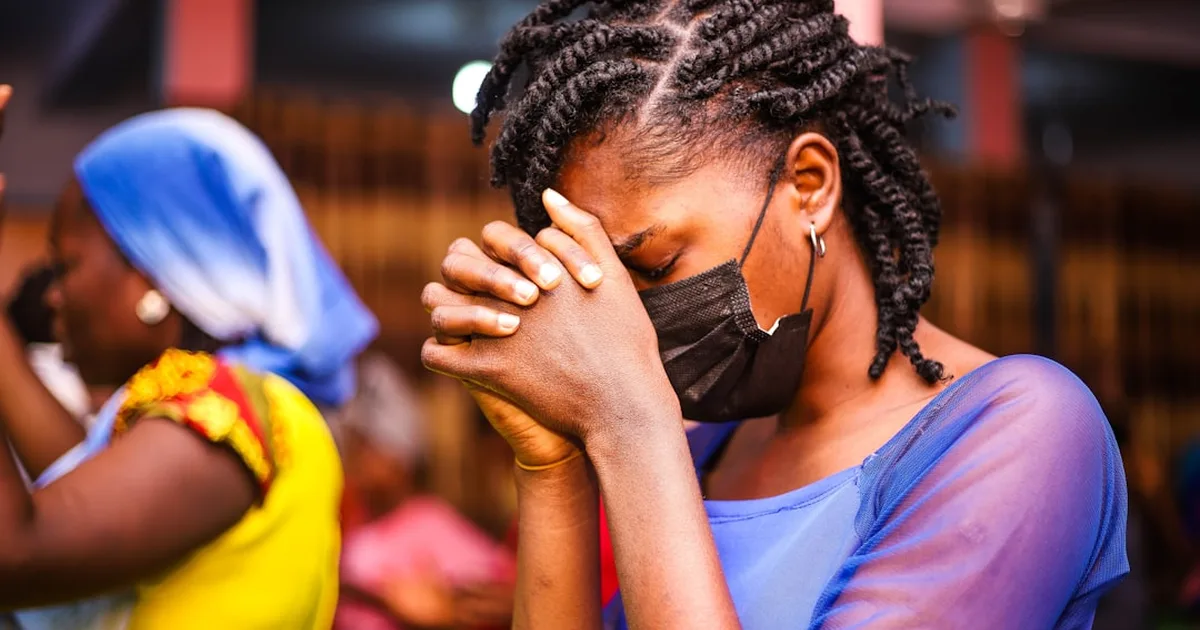
Recently, Pope Leo XIV, who assumed the Petrine ministry in May 2025 following the passing of Pope Francis, has reminded us of a profoundly evangelical truth: in Christ, our frailty ceases to be a condemnation and becomes a space for encounter with God. The Holy Father has emphasized how the most difficult experiences can help us discern what is truly essential in our spiritual lives.
The Compassion of Jesus: A Divine Model
When we read the Gospels, we find a Jesus who does not keep his distance from human pain. On the contrary, he draws near, touches, heals, and comforts. Let us remember that encounter with the leper who, marginalized by all, dared to approach the Master with a plea full of faith: "Lord, if you are willing, you can make me clean." Jesus, moved with compassion, reached out his hand and touched him, saying, "I am willing; be clean" (Matthew 8:2-3, NIV).
"When he saw the crowds, he had compassion on them, because they were harassed and helpless, like sheep without a shepherd" (Matthew 9:36, NIV).
This compassion was not a passing feeling but the very expression of God's heart. Jesus identified so deeply with those who suffered that he said: "I was hungry and you gave me something to eat, I was thirsty and you gave me something to drink, I was a stranger and you invited me in" (Matthew 25:35, NIV). In the face of the one who suffers, Christ recognizes his own face.
Suffering Transformed into Love
What makes the Christian perspective on pain different? It is not that we deny its reality or its harshness. On the contrary, faith allows us to look beyond the present moment, discovering that in God's hands, even the most difficult things can become instruments of grace. As Pope Leo XIV notes, "with Jesus, pain is transformed into love, redemption, and fraternal help."
This transformation is not magical or automatic. It requires that we welcome Christ into our lives, allowing him to be that "physician who can forever heal the illnesses of the soul," as the Holy Father expresses it. The healing that Jesus offers goes beyond the physical: it touches the deepest part of our being, restoring our relationship with God and with others.
Walking Together in Solidarity
The experience of frailty has a communal dimension that we cannot ignore. When we recognize our limitations, we become more sensitive to those of others. Solidarity ceases to be an abstract idea and becomes concrete gestures of closeness and tenderness.
The apostle Paul exhorts us: "Rejoice with those who rejoice; mourn with those who mourn" (Romans 12:15, NIV). This capacity to share joys and sorrows is an essential part of the Christian way of life. We are not islands, but members of one body that hurts when one of its parts suffers.
Four Dimensions of God's Way
In his reflection, Pope Leo XIV presents us with four characteristics of how God relates to us:
- Compassion: Not pity from a distance, but "suffering with," entering into the pain of the other.
- Closeness: God does not observe us from afar; in Jesus, he became Emmanuel, "God with us."
- Tenderness: Like a father with his child, God treats us with delicacy and care.
- Solidarity: He becomes one with us, bearing our weaknesses upon himself.
These characteristics invite us to imitate God's heart in our relationships. In a world that often rewards strength and self-sufficiency, the Christian path calls us to recognize our vulnerability as a place of encounter with divine grace.





Comments