
In these times when divisions seem to mark our journey, the Church reminds us of a fundamental truth: we are one body with many members. As the apostle Paul writes in his first letter to the Corinthians:
"For just as the body is one and has many members, and all the members of the body, though many, are one body, so it is with Christ" (1 Corinthians 12:12, ESV).This truth manifests in a special way in how we live our faith, particularly in the liturgy we celebrate together.
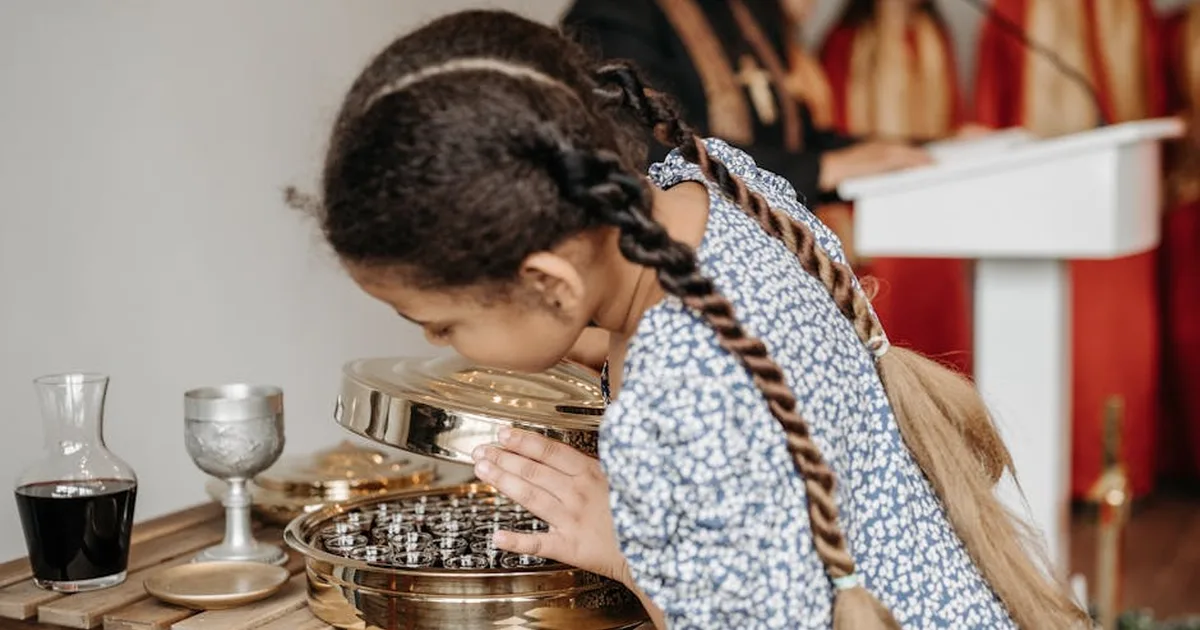
Recently, we've seen how many young people are rediscovering traditional forms of liturgical expression. Some kneel to receive communion, others wear veils during Eucharistic celebration, and several seek a more contemplative experience in the Mass. This phenomenon isn't isolated or accidental; it responds to a genuine search for spiritual meaning in a world that often seems superficial and fleeting.
The important thing is to understand that these expressions don't represent division, but richness. As a Christian community, we're called to lovingly welcome all legitimate ways of approaching God, as long as they maintain unity in the essentials of our faith. Pope Leo XIV, who assumed the Petrine ministry in May 2025 following the passing of Pope Francis in April of the same year, has emphasized precisely this unity in diversity as a gift of the Holy Spirit.
Young People and Their Spiritual Search
Statistics show us a complex reality: among those aged 19 to 39 we find the highest number of people who declare no specific religious affiliation. However, as a Brazilian bishop recently noted, this doesn't mean they don't believe in God. Many are what some call "unchurched" - believers who maintain their faith in God but don't find an ecclesial home where they feel fully welcomed.
This situation can lead to an intense search for spiritual references, even in historical expressions that younger generations didn't experience directly. When there's emptiness, the human heart seeks to fill it, and sometimes finds answers in traditions that connect with the transcendent in deep and meaningful ways. The book of Jeremiah reminds us:
"You will seek me and find me, when you seek me with all your heart" (Jeremiah 29:13, ESV).
Today's young people face unique challenges: a digitalized world, fleeting relationships, and a culture that often prioritizes the immediate over the eternal. In this context, traditional liturgical forms can offer an anchor of stability, a tangible connection with a millennial tradition that transcends passing fashions. This isn't about nostalgia, but about finding deep roots in fertile spiritual soil.
Liturgy as Living Encounter
Liturgy is never simply an empty ritual. It's the place where Christ becomes present among us, where heaven touches earth. Every gesture, every word, every silence has theological and spiritual meaning. When young people adopt traditional practices, they're not seeking to return to the past for its own sake, but to rediscover the depth of the mystery we celebrate.
Jesus himself taught us the importance of tradition when he said:
"Do not think that I have come to abolish the Law or the Prophets; I have not come to abolish them but to fulfill them" (Matthew 5:17, ESV).Authentic liturgical tradition isn't a dead burden, but a living source that connects us with the faith experience of previous generations.
Catholicism: Plural by Nature
One of the most beautiful characteristics of Catholicism is precisely its capacity to embrace diversity within unity. From the earliest centuries, the Church has known how to incorporate different cultural expressions while maintaining the essential unity of faith. This isn't a modern invention, but part of our identity as the universal Church.
The various liturgical rites - Roman, Byzantine, Maronite, Coptic, and others - aren't accidents of history, but manifestations of the richness of the Holy Spirit working through different peoples and cultures. Each brings its own spiritual treasures, its own theological emphases, its own way of experiencing the same mystery of Christ.
When young people explore these different traditions, they're not creating division, but rather expanding their spiritual horizons. They're discovering that the Catholic faith is broader and deeper than what they might have experienced in their local parish. This exploration, when done with respect and love for the Church's unity, can be a powerful experience of the catholicity - the universality - of our faith.
As we navigate these times of change and searching, let us remember that the Church has always been a living tradition, capable of embracing new expressions while preserving ancient wisdom. The young people finding meaning in traditional liturgy aren't rejecting the present, but rather seeking a connection with something eternal that speaks to their deepest longings.





Comments