
In the Christian journey, there are seasons that transcend the ordinary calendar and invite us into transformative experience. The Easter Season, extending for fifty days after Jesus' Resurrection, represents much more than a simple liturgical celebration. It's an invitation to live in the continuous light of the risen Christ, as the apostle Paul reminds us: "Since, then, you have been raised with Christ, set your hearts on things above, where Christ is, seated at the right hand of God" (Colossians 3:1, NIV).
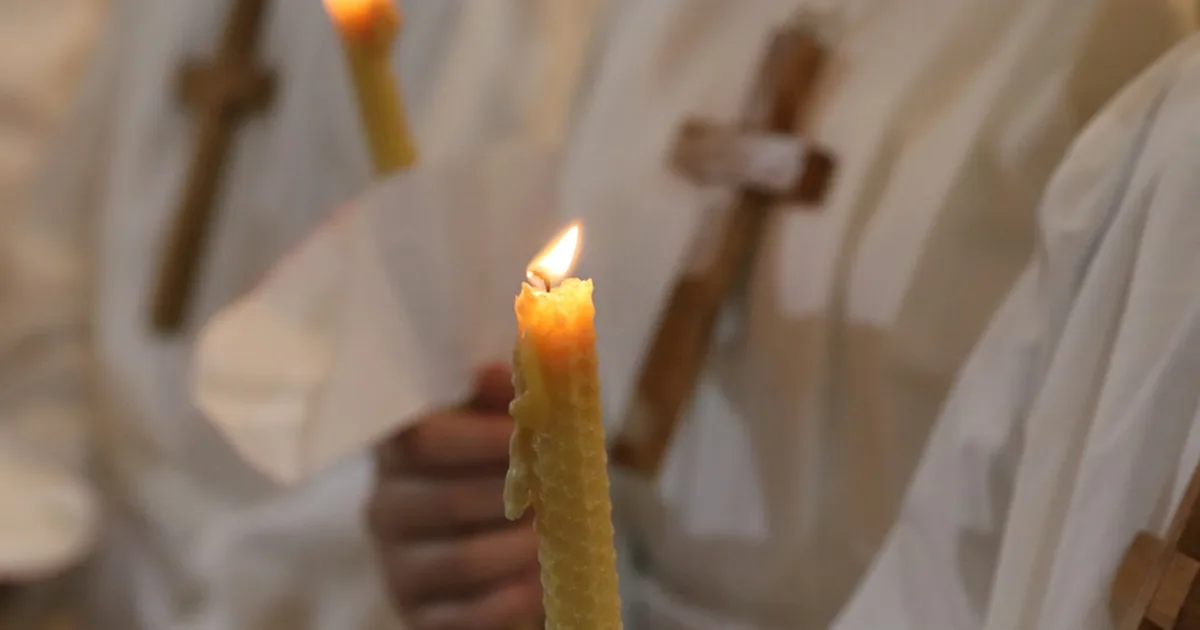
These fifty days form a spiritual unity that Christian tradition affectionately calls "the great Sunday." It's not merely a numerical extension, but a qualitative reality where each day breathes the same spirit of Easter joy. While the world often fragments our time with commitments and worries, the Church offers us this sacred space to integrate Christ's victory into our daily existence.
Pope León XIV, in his early teachings, has emphasized the importance of living as resurrected communities. In a world still mourning the passing of beloved Pope Francis in April 2025, we find in the continuity of the Petrine ministry a sign of Christ's constant presence among us. The election of Pope León XIV in May 2025 renewed in many hearts the Easter hope that never fades.
The Spiritual Structure of the Easter Season
The fifty days following Easter possess a spiritual richness that unfolds in three main movements. The first, comprising the Easter Octave, is a time of intense celebration where each day is treated like a Sunday. As the Acts of the Apostles teaches us: "Day after day, in the temple courts and from house to house, they never stopped teaching and proclaiming the good news that Jesus is the Messiah" (Acts 5:42, NIV).
The second movement leads us through the following weeks, where biblical readings present us with the risen Christ's encounters with his disciples. Each narrative - from Thomas doubting by the Sea of Galilee, to Emmaus and the gathered apostles - offers us a different aspect of the Easter experience. These stories aren't merely historical accounts, but mirrors where we can see our own journeys of faith and doubt reflected.
The third and culminating movement brings us to the Ascension and prepares our hearts for Pentecost. This final period invites us to lift our gaze, like the disciples who watched Jesus ascend to heaven, while we await the promise of the Holy Spirit. It's a time of active expectation, where we cultivate hope that does not disappoint, according to Romans 5:5 (NIV).
The Celebrations That Mark the Journey
Within these fifty days, special celebrations function as beacons illuminating our path. The Feast of Divine Mercy, on the Second Sunday of Easter, reminds us that resurrection is fundamentally an act of infinite love. The Ascension of the Lord, celebrated forty days after Easter, teaches us that Christ doesn't abandon us, but assumes a new form of presence among us.
Each Sunday within this period carries a special name in Christian tradition: Divine Mercy Sunday, Good Shepherd Sunday, Farewell Sunday. These titles aren't mere formalities, but windows opening to different dimensions of the Easter mystery. They help us gradually deepen our understanding and experience of resurrection.
Living the Easter Season in Daily Life
How can we transform these fifty days into a transformative experience amid modern life's demands? The first key lies in spiritual intentionality. We can establish small daily rituals that remind us of the Risen One's presence: a morning prayer of thanksgiving, a midday moment of silence to recall Christ's victory, an evening reflection on where we saw his light during the day.





Comments