
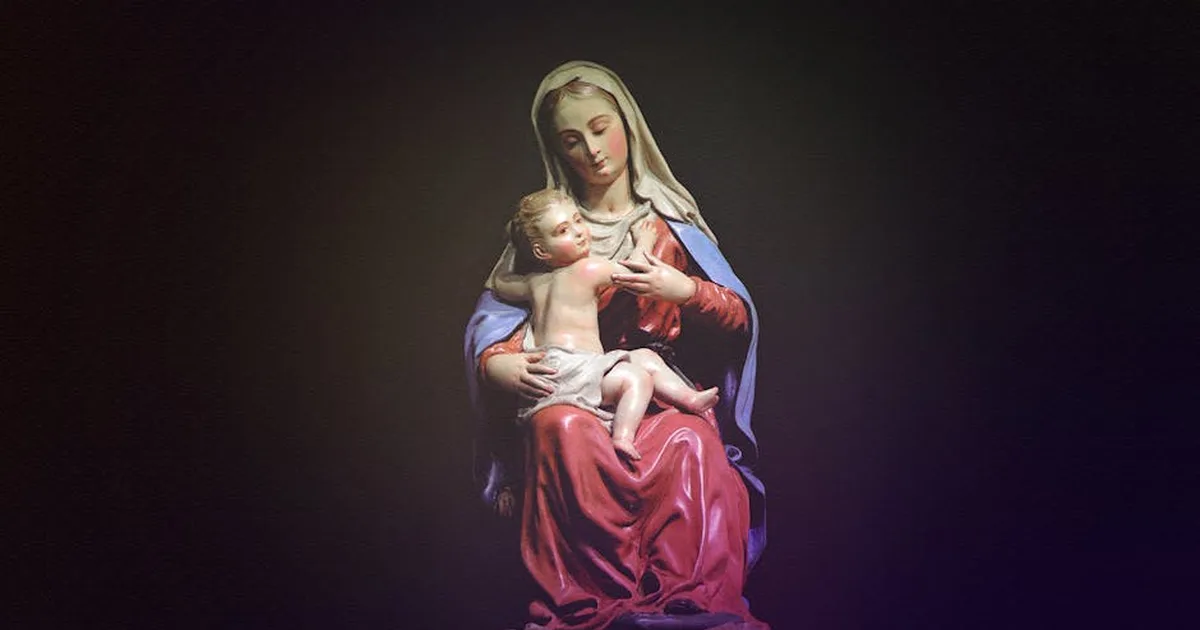
In a cultural moment where faith is often sidelined or sensationalized, the film Mother Mary steps into the spotlight with a bold visual language. Starring Anne Hathaway, the movie weaves a narrative that draws heavily on Catholic imagery—halos, rosaries, and Marian iconography. For Christian audiences, this raises important questions: How should we engage with art that borrows sacred symbols? Can a secular film carry spiritual truth?
As an ecumenical platform, we believe that stories, even those told outside the church, can reflect God's grace. Yet we must also approach them with discernment, recognizing that symbols can be emptied of meaning when used carelessly. This article explores the film's use of Catholic symbolism, offers biblical perspective, and invites readers to consider how we can engage with popular culture without compromising our faith.
The Power of Symbolism: A Double-Edged Sword
Symbols have always been central to Christian worship. The cross, the fish, the bread and wine—these are not mere decorations but vessels of deep theological truth. In Mother Mary, the director employs Marian imagery to evoke themes of motherhood, sacrifice, and grace. However, the context is not liturgical but cinematic, and the symbols are repurposed for dramatic effect.
This is not inherently wrong. Jesus himself used everyday objects—seeds, coins, sheep—to teach about the Kingdom. But when symbols are detached from their original meaning, they can become shallow or even misleading. For example, a rosary shown as a prop may lose its connection to prayer and meditation. As Paul writes in 1 Corinthians 10:31, “So whether you eat or drink or whatever you do, do it all for the glory of God.” Our engagement with culture must ultimately point to Him.
What Does the Bible Say About Images?
The Second Commandment warns against making idols (Exodus 20:4-6). Yet the Bible also uses visual imagery extensively—from the tabernacle to Ezekiel's visions. The key is intention. When we use images to worship God, they are helpful; when they replace God, they become dangerous. The film's imagery is not intended for worship, but it can still stir our hearts toward the divine if we watch with discernment.
“For now we see in a mirror dimly, but then face to face. Now I know in part; then I shall know fully, even as I have been fully known.” — 1 Corinthians 13:12 (ESV)
This verse reminds us that all human art is a partial reflection of God's glory. No film can capture the full reality of Mary's faith or Christ's sacrifice. But glimpses of truth can still inspire us to seek the real thing.
Mary as a Model of Faith
Regardless of denominational differences, Mary is a figure of profound humility and obedience. Her response to the angel Gabriel—“I am the Lord's servant... May your word to me be fulfilled” (Luke 1:38, NIV)—is a model for all believers. In Mother Mary, the character's journey echoes this surrender, though filtered through a modern lens.
The film may present Mary as a symbol of strength and compassion, qualities that align with Scripture. However, it is important to remember that the biblical Mary is not a goddess or a co-redemptrix, but a human who needed a Savior like all of us. She points to Jesus, not to herself. As she says in John 2:5, “Do whatever he tells you.”
When we watch films like this, we can appreciate the artistic portrayal while grounding our understanding in Scripture. Let Mary's example lead us to worship Christ, not the image on screen.
Practical Application: Engaging with Culture Wisely
How then should we respond to Mother Mary and similar works? Here are a few suggestions:
- Watch with a critical eye: Notice where the film aligns with biblical truth and where it diverges. Use these moments as conversation starters with fellow believers.
- Use the film as a bridge: If friends or family are curious about Christian symbols, explain their meaning. Let the movie open doors for gospel conversations.
- Focus on Christ: Whatever the film emphasizes, keep your eyes fixed on Jesus, the author and perfecter of our faith (Hebrews 12:2).
As you watch, consider this question: How can we appreciate art without letting it dilute our devotion? The answer lies in grounding ourselves in God's Word and allowing the Holy Spirit to guide our discernment.
A Final Reflection
Art has the power to move us, challenge us, and even draw us closer to God. Mother Mary is a cultural artifact that invites Christians to engage with faith in the public square. While the symbols may be superficial, the questions they raise are not: What does it mean to be a servant of God? How does grace transform a life? And who is this Jesus that Mary pointed to?
May we always seek the substance behind the symbol, and may our faith be rooted not in images but in the living Word.





Comments