
In the business world, faith and work are often seen as separate spheres. But some leaders prove otherwise. Gonzalo Gortázar, CEO of CaixaBank, is a living example of how Christian values can shape a successful career. In a recent interview, he shared how two Bible passages have guided his management. Beyond his story, this article invites you to reflect on how you, too, can integrate faith into your work—whatever your profession.
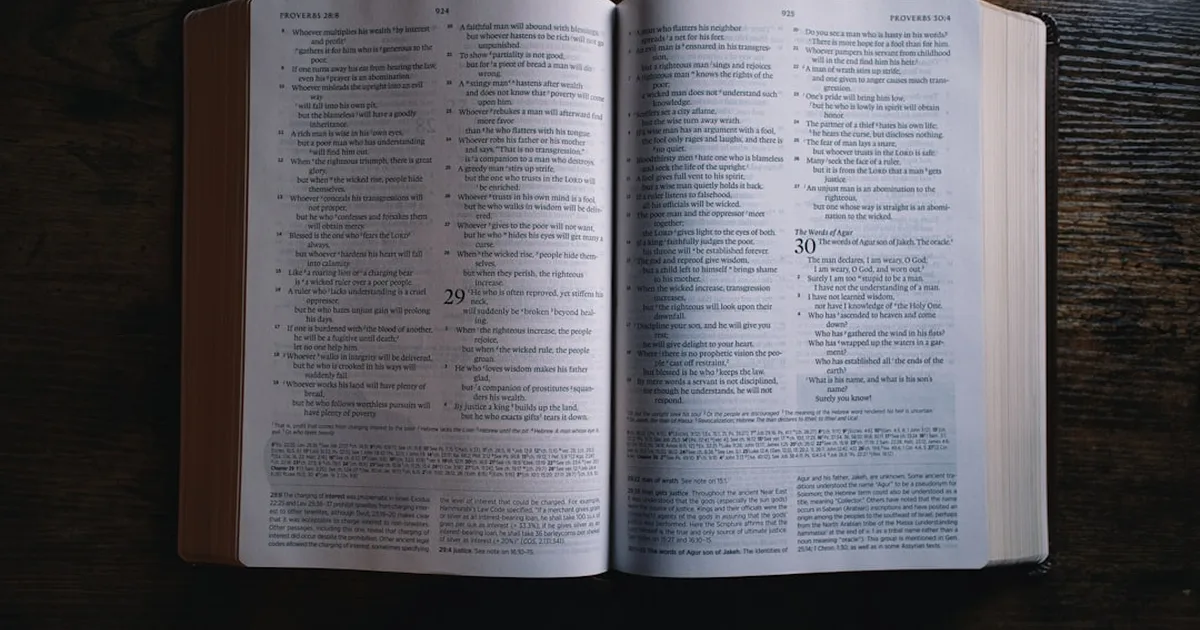
The Bible is full of principles that apply to leadership, decision-making, and relationships. It's not about being perfect, but about seeking God's wisdom in every step. As Proverbs 3:5-6 (NIV) says: "Trust in the Lord with all your heart and lean not on your own understanding; in all your ways submit to him, and he will make your paths straight."
Two Passages That Transform Management
Gortázar mentioned two biblical texts that guide him: one from the Old Testament and one from the New. Let's look at each and how they can apply to your life.
Micah 6:8 – Justice, Mercy, and Humility
The prophet Micah sums up what God requires: "He has shown you, O mortal, what is good. And what does the Lord require of you? To act justly and to love mercy and to walk humbly with your God" (Micah 6:8, NIV). For a business leader, this means making fair decisions with employees, customers, and society; showing compassion in tough times; and recognizing that success depends not only on human effort but on God's grace.
In practice, this can translate into social responsibility policies, equitable treatment, and servant leadership. Jesus himself taught that the greatest among you should be your servant (Matthew 23:11). How can you apply this verse in your work today?
Matthew 25:14-30 – The Parable of the Talents
Jesus told a story of a man who entrusted his property to his servants. Some received more talents, others fewer, but he expected them all to put the money to work. Those who multiplied what they received were rewarded; the one who buried it was punished. This parable speaks of managing well the resources God gives us: time, skills, money, and influence.
Gortázar sees in this parable a call to responsibility and purposeful productivity. It's not about hoarding wealth out of greed, but using what we have to bless others and honor God. As Colossians 3:23 (NIV) says: "Whatever you do, work at it with all your heart, as working for the Lord, not for human masters."
Practical Lessons for Daily Life
These principles aren't just for CEOs. Anyone can apply them in their own context. Here are a few ideas:
- At work: Strive for excellence not for recognition, but as an act of worship. Treat colleagues with justice and compassion.
- At home: Manage your time and resources to prioritize love and service to your family.
- In your community: Use your talents to help those in need, just as Jesus taught.
Faith isn't just for Sunday; it's for every decision you make. As Gortázar said, his Christian upbringing has given him a moral compass in a complex world. You can have that compass too.
Final Reflection
Imagine that your working life ends today. What would you like people to say about you? That you were a successful leader by the world's standards, or that you were faithful to the values of the Kingdom? We encourage you to read Micah 6:8 and Matthew 25:14-30 this week, and ask yourself: How can I live these principles in my work and home? The answer might change how you see every day.
"Well done, good and faithful servant! You have been faithful with a few things; I will put you in charge of many things. Come and share your master's happiness!" (Matthew 25:21, NIV)





Comments