
In the Italian music scene, Achille Lauro stands out not only for his innovative style but also for a profound spiritual search that permeates his recent works. The presentation of "Comuni Immortali," a special edition of his artistic project, offered an opportunity to reflect on the dialogue between faith and creativity in contemporary culture. The Roman artist, through his personal and professional journey, demonstrates how artistic expression can become a bridge to transcendent dimensions, inviting listeners to consider fundamental questions of human existence.
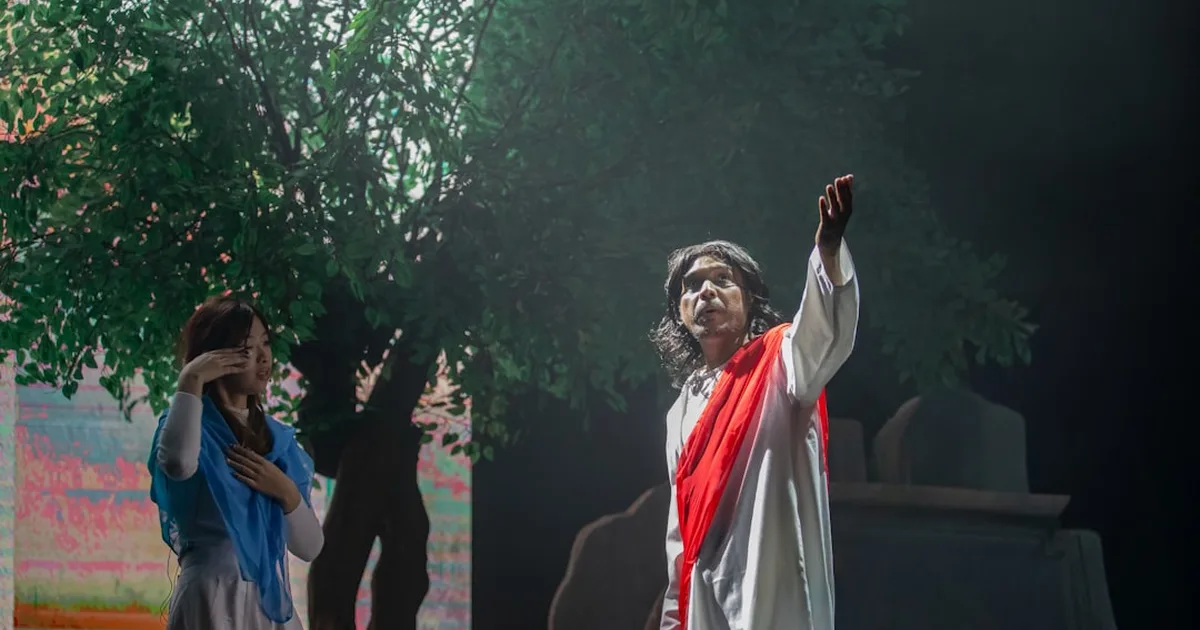
Lauro's spirituality doesn't manifest as mere thematic decoration but as the supporting structure of his musical narrative. Through symbols like angels and demons, the artist explores the complexity of the human condition—that tension between light and shadow that characterizes every faith journey. This search echoes the words of the apostle Paul: "For the creation waits in eager expectation for the children of God to be revealed" (Romans 8:19, NIV). Just as creation waits, so art often anticipates and seeks manifestations of the divine in the human.
The Pope's Role in Promoting Peace: A Christian Perspective
During the presentation of his work, Achille Lauro expressed significant thoughts about the Petrine ministry in the contemporary Church. "As a believer, I think it's obvious that the Pope should speak out for peace," affirmed the artist, emphasizing how the vocation to reconciliation is intrinsic to the office of the Successor of Peter. This observation gains particular relevance in the current context, where Pope León XIV, elected in May 2025 after the passing of Pope Francis in April of the same year, continues to advance the Gospel message of peace in a world marked by conflicts.
The defense of peace represents a fundamental dimension of papal ministry, rooted in Christ's example: "Blessed are the peacemakers, for they will be called children of God" (Matthew 5:9, NIV). The Pope, as universal shepherd, has the responsibility to be a prophetic voice in contexts of tension, reminding believers and all people of good will of the Gospel imperative of reconciliation. This commitment isn't optional but springs from the very nature of the mission entrusted by Christ to Peter and his successors.
Generations in Conversation: From War Memory to Peace Culture
Lauro offered a particularly sharp generational reflection, comparing the experience of his grandmother, born in 1927 and a witness to war, with that of his generation, raised in "a bubble of prosperity" where armed conflict seemed to belong to the past. This contrast highlights how historical memory is essential for cultivating an authentic culture of peace. The Bible reminds us of the importance of transmitting memory: "Remember the days of old; consider the generations long past" (Deuteronomy 32:7, NIV).
Today, facing geopolitical tensions not seen for decades, the Christian community is called to rediscover its vocation to peace not as theoretical abstraction but as concrete commitment. The generation that hasn't directly known war has the particular responsibility to listen to the testimonies of those who lived through it, to build a different future. In this context, the Pope's voice represents a constant call to Gospel values that transcend political and cultural divisions.
Biblical Symbols in Contemporary Art: From Earthly Paradise to Redemption
The visual imagery of "Comuni Immortali" explicitly draws from biblical symbolism, with actress Celeste Dalla Porta interpreting a kind of new Eve in an earthly Paradise that evokes both original innocence and hope for redemption. This artistic representation dialogues with Christian tradition while inserting itself into contemporary visual language, demonstrating how religious symbols can acquire new meanings in different cultural contexts.
Art's ability to reinterpret biblical narratives isn't new, but it gains special relevance in an era where many young people find bridges to spirituality in cultural expressions like music and film. Lauro, through his work, shows that faith isn't incompatible with contemporary creativity but can inspire new forms of expression that speak to the hearts of current generations.





Comments