
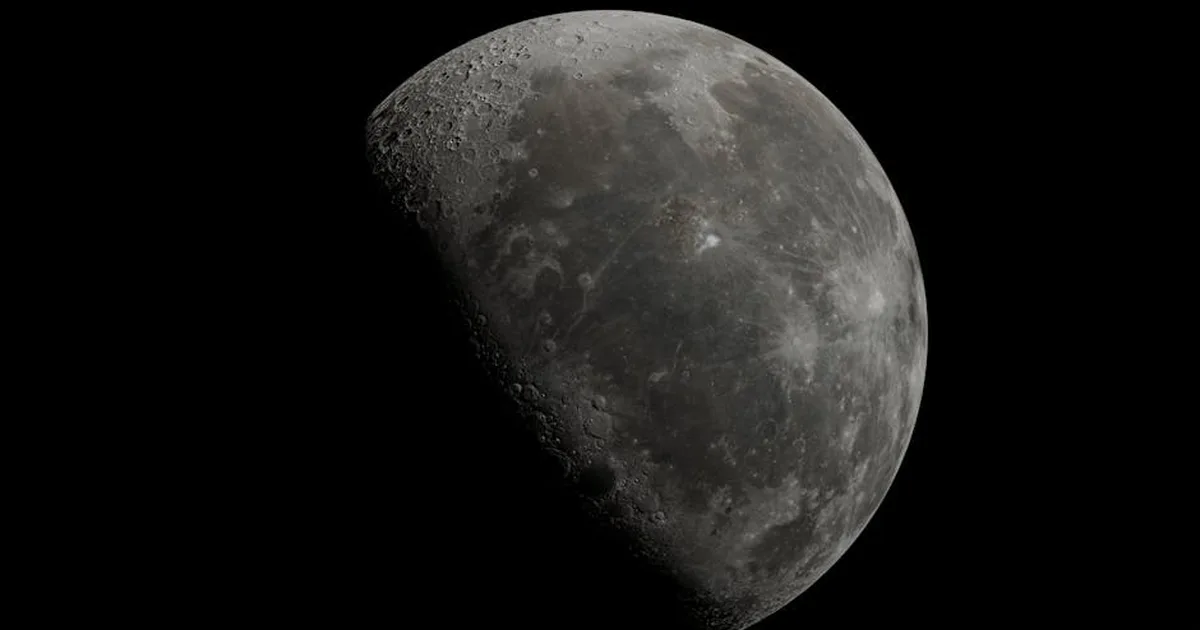
In October 2025, NASA's Artemis II mission accomplished something previously unimaginable: four astronauts orbited the Moon and gazed upon a scene no human had ever seen with their own eyes. During their ten-day journey, they reached the point where Earth disappeared as a slender crescent behind the lunar horizon — a so-called "earthset." For forty minutes they were without direct contact with their home world, until our planet reappeared on the opposite side. This "earthrise" from the perspective of the Moon's far side was captured in images that inspired wonder worldwide.
The Dual Dimension of Creation
The crew's photographs, including those of professing Christian Victor Glover, show Earth in its vulnerable beauty — a blue jewel in the blackness of space. The psalmist sings: "The heavens declare the glory of God; the skies proclaim the work of his hands" (Psalm 19:1 NIV). These images invite us to marvel anew at the Creator's greatness and glory. At the same time, they remind us of humanity's responsibility for this precious planet. In the vastness of the universe, Earth appears both wonderful and fragile.
Technology and Faith in Dialogue
The Artemis II mission represents an impressive human achievement. It shows what heights people can reach when they use their gifts and abilities. The Bible encourages us: "Whatever your hand finds to do, do it with all your might" (Ecclesiastes 9:10a NIV). At the same time, humility before the One who created heaven and earth remains essential. Space exploration can help us understand afresh the words of the Apostle Paul: "For since the creation of the world God's invisible qualities—his eternal power and divine nature—have been clearly seen, being understood from what has been made" (Romans 1:20 NIV).
Shadows in the Light of Conquest
Amid all the fascination with technological achievements, we must not overlook that space exploration is not free from earthly tensions either. Historically, the race to the Moon has always been marked by geopolitical rivalries — first between the United States and the Soviet Union, today in changed forms. This dynamic recalls the biblical diagnosis of human nature: "For where you have envy and selfish ambition, there you find disorder and every evil practice" (James 3:16 NIV). Fallen creation manifests itself even where humans reach new frontiers.
"And God said, 'Let there be lights in the vault of the sky to separate the day from the night, and let them serve as signs to mark sacred times, and days and years, and let them be lights in the vault of the sky to give light on the earth.' And it was so." (Genesis 1:14-15 NIV)
A Spiritual Perspective on Boundary Expansion
The Christian tradition knows the tension between human exploratory spirit and necessary humility. On one hand, the Bible encourages responsible use of creation; on the other, it warns against hubris. The story of the Tower of Babel (Genesis 11:1-9) illustrates how human ambitions without reference to God can end in emptiness. Space exploration poses the question: Do our technological advances serve the well-being of all people and the preservation of creation, or do they follow other motivations?
Hope Beyond All Horizons
The images of "earthrise" beyond the Moon can be read as a powerful symbol of Christian hope. Just as Earth reappeared on the horizon after the period of radio silence, so Christian faith proclaims that after times of darkness, new light dawns. This hope is not grounded in human technology, but in God's promise: "I am making everything new!" (Revelation 21:5a NIV).





Comments