
For centuries, the Diocese of Derry has been a spiritual anchor in Ireland, tracing its roots back to the 12th century. But now, its outgoing bishop, Donal McKeown, has raised a sobering possibility: his successor might be the last bishop to lead this historic diocese. In a recent interview, McKeown shared his concerns about declining church attendance, shrinking resources, and the need for a radical rethinking of how the Church serves its community. While his words are specific to Derry, they echo challenges faced by Christian communities across the Western world.
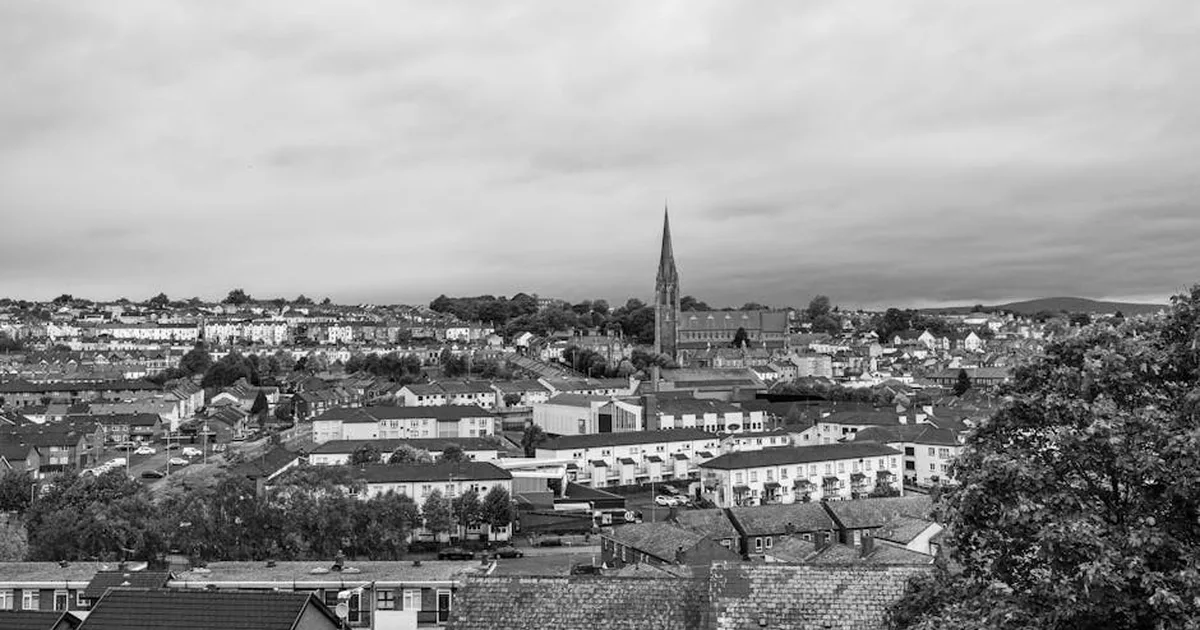
McKeown, who recently celebrated his silver jubilee as a bishop, spoke candidly about the realities of a changing religious landscape. He emphasized that his comments were not meant to sow fear, but to spark honest conversation about the future. “We need to ask ourselves what God is calling us to be,” he said. “The structures we have may not survive, but the Gospel will.”
This reflection invites all Christians to consider how we adapt to new circumstances while holding fast to our faith. The Apostle Paul reminds us in 1 Corinthians 3:11, “For no one can lay any foundation other than the one already laid, which is Jesus Christ.” The foundation remains, even if the building looks different.
Challenges Facing the Church Today
The Diocese of Derry is not alone in facing decline. Across Ireland and much of Europe, church attendance has dropped significantly over the past few decades. Fewer people are entering religious life, and many parishes struggle to maintain their buildings and programs. Bishop McKeown noted that the current model of diocesan structure may no longer be sustainable. He suggested that the Church might need to consolidate resources, share clergy across wider areas, and focus on smaller, more intentional communities of faith.
These challenges are not unique to the Catholic Church. Many Protestant denominations face similar issues. However, McKeown’s perspective offers a pastoral approach: rather than seeing decline as failure, he views it as an opportunity for renewal. In the Bible, we see God often works through periods of uncertainty. The prophet Isaiah writes, “Forget the former things; do not dwell on the past. See, I am doing a new thing!” (Isaiah 43:18-19a, NIV).
This is not a time for despair, but for creativity and prayer. Christians are called to be faithful stewards of the Gospel, not preservers of institutions. As Jesus said in Matthew 16:18, “I will build my church, and the gates of Hades will not overcome it.” The Church is ultimately Christ’s, and He will sustain it.
What Can Local Churches Learn from Derry?
The situation in Derry provides lessons for congregations everywhere. First, it highlights the importance of honest assessment. Churches must be willing to look at their realities—attendance numbers, financial health, community impact—and ask hard questions. Second, it underscores the need for collaboration. No single parish or diocese can thrive in isolation. Sharing resources, ideas, and even buildings can strengthen the Body of Christ.
Third, it reminds us that the Church exists for mission, not maintenance. The goal is not to keep the doors open, but to make disciples. As Jesus commissioned his followers, “Go therefore and make disciples of all nations” (Matthew 28:19, ESV). Every church, whether in a thriving city or a rural village, can focus on that mission.
A Hopeful Vision for the Future
Bishop McKeown’s interview was not all doom and gloom. He expressed hope that a smaller, more nimble Church could be more authentic and impactful. He envisioned a future where Christians are known for their love and service rather than their buildings or hierarchies. This aligns with the early Church, which grew rapidly despite having no official structures or grand cathedrals. The Book of Acts describes believers who “devoted themselves to the apostles’ teaching and to fellowship, to the breaking of bread and to prayer” (Acts 2:42, NIV). Their strength came from community and the Holy Spirit, not from institutions.
For the Diocese of Derry, the path forward may involve merging with neighboring dioceses or creating new models of leadership. But whatever happens, the Gospel will continue to be proclaimed. As Paul writes in Philippians 1:18, “The important thing is that in every way, whether from false motives or true, Christ is preached. And because of this I rejoice.”
Practical Reflections for Readers
Whether you attend a large church or a small one, the story of Derry invites you to consider your own faith community. How can you support your church in adapting to changing times? Perhaps you can volunteer for a ministry, invite a friend to service, or simply pray for your leaders. Remember that the Church is not a building but a people—the Body of Christ. Each member has a role to play.
Take a moment to reflect: What is one way you can help your church focus on its mission rather than its maintenance? Write it down, and commit to doing it this week. As Hebrews 10:24-25 encourages us, “Let us consider how we may spur one another on toward love and good deeds, not giving up meeting together, as some are in the habit of doing, but encouraging one another.”





Comments