
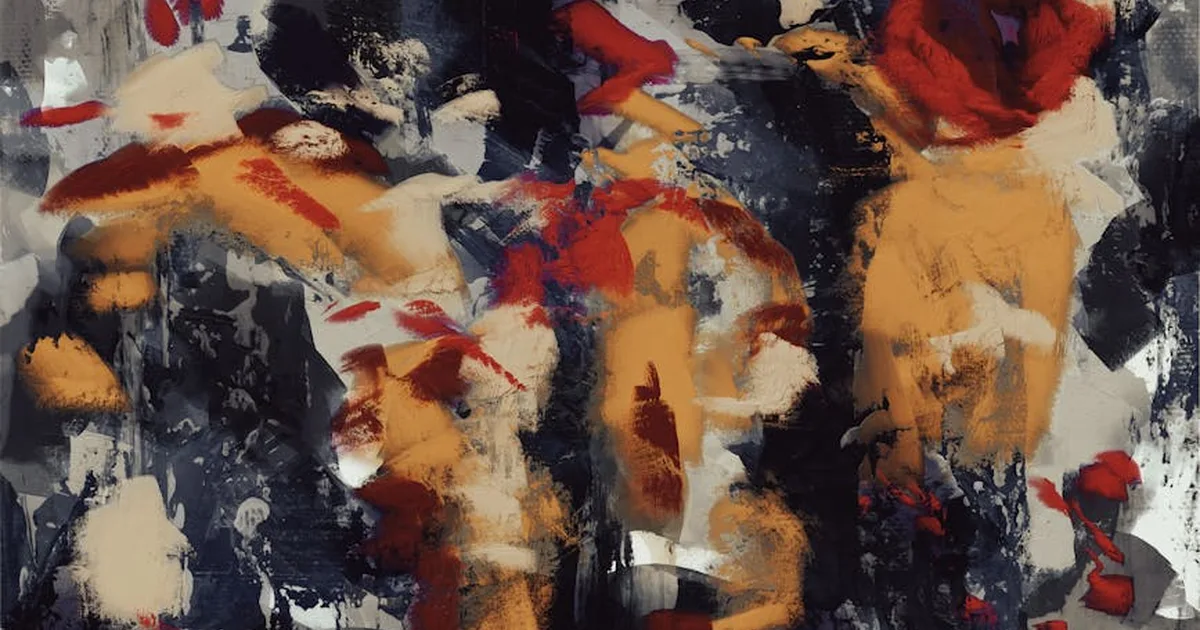
The art of Emil Nolde, born in 1867 as Hans Emil Hansen, continues to captivate with its intense color and expressive power. Many viewers sense a deep spirituality in his paintings that extends beyond the purely aesthetic. Nolde, who temporarily joined the expressionist artist group "Die Brücke," developed a distinctive style that captures nature, religion, and human emotions in radiant colors. His works invite not only aesthetic contemplation but also inner reflection and personal meditation.
For those interested in Christian art, Nolde's creations offer a special opportunity to reflect on the connection between faith and creative expression. His religious motifs—from biblical scenes to symbolic representations—speak a universal language of seeking and finding. In a time when many people yearn for authentic spiritual experiences, engaging with such art can open new perspectives.
Colors as Soul Language: Nolde's Artistic Approach
Emil Nolde once described color as "the true language of painting." In his works, colors become carriers of emotions and spiritual experiences. The glowing reds, deep blues, and intense yellows seem not only to depict the external world but also to reflect inner states. This approach recalls the biblical significance of colors and symbols as they repeatedly appear in Holy Scripture.
In the book of Exodus, we find detailed color descriptions for building the tabernacle: "They are to take the gold, and blue, purple and scarlet yarn, and fine linen" (Exodus 28:5, NIV). Colors also play a significant symbolic role in the Revelation of John. Nolde's intuitive color choices correspond in some ways to this traditional symbolic use of colors in religious context.
The Spirituality of Nature Depictions
Particularly in his landscape paintings and floral still lifes, Nolde shows an almost mystical attitude toward creation. His "Autumn Flowers" from 1931 radiates a vital energy that goes beyond mere representation. Here nature is not just depicted but celebrated—as an expression of divine creative power. The psalmist sings: "The heavens declare the glory of God; the skies proclaim the work of his hands" (Psalm 19:1, NIV).
Nolde's nature images can be understood as visual meditations on this biblical truth. They invite the viewer to recognize and honor the Creator in the beauty of creation. This attitude aligns with the ecumenical concern to perceive and appreciate God's work throughout the world.
Religious Motifs in Nolde's Work
Emil Nolde created numerous works with explicitly religious themes, including his famous "Life of Christ" series. These images are characterized by an unconventional, emotional portrayal of biblical events. Nolde approached the sacred stories not with academic distance but with personal engagement. His Christ depictions show a human, suffering Jesus who is close to people.
This approach finds a parallel in Jesus' invitation: "Come to me, all you who are weary and burdened, and I will give you rest" (Matthew 11:28, NIV). Nolde's religious images aim not to instruct but to touch—they speak to the heart, not just the mind. In a time when Pope León XIV leads the Church in new directions, such artworks remind us of the enduring power of the biblical message.
The Significance of Suffering in Nolde's Religious Depictions
Notable is the emphasis on suffering in many of Nolde's religious images. This corresponds to human reality and the Christian experience of redemption through pain. In his painting "Christ Among the Children," the expression of compassion on Jesus' face reflects a deep understanding of human suffering. As the apostle Paul wrote: "For just as we share abundantly in the sufferings of Christ, so also our comfort abounds through Christ" (2 Corinthians 1:5, NIV).
Nolde does not idealize suffering but presents it as an integral part of spiritual experience. This artistic honesty resonates especially in our contemporary era, where many people seek a faith that acknowledges the complexity of human life. His art reminds us that authentic spirituality does not evade pain but transforms it.
Conclusion: Emil Nolde's Spiritual Legacy
The work of Emil Nolde continues to speak to new generations of viewers, offering a bridge between artistic expression and spiritual seeking. His use of color, his treatment of religious themes, and his celebration of creation provide rich material for personal and communal reflection. In the ecumenical context of EncuentraIglesias.com, Nolde's art reminds us that beauty can be a pathway to the divine, transcending denominational boundaries.
As we contemplate these works, we can find inspiration for our own spiritual journey. As the psalmist wrote: "One thing I ask from the Lord, this only do I seek: that I may dwell in the house of the Lord all the days of my life, to gaze on the beauty of the Lord" (Psalm 27:4, NIV). Nolde's art, in its pursuit of truth and beauty, invites us to that same contemplation—a visual reminder that God reveals himself through human creativity and the wonder of his creation.





Comments