
In an era marked by global tensions and multiplying conflicts, the pursuit of peace presents itself not only as a human desire but as a fundamental Christian imperative. As believers, we are called to be peacemakers, remembering Jesus' words: "Blessed are the peacemakers, for they will be called children of God" (Matthew 5:9, NIV). This beatitude does not describe a passive condition but an active commitment, a choice requiring courage and determination.
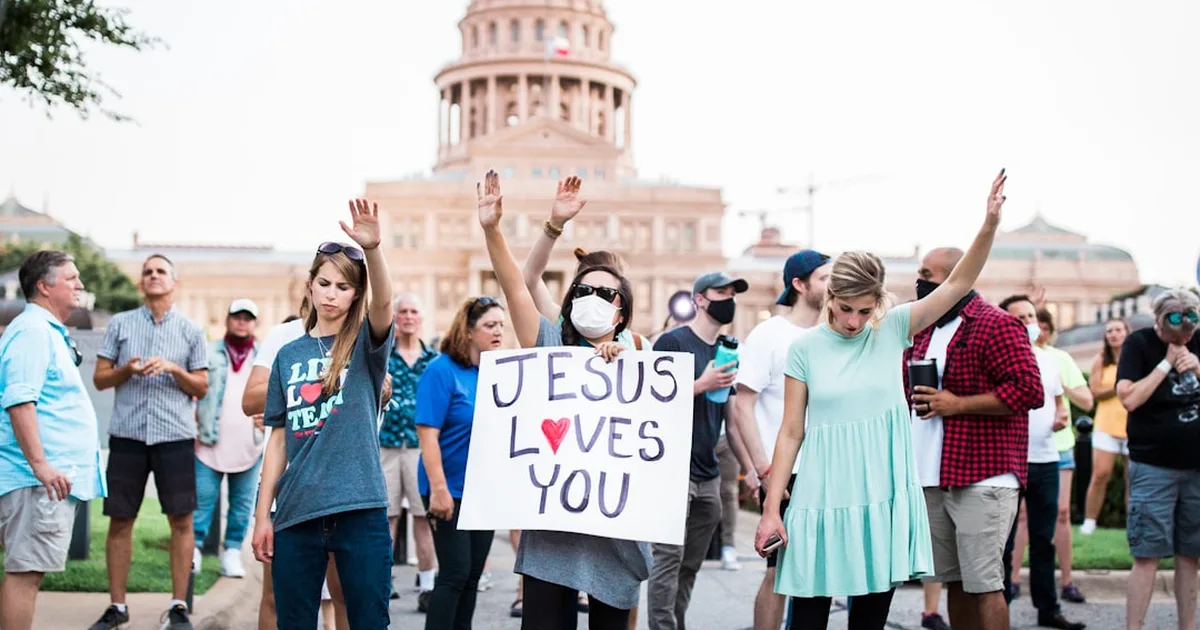
Peace, in the Christian vision, is not simply the absence of war. It is a state of harmony born from justice, respect for every person's dignity, and reconciliation. The prophet Isaiah offers us a powerful image: "They will beat their swords into plowshares and their spears into pruning hooks. Nation will not take up sword against nation, nor will they train for war anymore" (Isaiah 2:4, NIV). This prophetic vision points us in a direction, a path to walk with hope and perseverance.
Today, facing complex international scenarios, the Christian community is called to reflect on its own role. We cannot limit ourselves to praying for peace without committing to build it through concrete choices. As Pope Leo XIV reminds us in his recent addresses, peace demands "a heart open to dialogue and hands ready to build bridges." This pastoral vision invites us to overcome divisions and work for a more just and fraternal world.
Beyond Rhetoric: Concrete Choices for Peace
Peace is often spoken of in abstract terms, as an ideal distant from daily reality. Instead, peace is built through precise decisions and tangible paths. It requires abandoning the logic of confrontation and armament to embrace that of encounter and dialogue. As an ecumenical community, we can draw inspiration from the example of many witnesses who have dedicated their lives to reconciliation.
The diplomacy of patience represents a virtue often forgotten in our time. In an era dominated by rapid communications and the search for immediate solutions, the path toward peace requires time, mutual listening, and the ability to overcome obstacles with perseverance. Romans exhorts us: "If it is possible, as far as it depends on you, live at peace with everyone" (Romans 12:18, NIV). This "if possible" is not an excuse to give up but an invitation to do everything within our power.
Concrete proposals to promote peace can include supporting international mediation initiatives, educating for nonviolence in Christian communities, and promoting economies that prioritize integral human development over particular interests. As many international relations experts emphasize, we need to rethink foreign policy instruments from a long-term perspective, where security is founded not on mutual threat but on cooperation.
The Christian Community as a Peace Laboratory
Our ecclesial communities can become true laboratories of peace, places where reconciliation and forgiveness are experienced daily. The Eucharist itself is a memorial of the peace given by Christ, who broke down the dividing wall between peoples (cf. Ephesians 2:14). By participating in the common table, we are called to become builders of unity in diversity.
In the Lord's Prayer we ask: "Forgive us our debts, as we also have forgiven our debtors" (Matthew 6:12, NIV). This petition reminds us that inner peace and social peace are deeply connected. We cannot hope for world peace if we do not cultivate peace in our hearts and relationships. Forgiveness, often considered a weakness, is actually a revolutionary force that can break cycles of violence and open paths to reconciliation.
In our contemporary context, where polarization seems to grow daily, Christian communities have a unique opportunity. We can model respectful dialogue across differences, create spaces where diverse perspectives are heard, and demonstrate that unity does not require uniformity. The peace Christ offers is not merely personal tranquility but a transformative power that can heal relationships and communities.
As Pope Leo XIV emphasizes, every Christian is called to be an "artisan of peace" in their immediate environment: in family, workplace, and community. Small gestures of reconciliation, words that heal rather than wound, choices that prioritize the common good over personal interest—all these contribute to weaving the fabric of peace. In a fragmented world, our witness to unity in Christ can be a light of hope for many.





Comments