
In seventeenth-century France, while religious and political conflicts shook Europe, a young man named Nicolas Herman grew up in the small village of Hériménil. His life seemed destined to follow common paths, but the human heart often hides unexpected depths. Like many young men of his time, Nicolas found himself involved in the military events sweeping through Lorraine, experiences that marked not only his body but especially his soul.
The wounds of war left him with a permanent limp, but it was the inner wounds that pushed him toward a deeper search. During that period of suffering and convalescence, he began to ask essential questions about existence, the meaning of life, and the direction to give his days. The Bible reminds us that
"All things work together for good to those who love God" (Romans 8:28, NKJV), and even the most painful experiences can become instruments of grace when received with faith.
The Journey Toward Carmelite Vocation
After years of uncertainty and searching, during which he experienced different forms of spiritual life, Nicolas gradually came to understand his calling. Through the guidance of a Carmelite uncle, he discovered that religious life could be the answer to the restlessness of his heart. At twenty-six, he made a radical choice: he entered the Carmelite Order as a lay brother, humbly accepting to occupy the lowest places in the community.
He received the religious name Lawrence of the Resurrection, an appellation that already announced the transformation about to occur in his life. His novitiate was a time of deep spiritual formation, during which he learned the art of prayer according to the rich Carmelite tradition. The spiritual masters of Carmel, Saint Teresa of Jesus and Saint John of the Cross, became his companions on the interior journey.
The School of Continuous Prayer
The novice master introduced Brother Lawrence to what would become the main characteristic of his spirituality: the practice of the presence of God. It wasn't a complicated technique, but an attitude of the heart that learns to recognize the Lord in every moment of the day. As Saint Paul writes:
"Pray without ceasing" (1 Thessalonians 5:17, NKJV), an invitation that Brother Lawrence would make flesh of his flesh.
Holiness in Daily Service
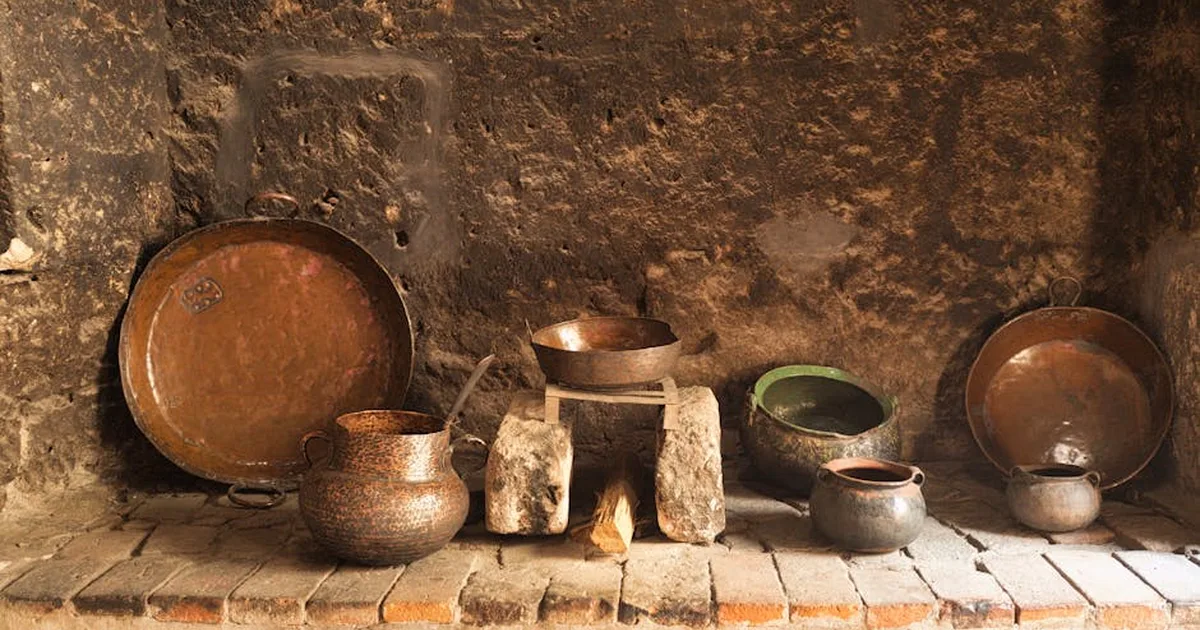
Assigned to the kitchen of the Rue Vaugirard convent in Paris, Brother Lawrence discovered that the humblest places can become sanctuaries of divine presence. While preparing meals for the large community, while washing pots or cleaning spaces, he cultivated a constant awareness of God. His spirituality didn't require special moments or privileged places, but transformed every action into an act of love.
His day was marked by the rhythm of manual work and liturgical prayer, but between one activity and another he maintained a continuous dialogue with the Lord. This constant union with God became the source of his inner peace and contagious joy. Visitors and brothers noticed in him a serenity that went beyond external circumstances, rooted in that divine presence he had learned to seek and find in everything.
The Kitchen as a Meeting Place
The convent kitchen, under Brother Lawrence's guidance, became not only a place for preparing material food, but also a space for welcome and spiritual sharing. Many came to him not so much for elaborate advice, but to absorb that peace emanating from his person. His wisdom was simple and practical, rooted in the daily experience of God's presence.
The Spiritual Legacy of a Lay Brother
Brother Lawrence's life teaches us that holiness isn't reserved for extraordinary moments, but is built in faithfulness to the everyday. His testimony continues to inspire Christians of all traditions to find God in the simplest tasks of daily life. In a world seeking the spectacular, his example reminds us that true transformation occurs in the heart that constantly opens itself to divine presence.





Comments