
In the Gospel of Mark, we find a powerful narrative that invites us to look beyond appearances. In Mark 11:12-26, Jesus approaches a fig tree with leaves, expecting to find fruit, but finds only empty promises. Then, He enters the Temple, the holiest place for the Jewish people, and finds there not sincere worship, but commerce that distorted the purpose of God's house. These two events, intertwined by the evangelist's narrative, are not just stories from the past. They are a mirror for our own spiritual journey, an urgent invitation to examine whether our faith produces fruit that pleases God.
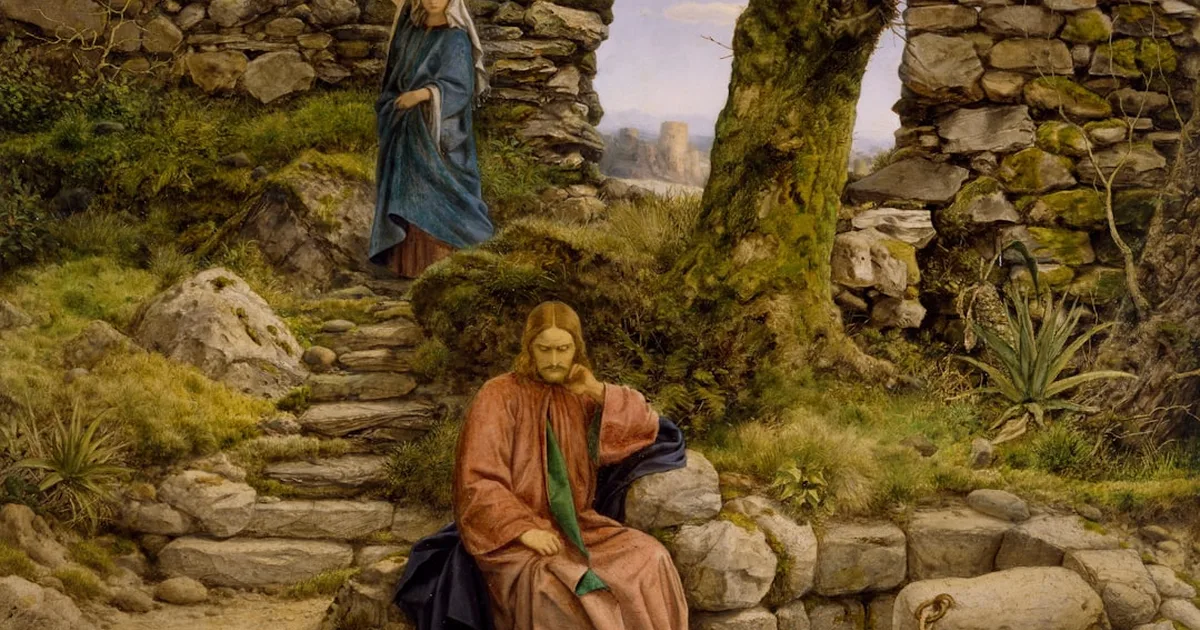
This moment in Jesus' life occurs shortly before His passion. He is in Jerusalem, the holy city, and His actions are loaded with prophetic meaning. The withered fig tree and the overturned money changers' tables speak of the same theme: disappointment with a religiosity that has lost its essence. As the prophet Isaiah reminds us, God declared: "These people come near to me with their mouth and honor me with their lips, but their hearts are far from me" (Isaiah 29:13, NIV). The scene in the Temple was the living manifestation of that word.
The Fig Tree That Promised and Did Not Deliver
The fig tree with leaves was a sign of life. In that region and time, when a fig tree displayed foliage, it was reasonable to expect it to also have the first fruits of the season, the so-called "early figs." Jesus was hungry and approached the tree with legitimate expectation. Finding it without fruit, despite its leaves, was more than a momentary disappointment; it was an opportunity for profound teaching.
In the Old Testament, the fig tree was often used as a symbol of the nation of Israel and its relationship with God. For example, in Jeremiah 8:13 (NIV), the Lord laments: "'When I would gather them,' declares the Lord, 'there are no grapes on the vine, nor figs on the fig tree; even the leaves are withered.'" The lack of fruit was associated with spiritual distance. Thus, Jesus' action was not a whim, but a living sign of God's judgment on a merely apparent faith.
The cursing of the fig tree, followed by its rapid withering "from the roots" (Mark 11:20), deeply impressed the disciples. Peter drew Jesus' attention to the fact, and the Master's response was one of the most transformative teachings about the power of faith: "'Have faith in God,' Jesus answered. 'Truly I tell you, if anyone says to this mountain, "Go, throw yourself into the sea," and does not doubt in their heart but believes that what they say will happen, it will be done for them'" (Mark 11:22-23, NIV). The contrast is revealing: the fig tree, with its appearance of life, dried up for lack of authentic fruit. The disciple, with genuine and confident faith, can see mountains of difficulty removed.
The Temple and the Necessary Purification
Between the two moments with the fig tree, Mark places the purification of the Temple. Jesus enters the Court of the Gentiles, the area designated for non-Jews seeking God, and finds a noisy marketplace. Animals for sacrifice were sold at high prices, coins were exchanged with abusive rates, and the sound of worship was drowned out by the noise of commerce. Jesus' heart burned with zeal for His Father's house.
As it is written: "'Is it not written: "My house will be called a house of prayer for all nations"? But you have made it "a den of robbers"'" (Mark 11:17, NIV). Jesus quoted Isaiah 56:7, which spoke of the Temple as a place of welcome for all nations. The commerce in the Court of the Gentiles robbed precisely this group of the opportunity for a peaceful encounter with God. Jesus' action was an act of restoration, not destruction. He did not come to abolish worship, but to purify it, returning the Temple to its original vocation.
This event reminds us that God cares about the integrity of our worship. It is not enough to frequent sacred spaces if our hearts are occupied with other interests. Jesus calls us to a faith that expresses itself in love, justice, and compassion, not just in external rituals. As the apostle James teaches: "Faith without deeds is dead" (James 2:26, NIV). Our relationship with God must bear visible fruit in our daily lives.
The fruitless fig tree and the Temple turned marketplace confront us today. Is our faith authentic or merely appearance? Does our worship come from the heart or is it an empty routine? Jesus invites us to examine our motivations and seek a living faith that transforms our inner being and manifests in concrete actions of love and service.
In these times when faith can become superficial, let us remember Jesus' words: "I am the vine; you are the branches. If you remain in me and I in you, you will bear much fruit; apart from me you can do nothing" (John 15:5, NIV). Only by remaining united to Christ can our faith flourish and bear fruit that glorifies God.





Comments