
In the heart of the Pyrenees, in the small town of Lourdes, Bernadette Soubirous was born in 1844. Coming from a family of millers facing significant economic difficulties, the young girl grew up in an environment where faith was lived daily, without pretense. Her fragile health did not prevent her from developing a deep relationship with God, nourished by the simplicity of her prayer and the authenticity of her spiritual journey. As the apostle Paul reminds us:
"For it is by grace you have been saved, through faith—and this is not from yourselves, it is the gift of God" (Ephesians 2:8, NIV).This divine grace would manifest in a special way in Bernadette's life, offering her an unexpected mission in service to the universal Church.
The Apparitions at the Grotto of Massabielle
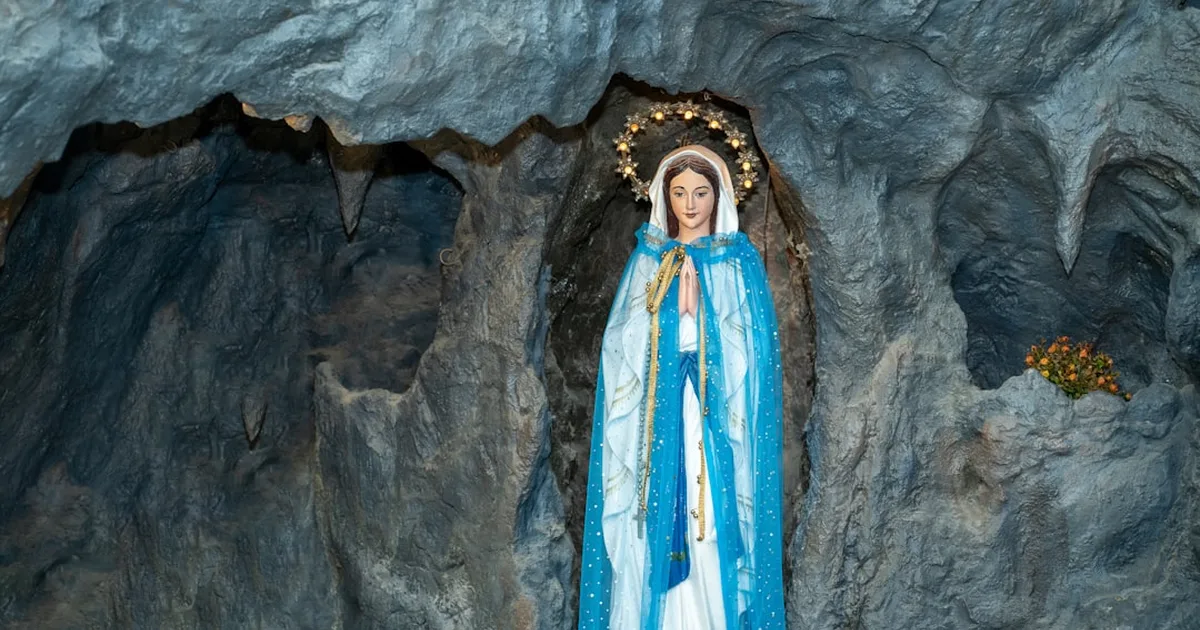
On February 11, 1858, while gathering firewood with her sister and a friend near the grotto of Massabielle, Bernadette experienced something that would transform her life and mark contemporary religious history. She described a "beautiful Lady" dressed in white, whose presence would reappear eighteen times until July. During these encounters, the Lady conveyed messages centered on prayer, penance, and conversion of heart. On March 25, the feast of the Annunciation, she identified herself as "the Immaculate Conception," a theological expression that Bernadette, with little formal education, could not have known. This revelation would confirm to ecclesiastical authorities the authenticity of the apparitions, as highlighted in the Gospel:
"I praise you, Father, Lord of heaven and earth, because you have hidden these things from the wise and learned, and revealed them to little children" (Matthew 11:25, NIV).The grotto quickly became a pilgrimage site, attracting believers seeking comfort and spiritual healing.
Bernadette's Response to Skepticism
Faced with doubts, questions, and sometimes mockery from those around her, Bernadette maintained a constant and humble witness. She never sought to convince with elaborate arguments but simply reported faithfully what she had seen and heard. This attitude reflects biblical wisdom that invites trust in God rather than in one's own strength:
"Trust in the Lord with all your heart and lean not on your own understanding" (Proverbs 3:5, NIV).Despite the growing notoriety of the events at Lourdes, Bernadette maintained deep humility, refusing to put herself forward and recognizing that her mission went beyond her own person.
A Discreet and Faithful Religious Life
In 1866, responding to an inner call to total consecration, Bernadette entered the Sisters of Charity of Nevers at the Saint-Gildard convent. Far from the now-famous grotto, she lived a life marked by prayer, obedience, and service to the sick. Her health, always fragile, brought sufferings that she offered in union with those of Christ. In this hidden life, Bernadette embodied the words of Jesus:
"If anyone wants to be first, they must be the very last, and the servant of all" (Mark 9:35, NIV).She carried out her assigned duties with dedication, never seeking special honors, demonstrating that holiness is often lived in the ordinary moments of daily life.
A Spiritual Legacy for Today
Having died at age 35 in 1879, Bernadette Soubirous left a testimony that continues to inspire millions of Christians worldwide. Beatified in 1925 and then canonized in 1933, she remains a figure of evangelical simplicity and faithfulness to her received vocation. Her body, found intact, now rests in a glass shrine in Nevers, attracting pilgrims and seekers of meaning. Her message centered on prayer, conversion, and trust in God continues to resonate today, reminding us that authentic faith flourishes in humility and service to others.





Comments