
In times of global challenges, the communion between Christians from different nations reveals itself as a living testimony of the love that unites Christ's Body. Recently, Cardinal Pierbattista Pizzaballa, Latin Patriarch of Jerusalem, sent a touching message to brothers and sisters in Brazil through the National Conference of Bishops of Brazil (CNBB). Though unable to be physically present due to the grave situation in the Holy Land, his heart and words crossed continents to express deep gratitude for the constant support of the Brazilian Church.
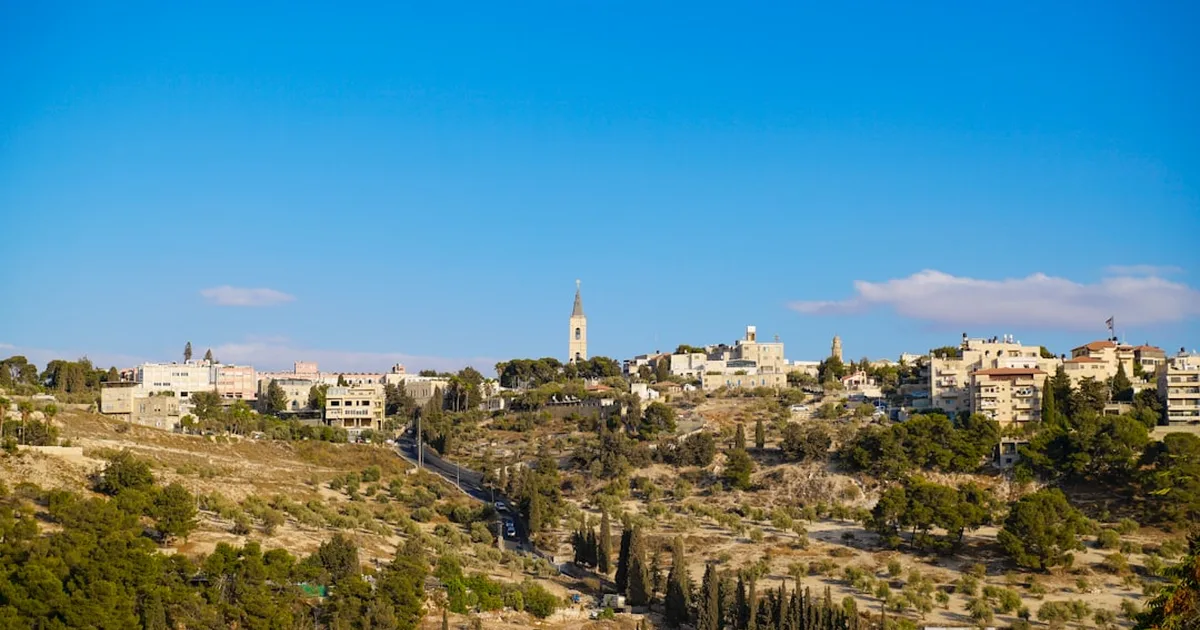
This communication, more than a mere protocol thank-you, represents a thread of hope woven in prayer and solidarity. In a world marked by divisions, gestures like this remind us that in Christ, we form one family. The impossibility of travel, far from being an obstacle, became an opportunity to strengthen spiritual bonds that transcend geographical distances.
The apostle Paul expressed similar feelings in his letter to the Philippians when he wrote:
"I thank my God every time I remember you. In all my prayers for all of you, I always pray with joy" (Philippians 1:3-4, NIV).Just as Paul rejoiced in communion with distant churches, today we witness that same joy in the connection between the Holy Land and Brazil.
The Weight of Pastoral Responsibility
Cardinal Pizzaballa's decision to remain in Jerusalem, despite all preparations to visit Brazil, reveals the depth of his pastoral commitment. Leading a Christian community in a conflict region demands constant presence, spiritual discernment, and courage to face daily challenges. His choice invites us to reflect on the true meaning of pastoral care in crisis situations.
In the Holy Land, where Christians represent a minority amid political and religious tensions, church leadership carries additional weight. Each decision affects not only the local community but echoes among Christians worldwide who look to Jerusalem as the cradle of their faith. The impossibility of travel wasn't simply a logistical matter but an expression of faithfulness to the flock entrusted to his care.
Jesus, the Good Shepherd, left us a clear example:
"I am the good shepherd. The good shepherd lays down his life for the sheep" (John 10:11, NIV).This total surrender manifests in different ways—sometimes in the sacrifice of martyrdom, other times in relinquishing important travels to remain with the sheep in moments of need.
The Retreat That Continued in Prayer
Though physically absent, Cardinal Pizzaballa had prepared meditations for the CNBB retreat scheduled for April 15-16. Archbishop Armando Bucciol, Apostolic Nuncio to Brazil, graciously assumed spiritual leadership of the gathering. This harmonious transition demonstrates how the Holy Spirit works through different ministries to sustain the community's spiritual life.
Spiritual retreats represent precious moments of renewal for church leaders. In a context of many pastoral demands, these periods of withdrawal are essential to replenish the inner springs from which ministry flows. The change in facilitator didn't diminish the gathering's depth but added layers of meaning to the shared experience.
Psalm 46 invites us:
"Be still, and know that I am God" (Psalm 46:10, NIV).This stillness before God, cultivated in retreats, is an antidote to empty activism and a foundation for fruitful ministries. Even when human plans change, God continues speaking to his servants' hearts.
Solidarity That Builds Bridges
Cardinal Pizzaballa's gratitude message highlights a fundamental aspect of contemporary church life: international solidarity that strengthens communities in vulnerable situations. In moments when the Holy Land faces complex crises, support from sister churches like Brazil's isn't just material aid but a concrete expression of communion in the Spirit.
This spiritual reciprocity reflects the very nature of the Church as an interconnected body. When one part suffers, all suffer; when one part receives comfort, all are strengthened. The gratitude expressed by the Cardinal isn't toward an institution but toward a family of faith that has chosen to walk alongside their brothers and sisters in the Holy Land.
The letter to the Hebrews encourages us:
"And do not forget to do good and to share with others, for with such sacrifices God is pleased" (Hebrews 13:16, NIV).Solidarity between distant churches embodies this command, transforming compassion into action and prayer into tangible presence.




Comments