
The Vatican Astronomical Observatory, known as the Specola Vaticana, has chosen to honor key figures from its history by naming four asteroids after them. Among these, the asteroid dedicated to Pope Leo XIII stands out, named 'Gioacchinopecci' after his baptismal name, Gioacchino Vincenzo Raffaele Luigi Pecci. This gesture not only recognizes his legacy but also underscores the Church's long tradition of engaging with science and the cosmos.
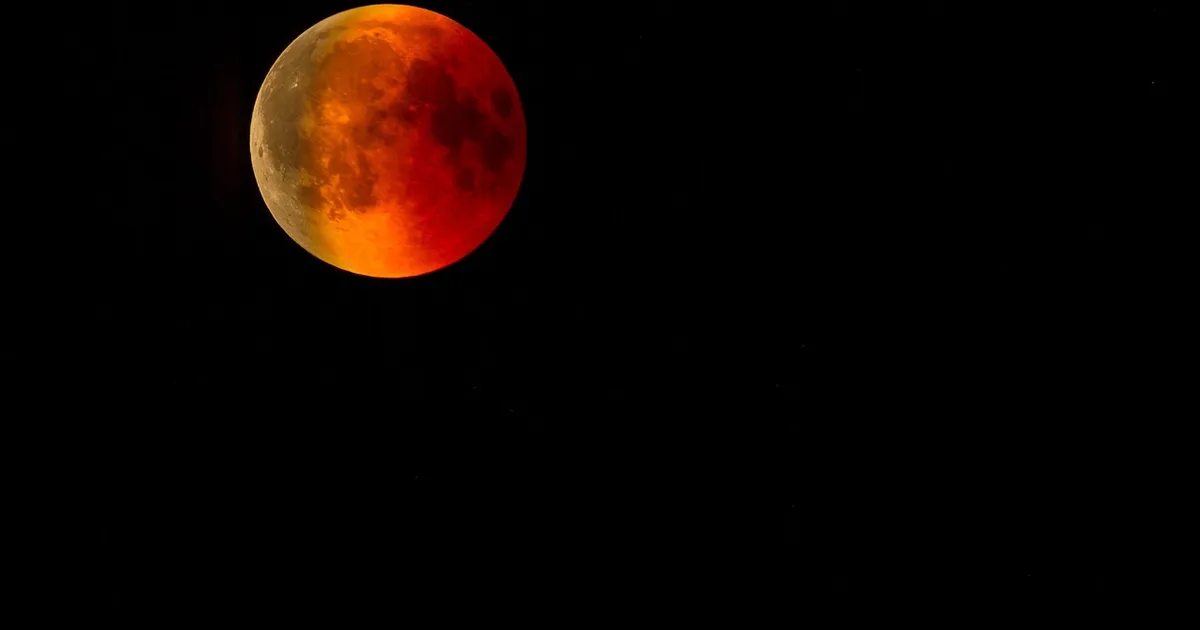
Leo XIII was the one who reestablished the Specola Vaticana in 1891, after the original observatory of Father Angelo Secchi was lost due to Italian unification. His vision was clear: science and faith are not enemies but allies in the search for truth. As it is written in Romans 1:20 (NIV), 'For since the creation of the world God’s invisible qualities—his eternal power and divine nature—have been clearly seen, being understood from what has been made.'
The Specola Vaticana: A History of Science and Faith
The Specola Vaticana traces its roots to the 16th century, when Pope Gregory XIII commissioned the construction of the Tower of the Winds to study the movement of the planets and reform the calendar. However, it was Leo XIII who gave it new momentum by reestablishing the observatory in 1891 through the motu proprio Ut Mysticam. In that document, he declared that the Church has always embraced, encouraged, and promoted true science, contradicting those who accuse it of opposing knowledge.
Over time, the Specola moved from the Vatican walls to the Apostolic Palace of Castel Gandolfo, and later to Mount Graham in Arizona, where the Vatican Advanced Technology Telescope (VATT) now operates. This telescope has been key in discovering asteroids like the one that now bears Leo XIII's name.
A Legacy That Transcends Time
Leo XIII is remembered not only for his love of science but also for his encyclical Rerum Novarum, which laid the foundations of the Church's social doctrine. His comprehensive vision of the human person embraced both spirit and reason, and he believed that contemplation of the cosmos elevates the soul toward God. In the words of Psalm 19:1 (NIV), 'The heavens declare the glory of God; the skies proclaim the work of his hands.'
The asteroid 'Gioacchinopecci' joins other asteroids named after popes, such as 'Gregorio XIII' and '(8661) Ratzinger' in honor of Benedict XVI. Each of these names is a reminder that the Church has contributed to the advancement of astronomy and other sciences over the centuries.
What Does This Mean for Christians Today?
This tribute invites us to reflect on the relationship between faith and science. Often they are presented as opposites, but the history of the Specola Vaticana shows they can walk together. As Christians, we are called to explore creation with wonder and gratitude, recognizing that every scientific discovery is an opportunity to marvel at the wisdom of God.
Moreover, it reminds us of the importance of leaving a legacy that transcends our lifetime. Leo XIII was not only a shepherd of souls but also a promoter of knowledge. What legacy are you building? It may be small, like teaching a child to observe the stars, or large, like supporting initiatives that unite faith and science.
To conclude, we invite you to go out on a clear night, look at the sky, and remember that every star and every asteroid is part of the creation God has given us to care for and admire. As Proverbs 3:19 (NIV) says, 'By wisdom the Lord laid the earth’s foundations, by understanding he set the heavens in place.'





Comments