
Dear brothers and sisters, today we explore a key question for our faith: what does the Bible say about fasting. Fasting is a spiritual practice that has accompanied God's people since Old Testament times, and Jesus himself both practiced and taught it. In a world full of distractions, rediscovering fasting can be a powerful tool to draw closer to God. Throughout this article, we will see how the Bible guides us in this discipline—not as a mere ritual, but as an act of humility and sincere seeking of the Lord.
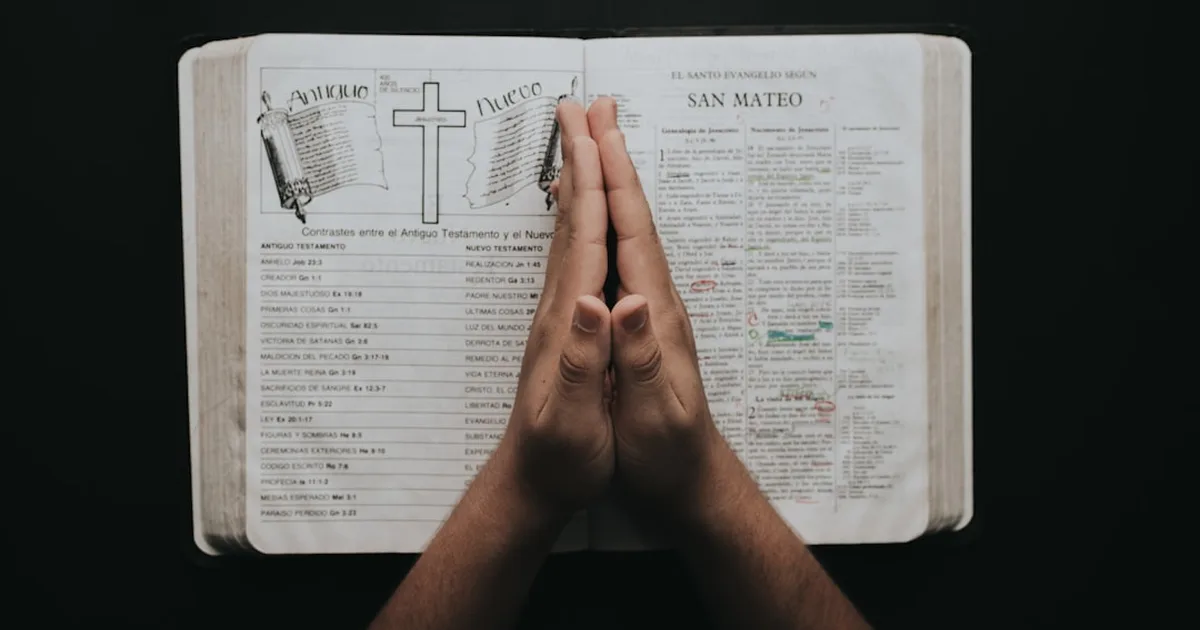
Fasting in the Old Testament: A Call to Humility
In the pages of the Old Testament, fasting often appears as an expression of repentance, mourning, and supplication. For example, in the book of Joel, God calls his people:
“Return to me with all your heart, with fasting and weeping and mourning” (Joel 2:12, NIV).Here we see that fasting is not an end in itself, but a means to return to God sincerely. Also in Isaiah, the prophet denounces hypocritical fasting and teaches that true fasting consists of sharing bread with the hungry and breaking chains of injustice (Isaiah 58:6-7). In other words, biblical fasting is always accompanied by a transformed heart and actions of justice.
Examples of Fasting in the Old Testament
Moses fasted forty days and forty nights when he received the Law of God (Exodus 34:28). Elijah also fasted on his journey to Mount Horeb (1 Kings 19:8). Esther and the Jews fasted before she approached the king (Esther 4:16). In all these cases, fasting was an expression of total dependence on God and seeking his direction.
Fasting in the New Testament: Jesus' Teaching
When we ask what does the Bible say about fasting, Jesus' words are essential. In the Sermon on the Mount, Jesus teaches:
“When you fast, do not look somber as the hypocrites do, for they disfigure their faces to show others they are fasting. Truly I tell you, they have received their reward in full. But when you fast, put oil on your head and wash your face, so that it will not be obvious to others that you are fasting, but only to your Father, who is unseen; and your Father, who sees what is done in secret, will reward you” (Matthew 6:16-18, NIV).Jesus assumes his disciples will fast, but warns against hypocrisy. Fasting should be a private matter between the believer and God, not a spectacle to gain others' approval.
Fasting in the Early Church
In the book of Acts, we see the early Christians fasting as they sought the Holy Spirit's guidance. For example, when the church in Antioch sent Paul and Barnabas as missionaries, “While they were worshiping the Lord and fasting, the Holy Spirit said, ‘Set apart for me Barnabas and Saul for the work to which I have called them.’ So after they had fasted and prayed, they placed their hands on them and sent them off” (Acts 13:2-3, NIV). Fasting was linked to prayer and important decision-making. Paul also mentions fasting as part of his ministry (2 Corinthians 6:5; 11:27).
Purposes and Benefits of Fasting According to the Bible
The Bible reveals several purposes for fasting. First, fasting helps us humble ourselves before God, acknowledging our dependence on Him (Psalm 35:13). Second, fasting intensifies our prayer and helps us focus on God. Third, fasting can be an expression of repentance and a desire for change. Additionally, fasting strengthens us spiritually by weakening our flesh. As the prophet Isaiah wrote, the fast that God chooses is one that loosens the bonds of wickedness and sets the oppressed free (Isaiah 58:6). True fasting not only changes us but also impacts those around us. By practicing fasting with a right heart, we experience greater closeness to God and sensitivity to the Holy Spirit. We encourage you to consider fasting as a spiritual discipline that can renew your faith and transform your life.



Comments