
When we gather for worship, something profound happens. The songs we sing are not merely melodies or emotional triggers; they are carriers of truth. Every lyric we lift up embeds itself deep within us, shaping how we understand God, ourselves, and the world. This is why the Apostle Paul urged the Colossians to let the word of Christ dwell in them richly, teaching and admonishing one another with psalms, hymns, and spiritual songs (Colossians 3:16). Singing is a form of teaching—a way to internalize Scripture and declare it back to God and to one another.

Think about it: How often do you find yourself humming a worship song long after the service ends? The melodies stick, and with them, the truths they proclaim. Whether it's a classic hymn like “How Great Thou Art” or a modern chorus like “Way Maker,” these songs become part of our spiritual vocabulary. They shape our prayers, comfort us in sorrow, and give voice to our joy. In a very real sense, we sing our theology into existence.
This isn't a new idea. The book of Psalms is essentially the hymnbook of ancient Israel, covering every human emotion and circumstance. From lament to praise, from confession to thanksgiving, the Psalms model how to bring our whole selves before God. When we sing them, we join a chorus that spans millennia, connecting us to the faith of our ancestors.
Why Song Transcends Mere Words
Music has a unique ability to bypass our defenses and speak directly to the heart. Neuroscientists have shown that singing releases oxytocin and dopamine, fostering bonding and joy. But beyond the biology, there's something mysterious about how music carries spiritual truth. The great reformer Martin Luther once said, “Next to the Word of God, the noble art of music is the greatest treasure in the world.” He understood that music can plant seeds of faith in ways that sermons alone cannot.
Consider the role of music in evangelism. When missionaries go to new cultures, they often use songs to communicate the gospel. Why? Because music transcends language barriers and cultural differences. A simple melody can convey love, hope, and redemption in a way that words alone struggle to achieve. In many indigenous communities, the first Bible translation is often accompanied by a songbook, recognizing that people remember what they sing far more than what they hear.
In our own lives, think about the songs that have marked your spiritual journey. Perhaps it was a hymn sung at a funeral that brought comfort, or a worship chorus that became your anthem during a difficult season. These songs become landmarks of faith, reminding us of God's faithfulness in the past and anchoring us for the future.
Singing Through Joy and Sorrow
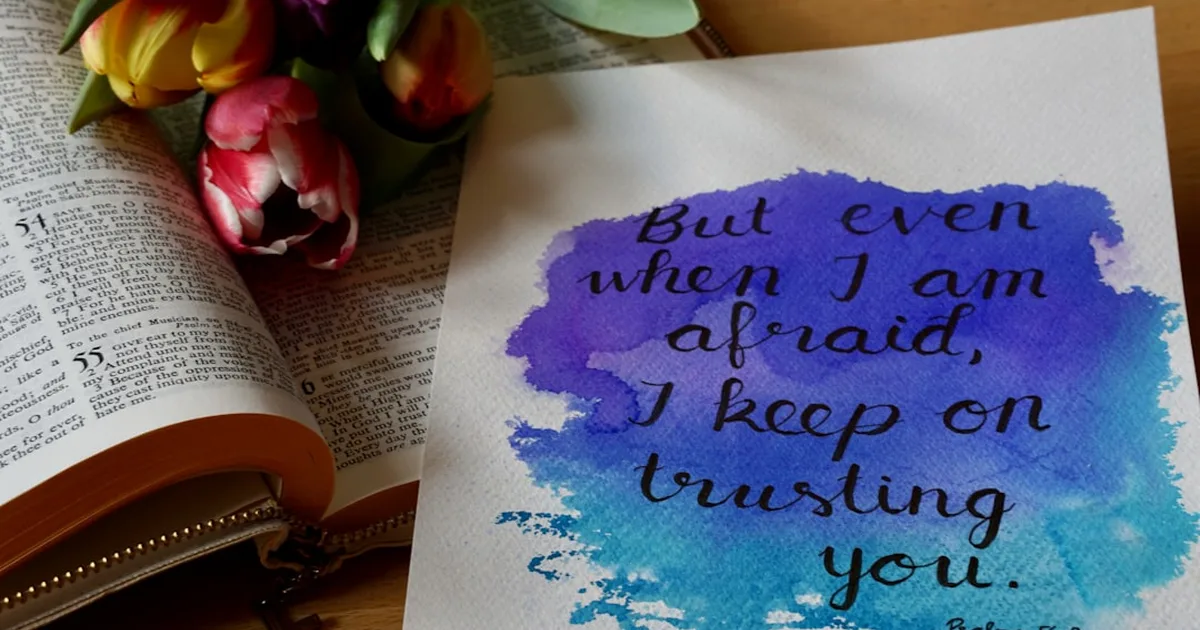
Life is a mixture of mountaintops and valleys, and our singing should reflect that. The Bible doesn't call us to pretend everything is fine when it's not. Instead, it invites us to bring our honest emotions to God. The Psalms are filled with raw lament, but they almost always end with a note of trust. This is the pattern of biblical faith: we pour out our hearts, but we also remember who God is.
When joy overflows, singing becomes a natural response. When a friend comes to faith, when a prayer is answered, when we simply bask in the beauty of creation—our hearts can't help but burst into song. But when sorrow threatens to overwhelm us, singing can be an act of defiance. It declares that even in the darkness, God is still worthy of praise. Job, in the midst of his suffering, did not curse God but worshiped (Job 1:20-21). His example shows us that worship is not dependent on our circumstances but on the unchanging character of God.
“The Lord your God is in your midst, a mighty one who will save; he will rejoice over you with gladness; he will quiet you by his love; he will exult over you with loud singing.” — Zephaniah 3:17 (ESV)
This verse reminds us that God himself sings over us. Our singing is a response to his initiative, a echo of the joy he already feels toward his children. When we sing, we participate in the divine melody that has been playing since creation.
Practical Ways to Incorporate Singing into Your Daily Faith
You don't have to be a musician or have a beautiful voice to sing. God doesn't grade our worship based on vocal ability; he looks at the heart. Here are some simple ways to make singing a regular part of your spiritual life:
- Start your day with a song. Instead of scrolling through your phone, play a worship song and let it set the tone for the day. Sing along, even if it's just a whisper.
- Use songs as prayers. When you don't have words, let a familiar hymn or chorus express your heart. Many worship songs are essentially prayers set to music.
- Memorize Scripture through song. There are many resources that set Bible verses to music. This is especially helpful for children, but adults can benefit too.
- Sing with others. Join a church choir, a small group worship time, or simply gather with friends to sing. Corporate singing strengthens bonds and builds community.
- Create a playlist for different seasons. Have a playlist for joy, one for lament, and one for hope. Let the music accompany you through life's ups and downs.
Reflection: What Song Is Your Heart Singing Today?
Take a moment to consider the soundtrack of your life. What songs have shaped your faith? Are there lyrics that have become your personal declarations? Perhaps today you need to sing a song of trust, even if you don't feel it. Or maybe it's time to let a song of thanksgiving rise from your heart.
Singing is not just an activity we do on Sundays; it's a way of living out our faith. It reminds us of who God is and who we are in him. So go ahead—sing. Whether loudly or softly, in tune or off-key, let your voice join the eternal chorus that praises the Lamb who was slain. As the psalmist wrote, “I will sing to the Lord as long as I live; I will sing praise to my God while I have being” (Psalm 104:33, ESV).




Comments