
Georgia, a small country nestled at the crossroads of Europe and Asia, holds a remarkable place in Christian history. Despite its size, it is one of the oldest Christian nations in the world, with a faith tradition that dates back nearly two millennia. Today, about 4.9 million people call Georgia home, and while many identify as Christian, the story of how the gospel first arrived there is both inspiring and instructive for believers everywhere. Understanding this history can deepen our appreciation for the global Church and remind us of the enduring power of the gospel to transform cultures.
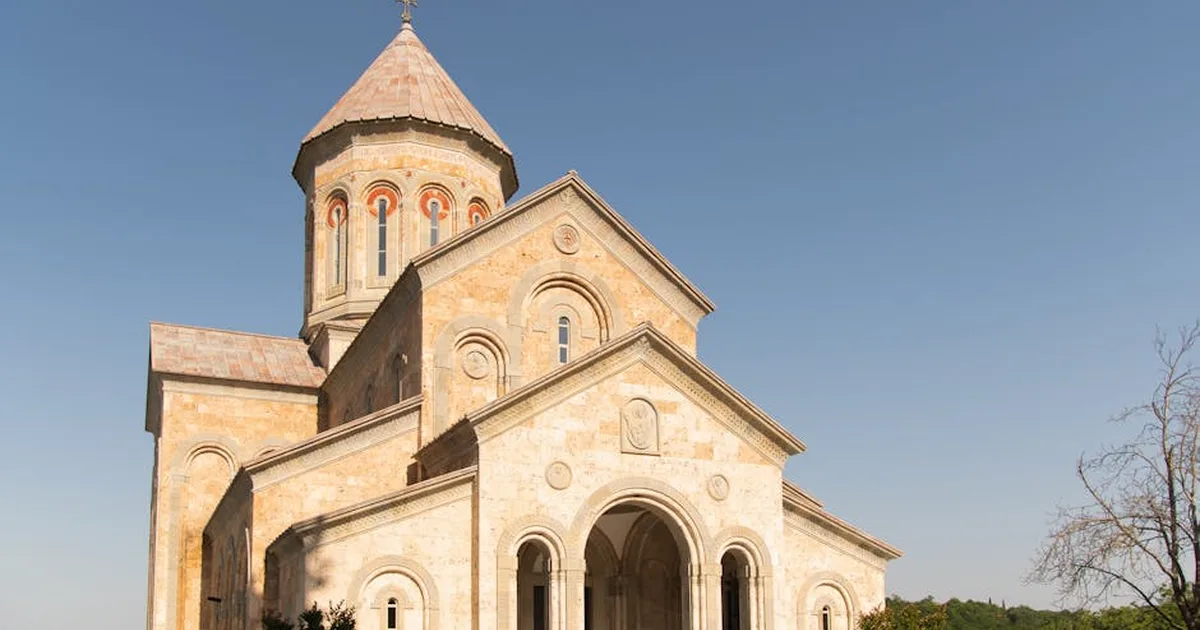
The Arrival of the Gospel in Ancient Georgia
Early Traditions and Apostolic Connections
According to ancient tradition, the gospel reached Georgia as early as the first century. Some accounts suggest that the apostles Andrew and Simon the Zealot traveled through the region, preaching and establishing small communities of believers. While historical records from that era are sparse, these traditions highlight the deep roots of Christianity in Georgian soil. The early Church spread gradually through trade routes and the movement of believers, and by the third century, there were already Christian communities in the eastern part of the country, known as Iberia.
Saint Nino: The Woman Who Changed a Nation
The most pivotal figure in Georgia's Christianization is Saint Nino, a woman from Cappadocia (modern-day Turkey) who arrived in the early fourth century. According to tradition, Nino was a devout Christian who felt called to bring the gospel to the people of Iberia. She traveled alone, relying on God's provision, and her ministry was marked by humility, prayer, and miraculous healings. One of the most famous stories tells of how she healed Queen Nana of a serious illness, leading to the queen's conversion. Soon after, King Mirian III, who had been skeptical, converted after praying to the God of Nino during a battle and experiencing a divine intervention. In 337 AD, King Mirian declared Christianity the state religion, making Georgia one of the first nations to officially embrace the faith.
The conversion of the royal family had a profound impact. Christianity quickly spread among the people, and the Church became central to Georgian identity. Saint Nino is remembered as the "Equal to the Apostles" and her feast day is celebrated with great devotion. Her story reminds us that God often uses ordinary people, filled with faith and courage, to accomplish extraordinary things.
The Birth of the Georgian Orthodox Church
With Christianity as the state religion, the Church began to organize and grow. One of the most significant developments was the creation of the Georgian alphabet, traditionally attributed to the monk Mesrop Mashtots in the fifth century. This alphabet was developed specifically to translate the Bible and liturgical texts into the Georgian language, allowing the faith to take root deeply in the culture. The Georgian Orthodox Church emerged as a distinct entity, with its own traditions and theology, while maintaining communion with the wider Eastern Orthodox world. For centuries, the Church was a pillar of national identity, preserving Georgian language and culture even under foreign domination.
The Church in Georgia Today
A Predominantly Orthodox Nation
Today, approximately 80–85% of Georgians identify with the Georgian Orthodox Church. This makes Georgia one of the most Orthodox countries in the world. However, for many, this identity is more cultural than deeply personal. The Church plays a central role in national holidays, family events, and public life, but regular church attendance and personal faith vary widely. Many Georgians view Orthodoxy as an essential part of being Georgian, and the Church hierarchy holds significant influence in society and politics.
Religious Minorities and Growing Diversity
Islam is the second-largest religion in Georgia, with about 500,000 Muslims, primarily among ethnic Azeris and Adjarians. There are also small communities of Armenian Christians, Catholics, and Jews. Protestantism, including evangelical and Pentecostal churches, is a growing but still small minority. While religious freedom is legally guaranteed, Protestant groups sometimes face social suspicion or pressure, as they are seen as foreign or divisive. Nevertheless, there is a slow but steady diversification of the religious landscape, especially in urban areas and among younger generations.
Challenges and Opportunities for the Church
The Georgian Orthodox Church faces its own challenges, including a need for renewal and engagement with a changing society. Many young Georgians are less connected to traditional religious practices, and the Church must find ways to communicate the gospel in a contemporary context. For Protestant and other minority groups, the challenge is to build bridges and demonstrate the love of Christ in a way that respects Georgian culture while offering a fresh perspective on faith.
Across all traditions, there is an opportunity for unity in the gospel. The story of Saint Nino reminds us that the gospel transcends denominations and cultural barriers. As the Apostle Paul wrote, "There is neither Jew nor Greek, there is neither slave nor free, there is no male and female, for you are all one in Christ Jesus" (Galatians 3:28, ESV). In a world of division, the Church in Georgia—and everywhere—is called to be a beacon of reconciliation and hope.
Practical Reflections for Today's Believers
The journey of the gospel to Georgia teaches us several important lessons. First, God often uses humble, faithful individuals to bring about great change. Saint Nino was a single woman traveling alone, yet her courage and trust in God transformed a nation. We don't need to be powerful or influential to be used by God—we simply need to be willing.
Second, the gospel is most effective when it takes root in a culture. The translation of the Bible into Georgian and the development of a national alphabet show that the Christian faith is not a foreign import but a message that can speak to every people group in their own language and context. As believers, we should celebrate the diversity of expressions of faith while holding fast to the core truths of the gospel.
Finally, the Church in Georgia today, like churches everywhere, faces both challenges and opportunities. Whether you are part of a large, established denomination or a small house church, the call is the same: to love God, love your neighbor, and make disciples. The story of Georgia reminds us that the gospel has the power to transform individuals, families, and entire nations. As you reflect on this history, consider how you can be a part of God's work in your own community.
"Go therefore and make disciples of all nations, baptizing them in the name of the Father and of the Son and of the Holy Spirit, teaching them to observe all that I have commanded you. And behold, I am with you always, to the end of the age." (Matthew 28:19–20, ESV)
May we, like Saint Nino, be faithful witnesses to the gospel wherever we are.


Comments