
Maundy Thursday is one of the deepest and most meaningful days of Holy Week. On this day, the Church remembers two foundational events: the institution of the Eucharist and the commandment of fraternal love, symbolized in the washing of the feet. For Christians around the world, this day marks the beginning of the Paschal Triduum, the center of our faith. Amid the traditional visits to the altar of repose and the night procession, Maundy Thursday invites us to pause and reflect on the radical love of Jesus. Join us as we explore the meaning of this day and how to live its message in our daily lives.
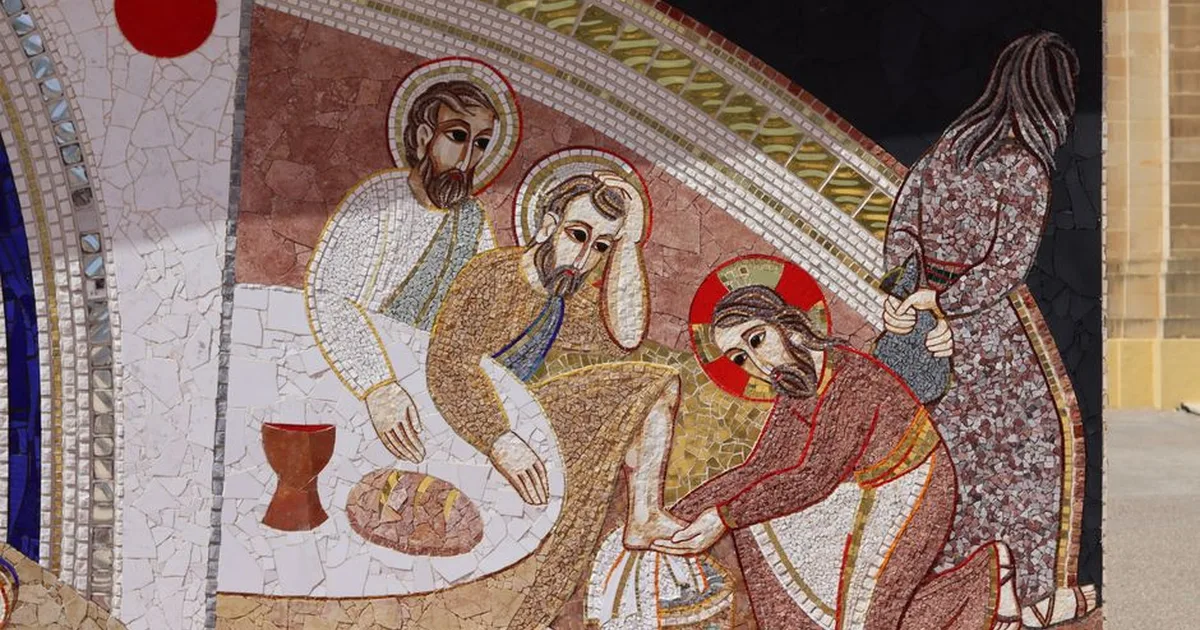
The Washing of the Feet: A Call to Humility and Service
In the Gospel of John, chapter 13, we find one of the most moving scenes of Maundy Thursday. Jesus, knowing that his hour had come, gets up from the meal, takes off his outer clothing, wraps a towel around his waist, and pours water into a basin. Then he begins to wash his disciples' feet and dry them with the towel. This gesture, which seems familiar to us today, was in his time a task reserved for slaves. Peter, shocked, resists: "You shall never wash my feet!" But Jesus answers: "Unless I wash you, you have no part with me" (John 13:8, NIV).
With this act, Jesus teaches us that true leadership in the Kingdom of God is based on humble service. He did not come to be served, but to serve. In a world that values power and status, Maundy Thursday challenges us to put others first, to wash the feet of those around us, literally or symbolically. In many churches, this gesture is reenacted, reminding us that we are all called to be servants.
The New Commandment
After washing their feet, Jesus says: "A new command I give you: Love one another. As I have loved you, so you must love one another" (John 13:34, NIV). This commandment is not optional; it is the identifying mark of his followers. The love Jesus asks of us is not an abstract feeling but a concrete love that translates into acts of service, forgiveness, and self-giving. This call resonates powerfully: to love as Christ loved means being willing to sacrifice for the good of others.
The Institution of the Eucharist: Bread of Life and Eternal Covenant
On the night of Maundy Thursday, Jesus also instituted the Eucharist. Taking bread, he broke it and said: "This is my body given for you; do this in remembrance of me" (Luke 22:19, NIV). In the same way, after the supper he took the cup, saying: "This cup is the new covenant in my blood, which is poured out for you" (Luke 22:20, NIV).
The Eucharist is the center of Christian life. In every Mass, we renew this memorial of Jesus' passion, death, and resurrection. It is a mystery of faith that nourishes us and unites us as the body of Christ. For Catholics and many Christian denominations, the Eucharist is more than a symbol; it is the real presence of Jesus among us. On Maundy Thursday, celebrations include the Mass of the Lord's Supper, where the Blessed Sacrament is adored at the altar of repose, reminding us that Jesus remains with us always.
The Eucharist and Community
By sharing the bread and wine, Jesus teaches us that communion with him implies communion with our brothers and sisters. We cannot approach the Lord's table if we are at odds with others. Therefore, Maundy Thursday is also a day of reconciliation. Many parishes offer communal confessions and encourage forgiveness within families. The Eucharist impels us to build communities of love and justice.



Comments