
Dear brothers and sisters, as we approach the celebration of Easter, many wonder what the true biblical meaning of this feast is. It is not just another holiday on the calendar, but the very heart of our Christian faith. Easter, both in the Old and New Testaments, speaks of liberation, of passing from death to life, of God's faithfulness in fulfilling his promises. In this article, we will explore together the biblical roots of this celebration and how it transforms our lives today.
Easter in the Old Testament: Liberation from Egypt
The first great event the Bible associates with Easter is Israel's exodus from Egypt. In Exodus 12, we read how God commanded his people to sacrifice a lamb without blemish and mark the doorposts of their houses with its blood. This sign protected the Israelites from the destroying angel, while the firstborn of Egypt died. That night, the Lord “passed over” the marked houses, and from this comes the term “Passover” (from the Hebrew pesach, meaning “to pass over” or “to skip”).
“The blood shall be a sign for you on the houses where you live; and when I see the blood I will pass over you, and no plague will befall you to destroy you when I strike the land of Egypt” (Exodus 12:13, NASB).
This foundational event not only liberated Israel from slavery but also established a perpetual memorial: the Feast of Unleavened Bread. Each year, the Israelites remembered how God had brought them out “with a mighty hand and an outstretched arm.” Passover, therefore, is first and foremost a story of redemption. God hears the cry of his people, acts with power, and leads them to freedom.
The Passover Lamb as a Symbol
The lamb sacrificed at the first Passover is a central symbol. It had to be an animal “without blemish,” male and one year old (Exodus 12:5). Its blood, applied with hyssop, protected the families. This lamb prefigured the Lamb of God who would take away the sin of the world. Thus, the Jewish Passover pointed to a greater fulfillment.
Jesus, the Lamb of God Who Fulfills Passover
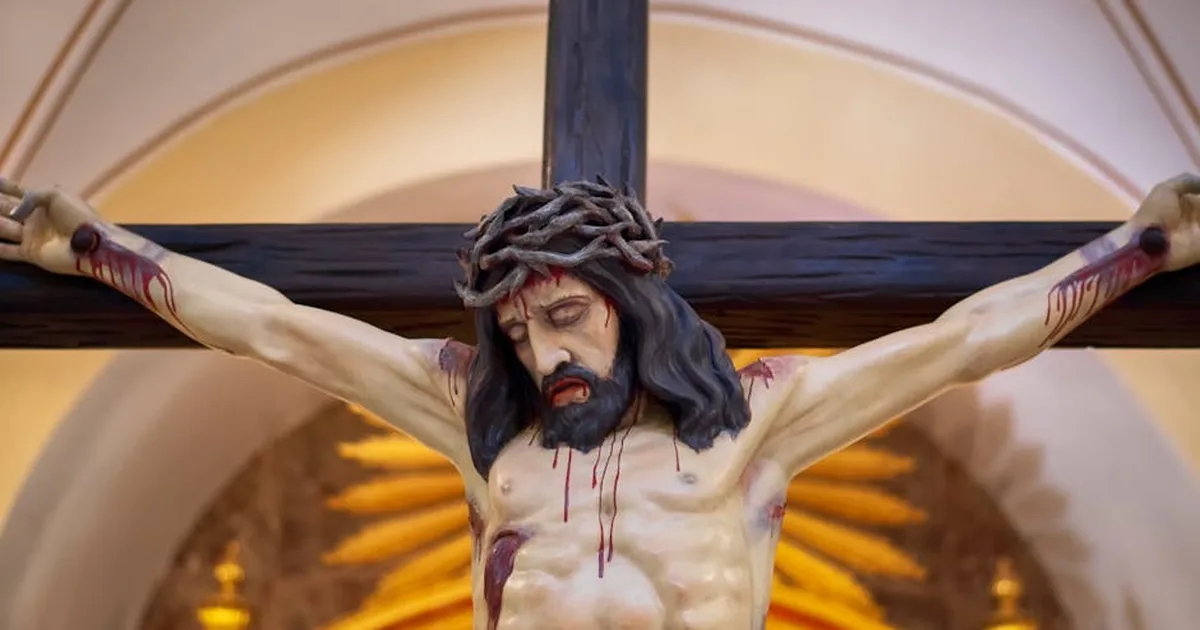
In the New Testament, the biblical meaning of Easter is fully revealed in the person of Jesus Christ. The Gospels tell us that Jesus celebrated the Passover meal with his disciples the night before he died. During that meal, he instituted the Lord's Supper, taking bread and wine as symbols of his body and blood, the new covenant. The next day, he was crucified, precisely at the same hour when the lambs were sacrificed in the Temple. John the Baptist had announced him: “Behold, the Lamb of God who takes away the sin of the world!” (John 1:29, NASB).
“For Christ our Passover also has been sacrificed” (1 Corinthians 5:7, NASB).
Jesus' resurrection on the third day is the climax of the Christian Easter. If the Jewish Passover celebrated liberation from Egypt, the Christian Easter celebrates liberation from sin and death. Christ, the perfect Lamb, offered himself once for all, and by rising, he conquered the power of the grave. That is why Christians call the feast of the Resurrection “Easter.”
From Slavery to Sonship
Just as Israel passed from slavery to freedom, we pass from death to life. The apostle Paul explains that through baptism we are buried with Christ and raised with him to walk in newness of life (Romans 6:4). Easter, therefore, is not just a historical memory but a present reality: we have been transferred from the kingdom of darkness to the kingdom of light.
Living Easter Today: A Call to Holiness and Hope
Understanding the biblical meaning of Easter invites us to live consistently with our faith. We cannot celebrate the resurrection if we remain in sin. Easter challenges us to die to selfishness and rise to a life of love and service. It is a time of spiritual renewal, of leaving behind the old and embracing the new that God has for us. As we celebrate Easter, we remember that our hope is not in this world, but in the promise of eternal life in Christ. May this Easter be for you a true passage from death to life, from sorrow to joy, from hopelessness to faith. Christ is risen! Hallelujah!




Comments